Encharcada
Also known as: Encharcada de Évora · Soaked egg sweet
Egg yolks and sugar taken to the limit, the surface scorched and dusted with cinnamon.
- Origin
- Conventual sweet from the Alentejo, traditionally linked to the convents of Évora
- Place
- Évora
- Region
- The Alentejo
- Category
- Convent Sweets
- Season
- Year-round
- Evidence
- Well documented
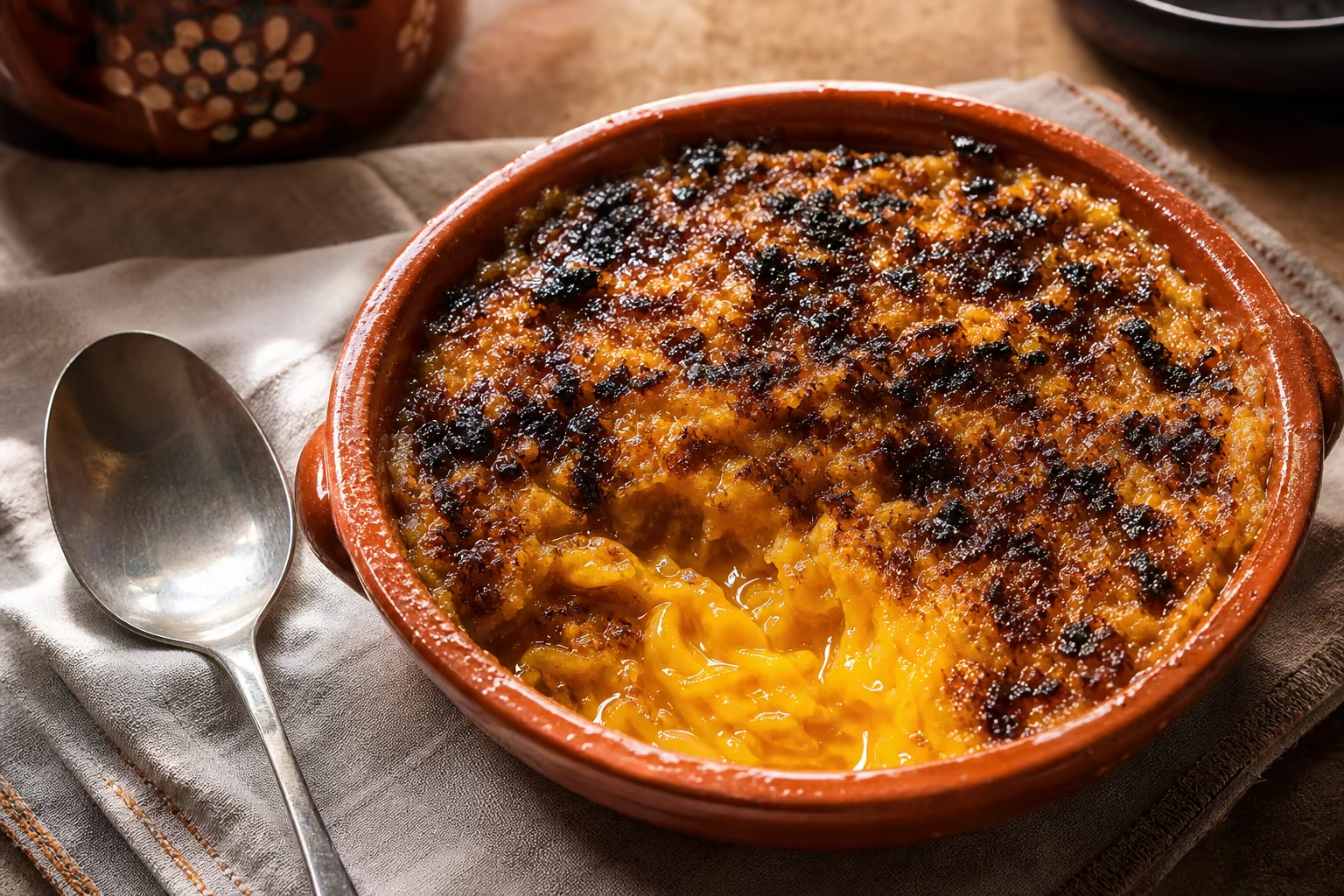
The Encharcada is one of the purest conventual sweets of the Alentejo: little more than egg yolks and sugar, with no flour to disguise them. The name says it all — from "encharcado" (soaked), because the yolks are literally drowned in hot sugar syrup, where they set into golden threads and ribbons.
It is served in a deep dish or earthenware tray, spread in an uneven layer, dusted with cinnamon and with the surface scorched by a red-hot iron or in the oven, which gives it dark streaks and a faintly toasted aroma.
It is a sweet for sharing, eaten by the spoon, intensely yellow and glossy with syrup. It has no hurry and no disguise: it is the yolk set to shine.
- Egg yolks
- Whole eggs
- Sugar
- Water
- Cinnamon
- Lemon zest or peel
Intensely sweet and deeply rich with yolk, its texture moist and silky — somewhere between soft custard and threads of fios de ovos set in syrup. Cinnamon and the lightly scorched top cut through the sugar and add depth; it melts on the tongue.
Differences lie mainly in syrup stage and finish: some Encharcadas are firmer, others almost fluid. The top may be scorched with a hot iron or simply broiled, and some add lemon. Beja and Mourão are close relatives. On Graciosa in the Azores, tourism and cultural sources record a specialty called encharcadas de ovos; because they do not publish enough technical detail to establish a separate formula, it is treated here as a regional branch of the same family rather than inventing a second recipe.
Look for it in pastry shops and conventual-sweet houses in Évora — Pastelaria Conventual Pão de Rala, on Rua do Cicioso, is a well-known address — and on the dessert lists of Alentejo restaurants. Because it is fragile and perishable, it rarely travels well — the best way is to eat it fresh, in the region itself.
Calls for a small glass of fortified Alentejo wine or a Moscatel, with a strong coffee to follow to balance all that sweetness.
Like so many of the country's egg sweets, the Encharcada was born from the convents' surplus of yolks. Portuguese conventual confectionery flourished from the 15th-16th centuries onward, with the arrival of sugar; in the Alentejo, the story goes that winemakers clarified their wine with egg whites and gave the leftover yolks to the nuns, who had them by the handful. In Évora, a city of many convents, those yolks turned into a rich repertoire of sweets, of which the Encharcada is perhaps the most stripped-back and essential.
Tradition links it above all to the Convento de Santa Clara in Évora, though close versions were also made in Beja and Mourão, with small differences of setting point and finish. Its exact origin is lost in the convent history of the Alentejo; it was the Évora version that won renown beyond the region.
Well documented
Identity supported by institutional, specialist or corroborating sources.
- en.wikipedia.org/wiki/Encharcada (opens in a new tab)
- outsider.pt/encharcada-de-evora-um-delicioso-doce-conventual-alentejano-que-derrete-na-boca/ (opens in a new tab)
- sobremesasdeportugal.pt/encharcada-alentejana-convento-de-santa-clara-evora/ (opens in a new tab)
- bellaciao.pt/restaurante/pastelaria-conventual-pao-de-rala/ (opens in a new tab)
- visitportugal.com/fr/destinos/acores/195382 (opens in a new tab)
- exploregraciosaisland.com/sobre-a-graciosa/ (opens in a new tab)
Pastries from here — The Alentejo
 Catalogue image
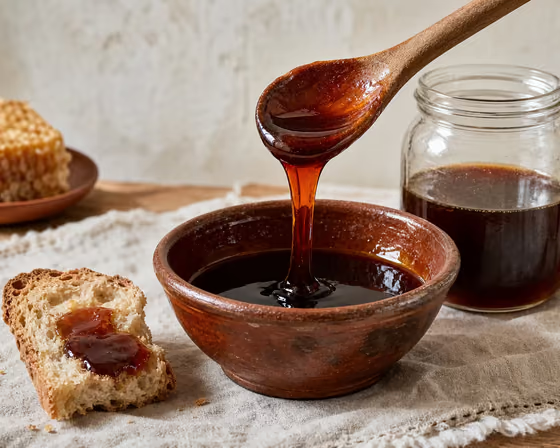
 Portuguese Água-mel Syrup
Water that recovers honey from combs after extraction, filtered and reduced for hours to 70–77° Brix.
The Alentejo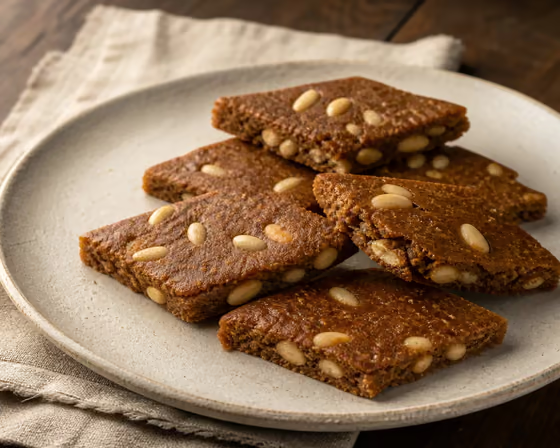 Catalogue image
 Alcomonias
Toasted coarse wheat flour, honey and pine nuts spread and cut into diamonds.
The Alentejo Catalogue image
 Amoreiras-Gare Alcôncoras
A large circular honey-and-olive-oil biscuit born from Amoreiras-Gare's promise-pole tradition.
The Alentejo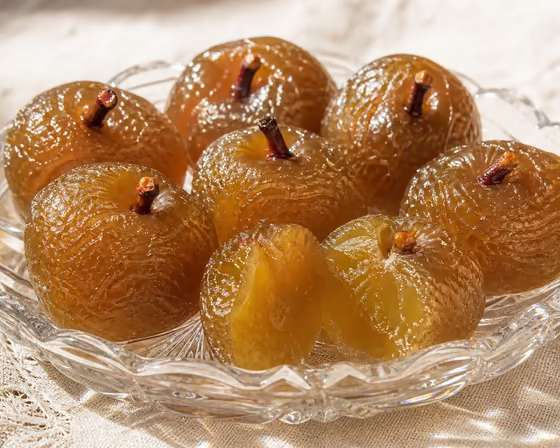 Catalogue image
 Elvas Plums
Protected Rainha Cláudia Verde greengages sold fresh, dried or candied—the sweet form requires at least seven days of slow candying.
The Alentejo