Portuguese Sour-Cherry Preserve
Also known as: Portuguese Sour-Cherry Preserve · Ginja Jam
Pitted sour cherries cooked with sugar into a vivid, bittersweet ruby preserve.
- Origin
- Portugal · especially associated with sour-cherry areas in the Oeste
- Place
- Alcobaça · Óbidos · Oeste
- Region
- The West
- Category
- Fruit & Honey Sweets
- Season
- Year-round · mainly prepared in June and July
- Evidence
- Well documented
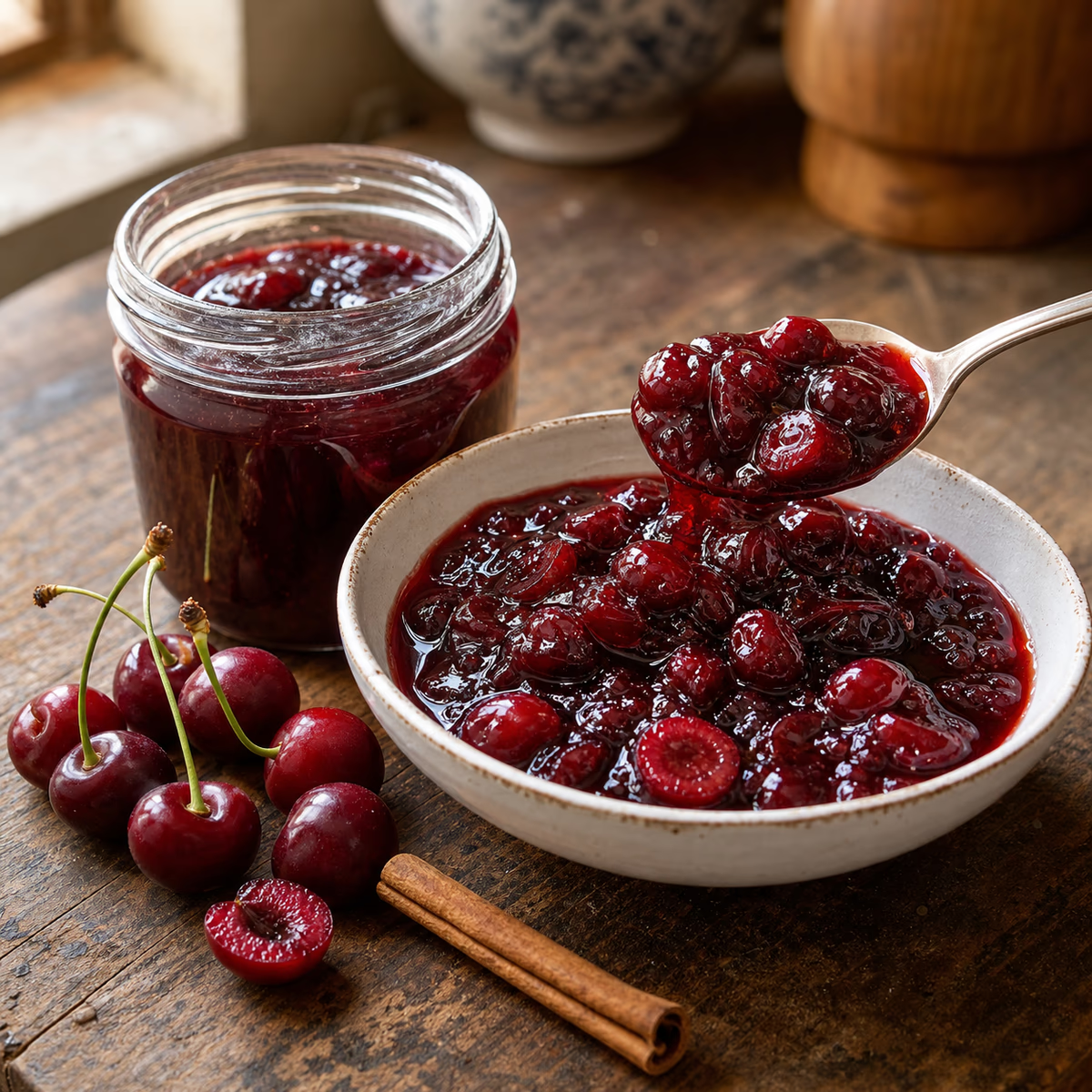
Doce de Ginja is a Portuguese preserve made with ginja, the small tart cherry also used for ginjinha liqueur. The fruit is pitted and cooked with sugar—whole, halved or partly broken down—until the syrup becomes glossy and thick. Natural acidity keeps the result from tasting merely sugary.
It is neither ginja liqueur nor cherries preserved in spirits. It also differs from strained jelly: the flesh and usually pieces of fruit remain visible in the preserve.
- Sour cherries
- Sugar
- Optional water
- Optional lemon or cinnamon
Sweet and intensely fruity, with pronounced tartness, slight astringency and tender sour-cherry pieces.
Sugar ratio and the degree of crushing vary. Some recipes add cinnamon, lemon or a small amount of ginjinha after cooking.
From producers and shops in Alcobaça, Óbidos and the Oeste, at markets and fairs, and in homes preserving the June harvest.
Bread, aged cheese, requeijão, yoghurt, dark chocolate and plain cakes.
Ginja cultivation and processing are strongly documented in Portugal's Oeste, especially around Alcobaça and Óbidos. Historic Alcobaça producer M.S.R. preserves a recipe using sour cherries, sugar and water alongside household liqueur formulas collected in Portuguese cookbooks.
The preserve remains part of both domestic and commercial practice. It is eaten at breakfast, with cheese or yoghurt, and used to fill Swiss rolls and cakes or to provide a tart contrast to chocolate.
Well documented
Identity supported by institutional, specialist or corroborating sources.
- ginja.pt/pt/index.php (opens in a new tab)
- tradicional.dgadr.gov.pt/pt/cat/frutos-frescos/563-ginja-de-obidos-e-alcobaca-igp (opens in a new tab)
- cookidoo.pt/recipes/recipe/pt-PT/r56666 (opens in a new tab)
- viladasrainhas.pt/wp-content/uploads/2023/04/FT.GA_.02.1A-Doce-de-Ginja_PT.pdf (opens in a new tab)
Pastries from here — The West
 Catalogue image
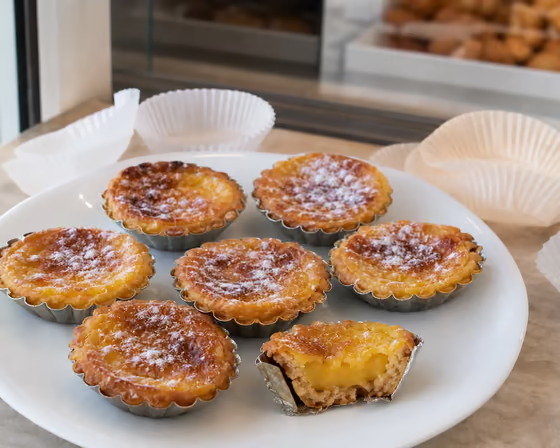
 Friends of Peniche
The sweet named after friends you should not trust.
The West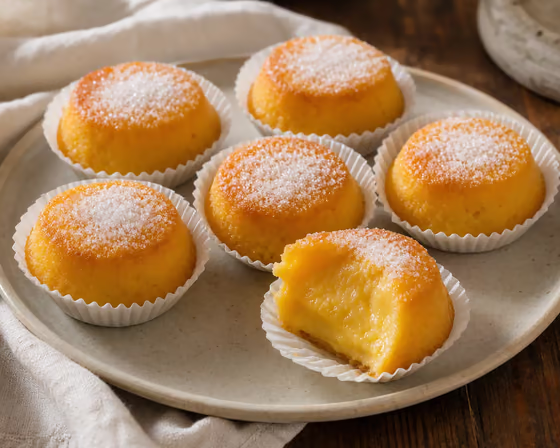 Catalogue image
 Areias Brancas
Small yolk-and-almond pudding cakes, named by the coast and covered with white sugar.
The West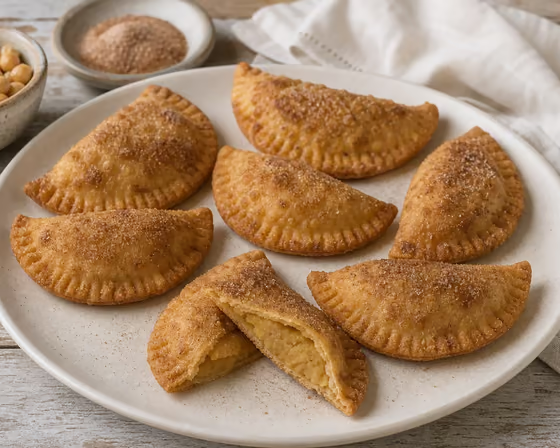 Catalogue image
 Peniche Chickpea Azevias
Thin fried half-moons with a sweet, creamy chickpea, almond and egg-yolk filling.
The West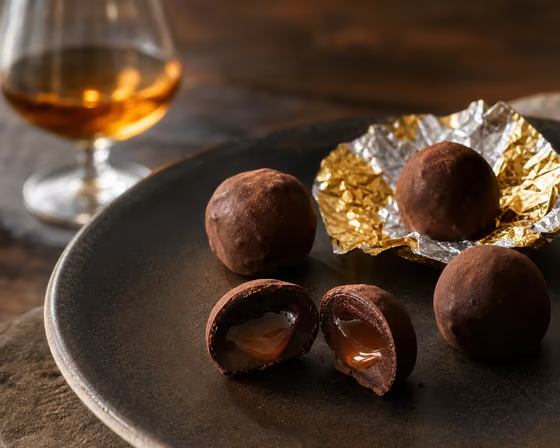 Catalogue image
 Lourinhã DOC Brandy Bonbon
A dark-chocolate bonbon with a Lourinhã DOC brandy heart.
The West