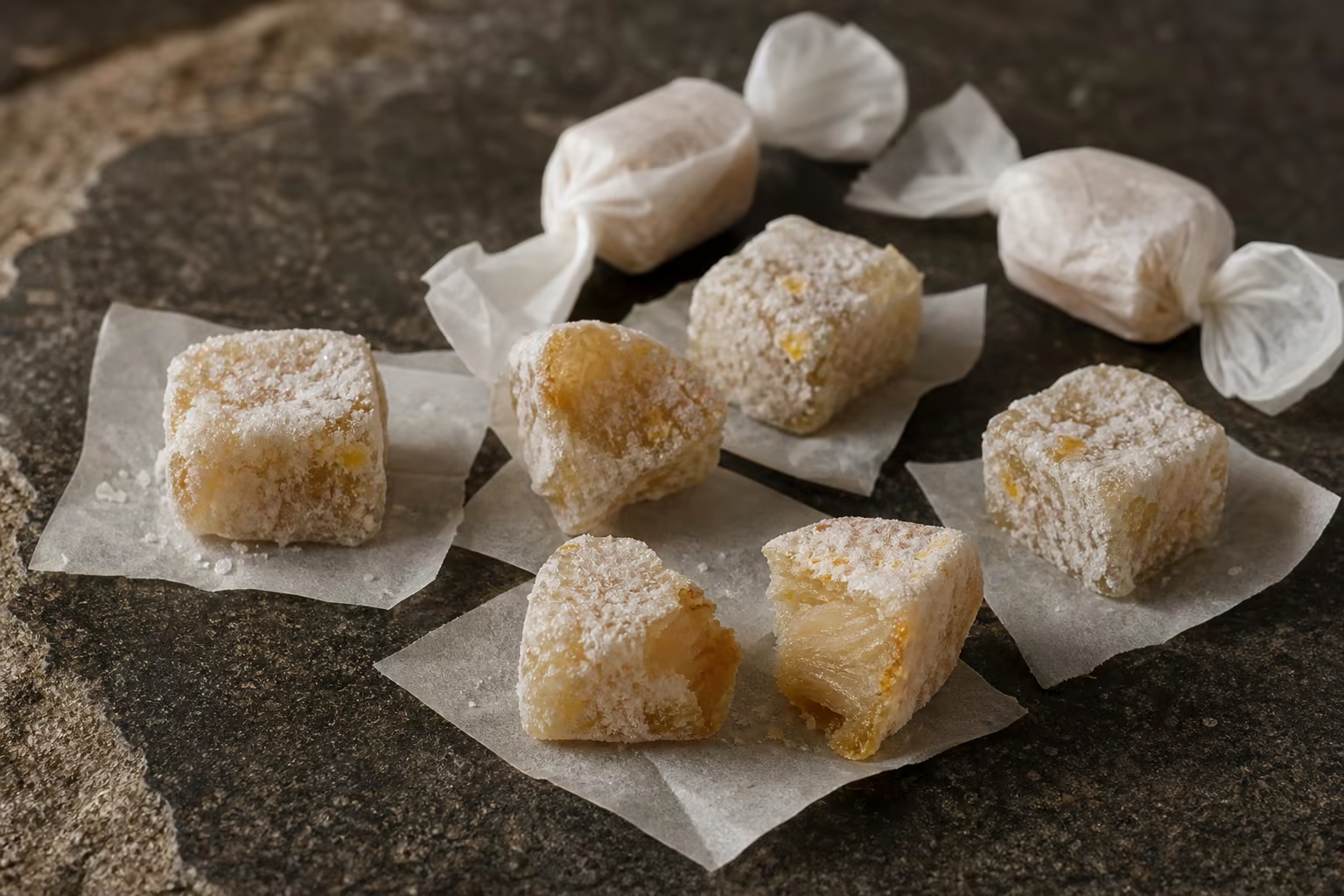
Évora Crystallised Scorzonera Sweet
Also known as: Évora Crystallised Scorzonera Sweet · Black Salsify Candy
Évora's nearly lost root, crystallised with sugar and citrus peel.
- Origin
- Évora · Central Alentejo
- Place
- Évora · Central Alentejo
- Region
- The Alentejo
- Category
- Cakes & Sweet Breads
- Season
- Extremely rare; occasional revivals and events only
- Evidence
- Well documented
Doce de Escorcioneira de Évora is a root confection: small cubes of scorzonera, or black salsify, are cooked with sugar and lemon or orange zest. Off the heat, the mixture keeps being stirred until it dries, hardens and crystallises; it is then broken into pieces and wrapped in paper.
Scorzonera has a long, dark, fleshy root. Once crystallised it becomes firm and sugary, with a fibrous interior and earthy notes softened by citrus. This is not a spreadable preserve: its most celebrated historical form was a solid, irregular candy produced in small Évora workshops and sold to residents and visitors.
- scorzonera root
- sugar
- lemon or orange zest
Very sweet and crystalline, with a firm fibrous vegetable core, restrained earthy notes and fresh citrus-peel perfume.
The same root could appear in soups, fried dishes and preserves. This page documents the historical crystallised sweet in hardened cubes or pieces; the Scorzonera Preserve entered as a 2019 innovation was a distinct revival and should not automatically be treated as the same product.
It is extremely rare, with no confirmed continuous commercial production. Look for food-heritage events, Évora Municipal Council activities or the Slow Food network, and confirm before travelling; do not expect to find it in an ordinary bakery.
Unsweetened black tea or espresso; a plain drink lets the citrus and root texture register.
Slow Food's Ark of Taste regards scorzonera as almost exclusive to Évora's culinary memory, though it also grew wild around Monte do Trigo and Portel. Old Portuguese cookbooks mention culinary uses and convent collections hold sweet recipes; the confection is associated with Santa Clara Convent and is also documented at Calvário Convent.
Around half a century ago both plant and sweet nearly disappeared as farming changed and industrial confectionery displaced its market. Slow Food Alentejo promoted experimental cultivation and recipe recovery; Alentejo Tourism and Évora Municipal Council ran training to revive it in 2011, and the council served the sweet again at an educational activity in 2024. In 2019 it joined the 420 Seven Wonders of Portuguese Sweets nominees as a Territory Sweet.
Well documented
Identity supported by institutional, specialist or corroborating sources.
- fondazioneslowfood.com/en/ark-of-taste-slow-food/scorzonera-sweet/ (opens in a new tab)
- portugal-aptece.com/wp-content/uploads/2014/12/Arca-dos-Sabores-APTECE-1.compressed.pdf (opens in a new tab)
- cm-evora.pt/docentes-conheceram-novo-percurso-da-flora-no-alto-de-s-bento/ (opens in a new tab)
- publituris.pt/2011/03/14/turismo-do-alentejo-da-formacao-em-docaria-tradicional (opens in a new tab)
- ccdr-a.gov.pt/docs/desenv_regional/Issuu%20-%20files/Revista3.pdf (opens in a new tab)
- gazetarural.com/wp-content/uploads/2019/04/7-Maravilhas-Doces-de-Portugal-Lista-de-Nomeados.pdf (opens in a new tab)
Pastries from here — The Alentejo
 Catalogue image
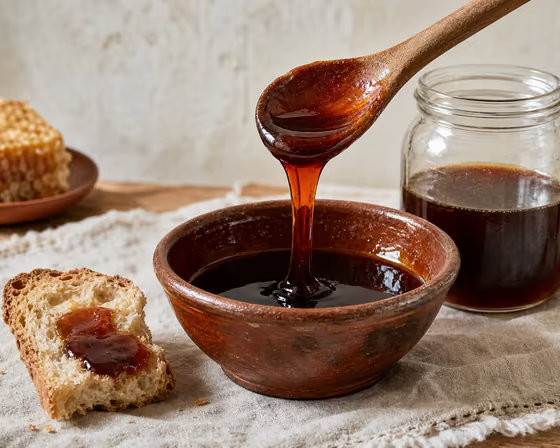
 Portuguese Água-mel Syrup
Water that recovers honey from combs after extraction, filtered and reduced for hours to 70–77° Brix.
The Alentejo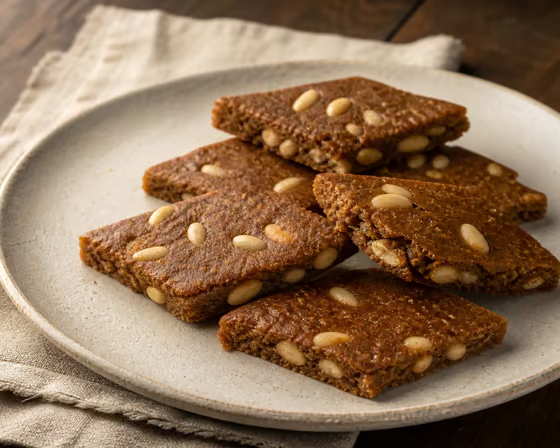 Catalogue image
 Alcomonias
Toasted coarse wheat flour, honey and pine nuts spread and cut into diamonds.
The Alentejo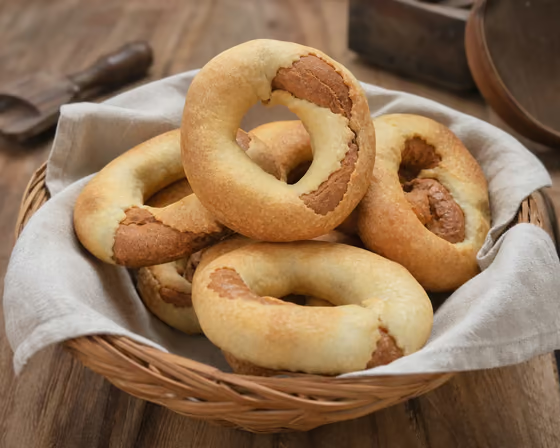 Catalogue image
 Amoreiras-Gare Alcôncoras
A large circular honey-and-olive-oil biscuit born from Amoreiras-Gare's promise-pole tradition.
The Alentejo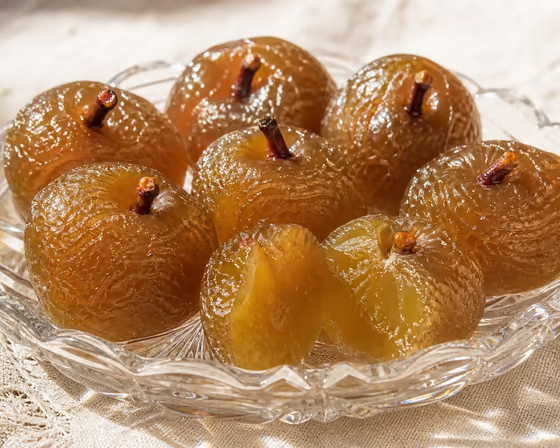 Catalogue image
 Elvas Plums
Protected Rainha Cláudia Verde greengages sold fresh, dried or candied—the sweet form requires at least seven days of slow candying.
The Alentejo