Vouzela Fair Sweets
A guide to the biscuits and dry sweets sold at Vouzela's fairs and pilgrimages.
- Origin
- Vouzela and Fataunços · Lafões
- Place
- Vouzela
- Region
- The Centre
- Category
- Festive & Seasonal
- Season
- Year-round; Passarinhas chiefly at festivals and pilgrimages
- Evidence
- Well documented
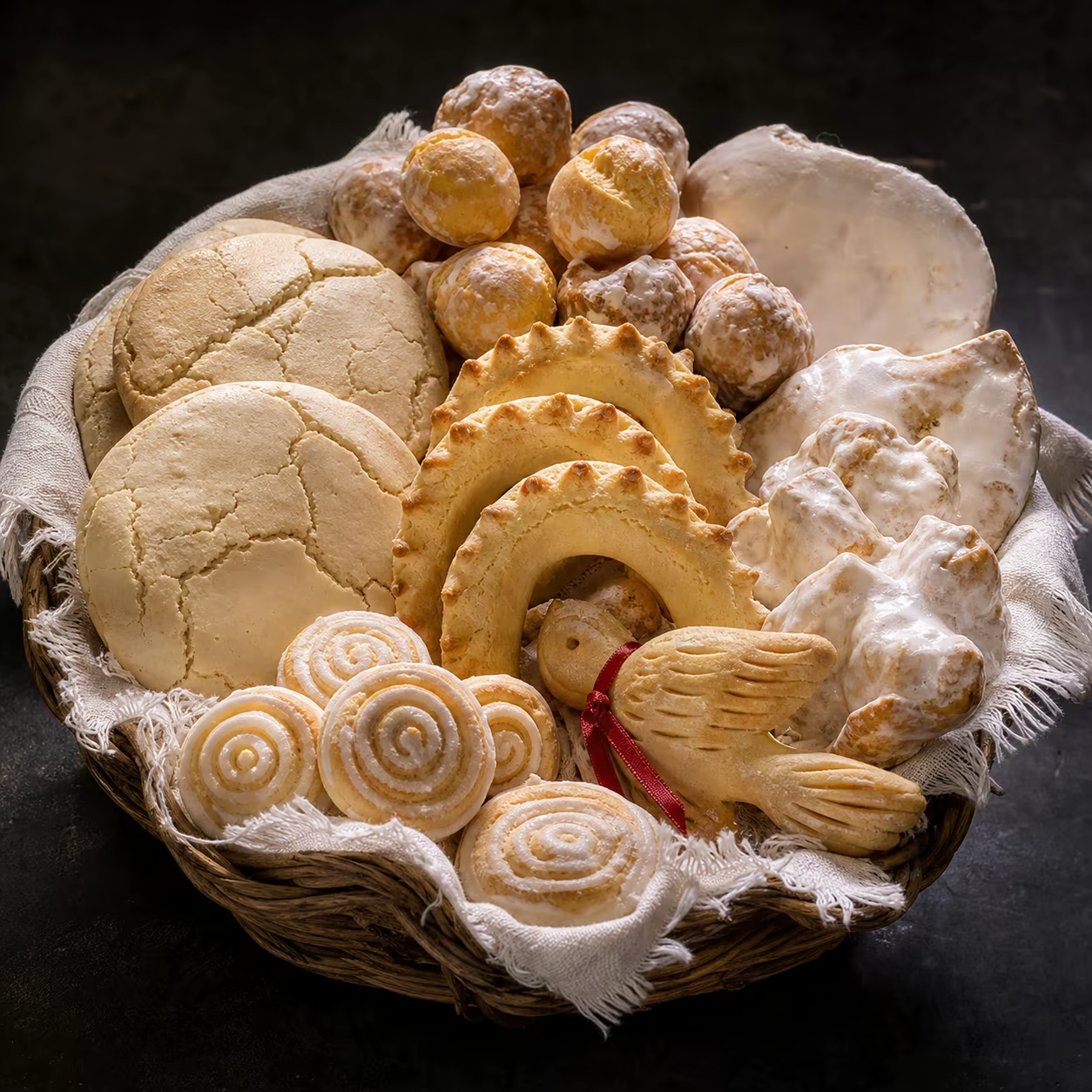
Doçaria de Feira de Vouzela is not one cake but a family of fairground sweets based on wheat flour, sugar and eggs. It includes Caladinhos, Bolinhos de Gema, Belindres or Melindres, Raivas de Fataunços, Cavacas, Passarinhas and Beijinhos, each with its own shape, texture and finish.
Caladinhos are large discs with a crisp crust and fluffy lemony centre; Belindres are smaller, dry and firm; Bolinhos de Gema carry white-syrup patterns; Raivas form horseshoes with toasted points. Cavacas can reach 35 centimetres and are syrup-coated, Passarinhas are cut into bird shapes, and Beijinhos are small, hollow and glazed. Mastering the wood-fired oven temperature is crucial throughout the family.
- wheat flour
- sugar
- eggs
- butter
- cinnamon
- lemon
- salt
Dry crisp textures predominate, with egg-and-sugar sweetness and varying notes of lemon and cinnamon.
Caladinhos, Bolinhos de Gema, Belindres/Melindres, Raivas de Fataunços, Cavacas, Passarinhas and Beijinhos form the documented repertoire.
At pastry shops in Vouzela and at the municipality's fairs, festivals and pilgrimages. Contemporary showcases in Fataunços continue to feature caladinhos, gemas, belindres, cavacas and beijinhos; Passarinhas appear mainly on festive days.
Espresso, tea or Dão red wine.
The sale of these sweets at local fairs is documented between the late 19th and early 20th centuries; photographs of the 1904 Feast of Our Lady of the Castle already show women carrying confectionery baskets. A locally transmitted hypothesis—not a documentary fact—attributes the recipes' spread to two sisters connected with a Poor Clare convent in Porto after 1834. Production expanded after 1940 and became an economic activity of particular importance to women.
Well documented
Identity supported by institutional, specialist or corroborating sources.
- tradicional.dgadr.gov.pt/pt/cat/doces-e-produtos-de-pastelaria/1092-docaria-de-feira-de-vouzela (opens in a new tab)
- mapadossegredosgastronomicos.visitviseudaolafoes.pt/wp-content/uploads/2023/05/CIMVDL-MAPA-GASTRO-roteiro-AF-WEB-single-pages_compressed.pdf (opens in a new tab)
- cm-vouzela.pt/fatauncos-leva-mostra-de-docaria-de-feira-a-festa-de-outono-de-serralves/ (opens in a new tab)
Pastries from here — The Centre
 Catalogue image
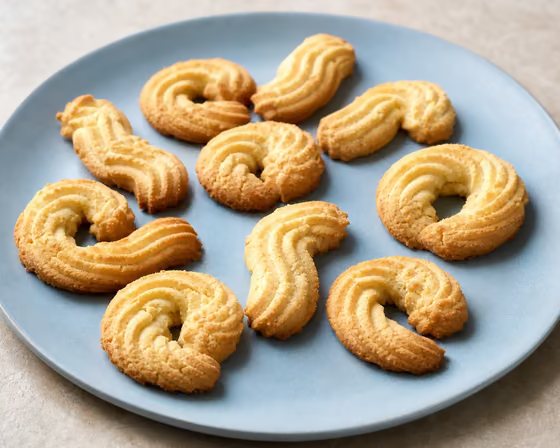
 Ílhavo Piped Butter Biscuits
Regional buttery biscuits piped into deeply ridged rings and curves.
The Centre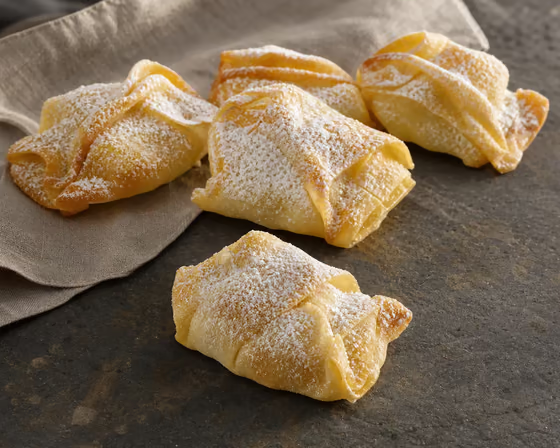 Catalogue image
 Saint Friar Gil’s Saddlebags
The small saddlebag-shaped pastry created at Vouzela’s vocational school and recognised as an innovative sweet.
The Centre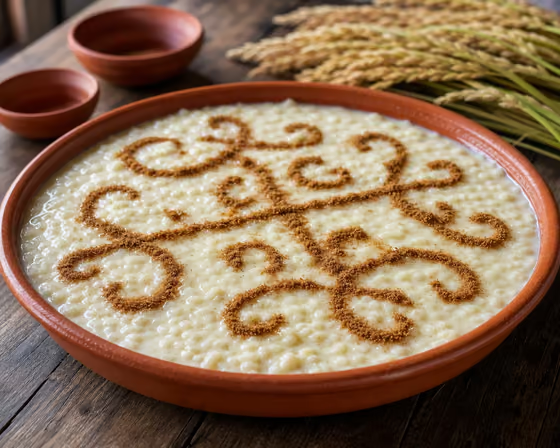 Catalogue image
 Baixo Mondego Rice Pudding
Mondego Carolino rice and Gândara milk, traced with cinnamon.
The Centre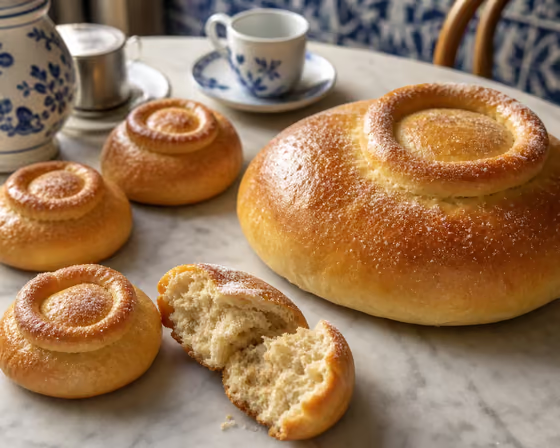 Catalogue image
 Arrufada de Coimbra
Coimbra's light, fragrant sweet bread, given by godparents at Easter.
The Centre