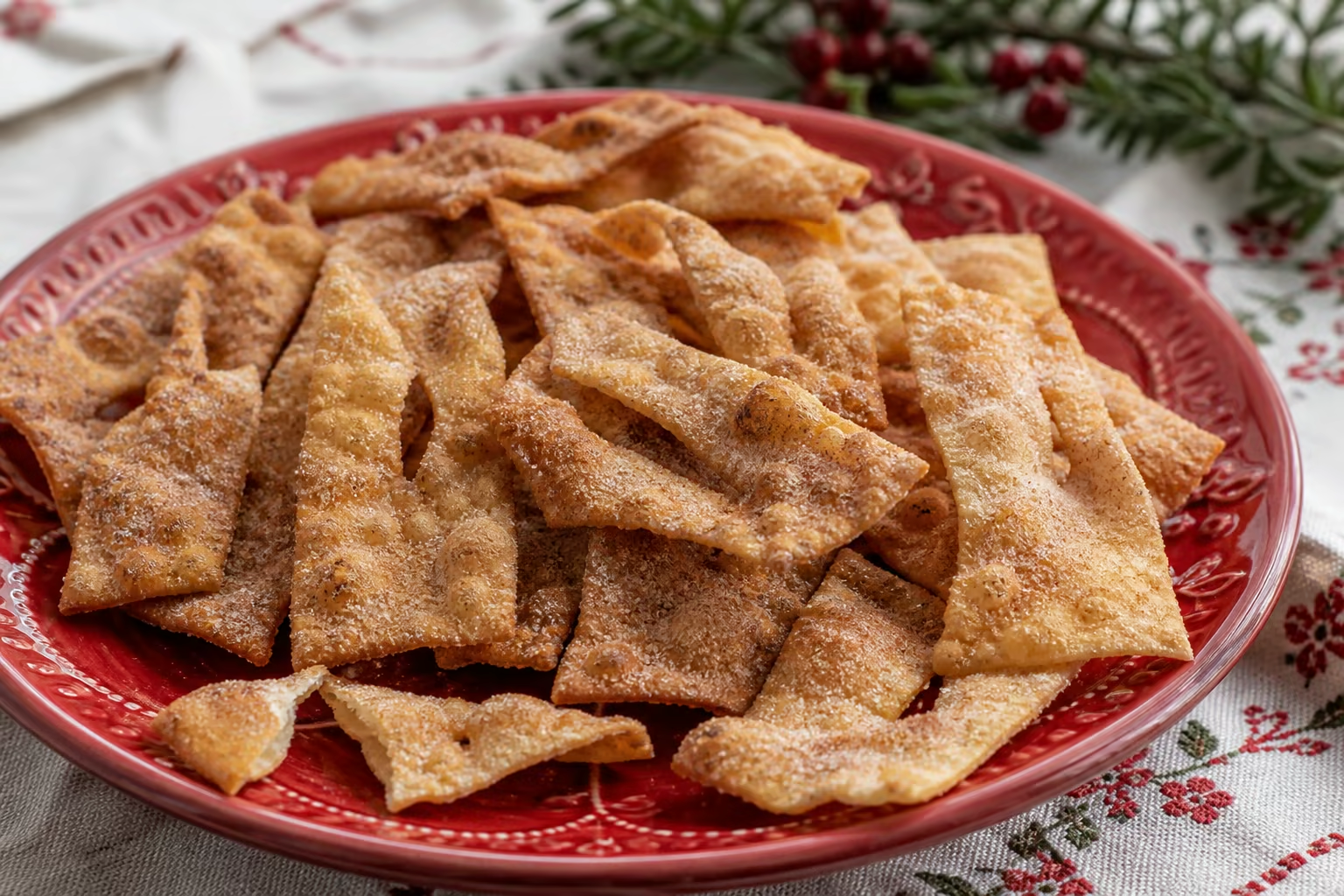
Coscorões
Also known as: Alentejo filhoses · Coscoréis · Arganil coscuréis
Ribbons of dough fried until they shatter, dusted with sugar and cinnamon or bathed in honey.
- Origin
- Festive fried sweet found across Portugal, especially in Alentejo and the interior
- Place
- Portugal · strong tradition in Alentejo and the interior
- Region
- Nationwide
- Category
- Fried Sweets
- Season
- Christmas
- Evidence
- Well documented
Coscorões are thin strips of dough, slashed and looped open, then dropped into bubbling oil until they turn gold and crisp to a glassy fragility. Still hot, they are tossed in cinnamon sugar or drenched in a honey syrup, and from there they rise to the top of every Christmas platter across the Alentejo.
This is home baking born of a deep pot, not of the patisserie counter. They are fried in great batches on the eves of the feast, the kitchen thick with sweet steam and the floor dusted with sugar. Every sheet comes out irregular, with curled edges and blisters, because no two hands stretch the dough quite the same.
In the Alentejo they share the table with filhoses and azevias, but stand apart for their brittle lightness: they snap dry between the teeth rather than yielding soft like their cousins.
- Wheat flour
- Eggs
- Olive oil (or lard)
- Aguardente (brandy)
- Lemon and orange zest
- Sugar
- Cinnamon
- Honey (for the syrup version)
Crisp and almost hollow-light, they break with a dry snap and dissolve on the tongue. The cinnamon sugar lends warmth and a restrained sweetness; the honey version is denser and stickier. Underneath, the citrus aroma and a whisper of brandy cut the fat and keep the dough fresh and never cloying.
The classic split is between those rolled in cinnamon sugar and the moister ones glazed with honey syrup. Some bake them instead of frying for a lighter, less oily result, and the shape shifts too: plain strips, looped bows, or rectangles slit down the middle. From place to place the name and the hand change — coscoréis, filhoses — but the gesture stays the same.
These are a home-kitchen sweet more than a shop one, and the best version is almost always the one made at home over the Christmas season. Look for them at Alentejo markets and Christmas fairs, in regional confectionery houses, and in some traditional bakeries of the interior, where they pile up generously through December.
They call for a glass of fortified wine — moscatel, an Alentejo liqueur wine — or an aged aguardente. At the Christmas breakfast they go nicely with a strong coffee or a cup of tea.
Coscorões belong to Portugal's family of festive fried sweets made from rolled dough that is cut or twisted and finished with cinnamon sugar or honey. The consulted sources show them in Alentejo and several inland regions; DGADR, for example, includes them among the specialities of Vila Nova de Foz Côa. They should therefore not be treated as exclusive to one region.
They are associated chiefly with Christmas, though they also appear at Carnival and other celebrations depending on local practice. General claims of Arab or medieval origin circulate in popular accounts, but no specific historical documentation was found establishing when or by what route this recipe entered Portugal. This entry preserves the verifiable distribution and culinary practice without turning a broad hypothesis about Iberian frying into a proven genealogy for the sweet.
Well documented
Identity supported by institutional, specialist or corroborating sources.
- vortexmag.net/coscoroes/ (opens in a new tab)
- docesconventuais.wordpress.com/2011/05/02/coscoroes/ (opens in a new tab)
- outsider.pt/coscoroes-alentejanos-receita-tradicional-e-muito-facil-de-fazer/ (opens in a new tab)
- mulherportuguesa.com/receita/coscoroes-alentejo/ (opens in a new tab)
- diariodistrito.sapo.pt/filhos-coscoroes-velhoses-ou-malassadas-sao-presenca-na-consoada/ (opens in a new tab)
- eubrdialogues.com/sites/default/files/acoes/documentos/049xlix_lista_de_produtos_tradicionais_portugueses_v_19_0.pdf (opens in a new tab)
- tradicional.dgadr.gov.pt/pt/cat/doces-e-produtos-de-pastelaria/1135-doces-de-amendoa-ou-doces-de-amendoa-de-mos-do-douro (opens in a new tab)
Pastries from here — Nationwide
 Catalogue image
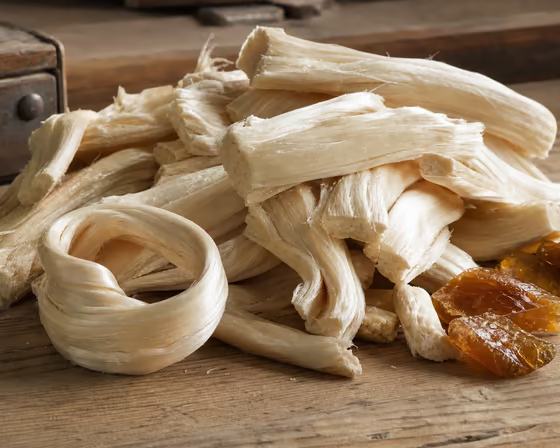
 Alféloa
Sugar or molasses cooked to a hard stage and worked until pale.
Nationwide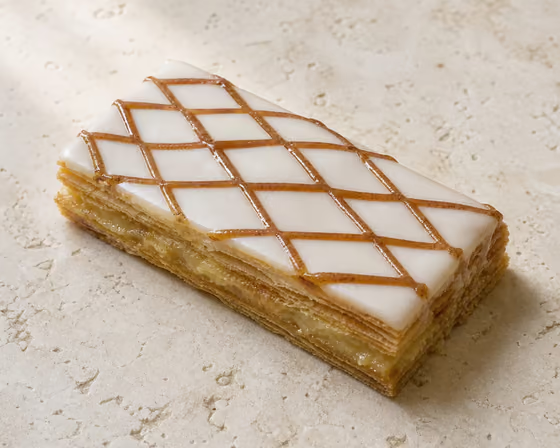 Catalogue image
 Portuguese Gila Allumette
A rectangular puff pastry with cream, gila and cinnamon beneath diamond-patterned royal icing.
Nationwide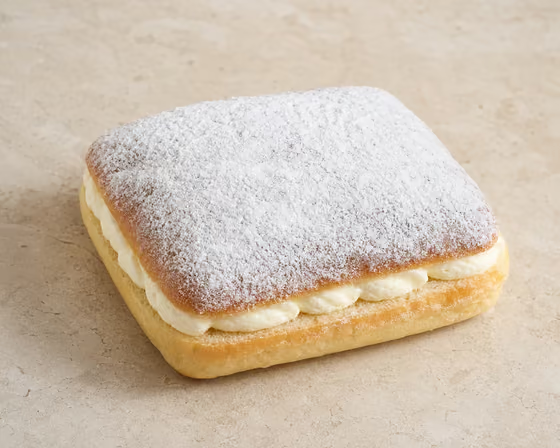 Catalogue image
 Portuguese Brioche Almofada
Light brioche dough, fresh buttercream and icing sugar.
Nationwide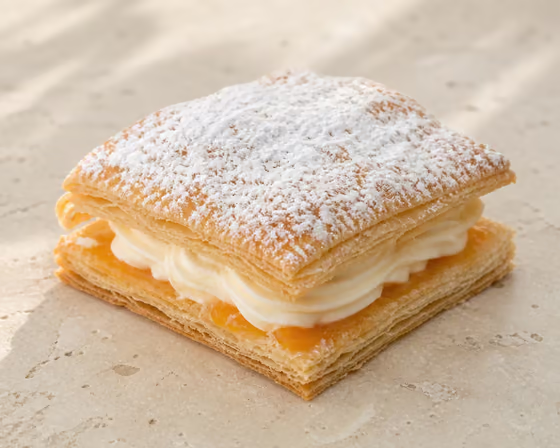 Catalogue image
 Portuguese Puff-Pastry Almofada
Puff pastry with white cream, egg sweet and icing sugar—the laminated Almofada variant.
Nationwide