Sugar-Coated Pine Nuts
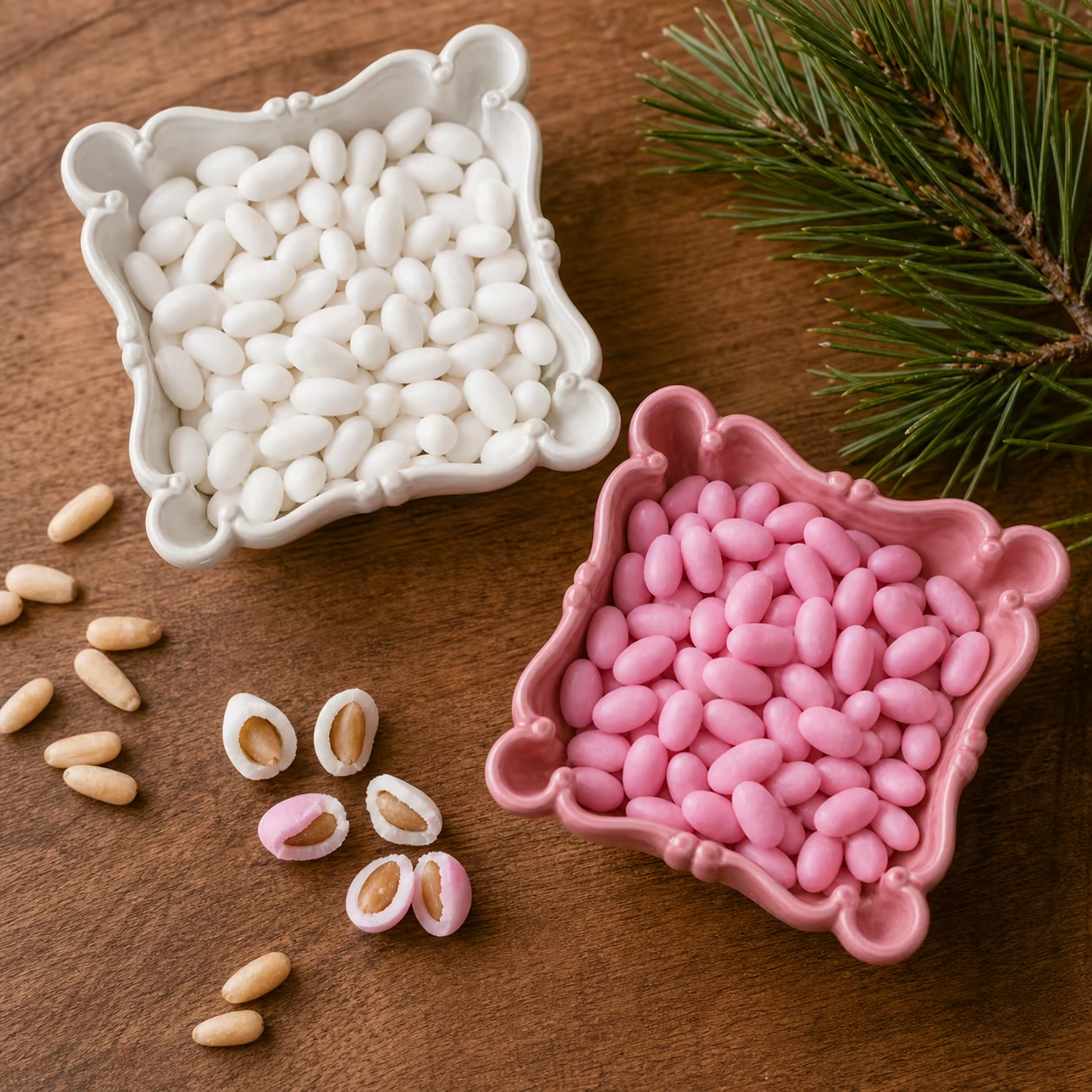
Pine nuts built up with successive layers of white or pink sugar.
- Origin
- Alcácer do Sal · Sado Valley, Alentejo
- Place
- Alcácer do Sal · Sado Valley
- Region
- The Alentejo
- Category
- Festive & Seasonal
- Season
- Easter; also available year-round
- Evidence
- Well documented
Confeitos de Pinhão are tiny oval dragees that retain roughly the elongated size and shape of a pine nut. White or pink and traditionally sold mixed, they hide a usually toasted pine nut beneath a smooth sugar shell.
The pine nuts are floured and placed in an oscillating pan. Repeated additions of sugar syrup build concentric layers until the desired size is reached. The exact formula and control of the syrup remain specialist confectioners' knowledge.
- pine nuts
- sugar
- flour
- food colouring
A hard, intensely sweet shell giving way to a small toasted, resinous and buttery centre.
Traditional dragees are white and pink; the pine nut may be raw or toasted, though toasted is common.
At confectioners, markets and regional-food shops in Alcácer do Sal and the Sado Valley, especially at Easter. Portuguese commercial versions are also listed by national retailers, but stock varies and does not prove production in Alcácer; confirm provenance and availability.
Espresso or pine-nut liqueur.
Around Alcácer do Sal, where pine nuts are known as ‘white gold’, these sweets became associated with Easter. DGADR records that they were given to godchildren and used to honour so-called contracts after the Alleluia bells rang; originally white, they are said to have later gained a final pink layer. A publication specialising in Portugal's forests independently confirms the basic identity: Easter dragees that replace the usual almond with a pine nut.
Well documented
Identity supported by institutional, specialist or corroborating sources.
- tradicional.dgadr.gov.pt/pt/cat/doces-e-produtos-de-pastelaria/293-confeitos-de-pinhao (opens in a new tab)
- florestas.pt/descobrir/pinhao-o-ouro-branco-que-e-um-luxo-da-floresta/ (opens in a new tab)
- avidaportuguesa.com/pt/loja/confeitos-de-pinhao-armel (opens in a new tab)
Pastries from here — The Alentejo
 Catalogue image
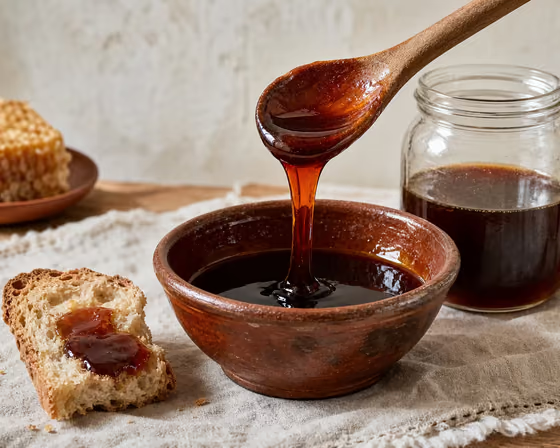
 Portuguese Água-mel Syrup
Water that recovers honey from combs after extraction, filtered and reduced for hours to 70–77° Brix.
The Alentejo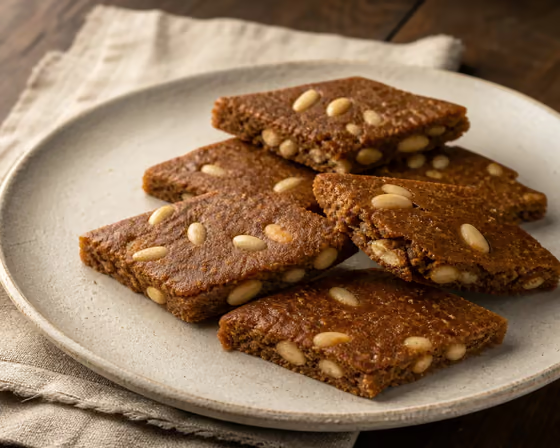 Catalogue image
 Alcomonias
Toasted coarse wheat flour, honey and pine nuts spread and cut into diamonds.
The Alentejo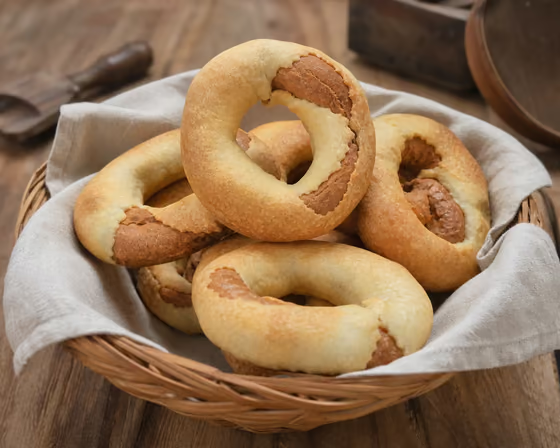 Catalogue image
 Amoreiras-Gare Alcôncoras
A large circular honey-and-olive-oil biscuit born from Amoreiras-Gare's promise-pole tradition.
The Alentejo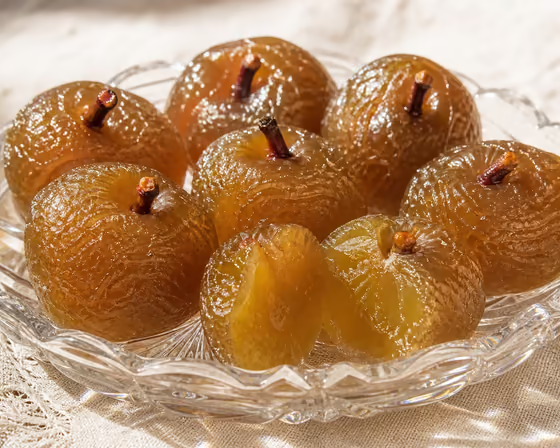 Catalogue image
 Elvas Plums
Protected Rainha Cláudia Verde greengages sold fresh, dried or candied—the sweet form requires at least seven days of slow candying.
The Alentejo