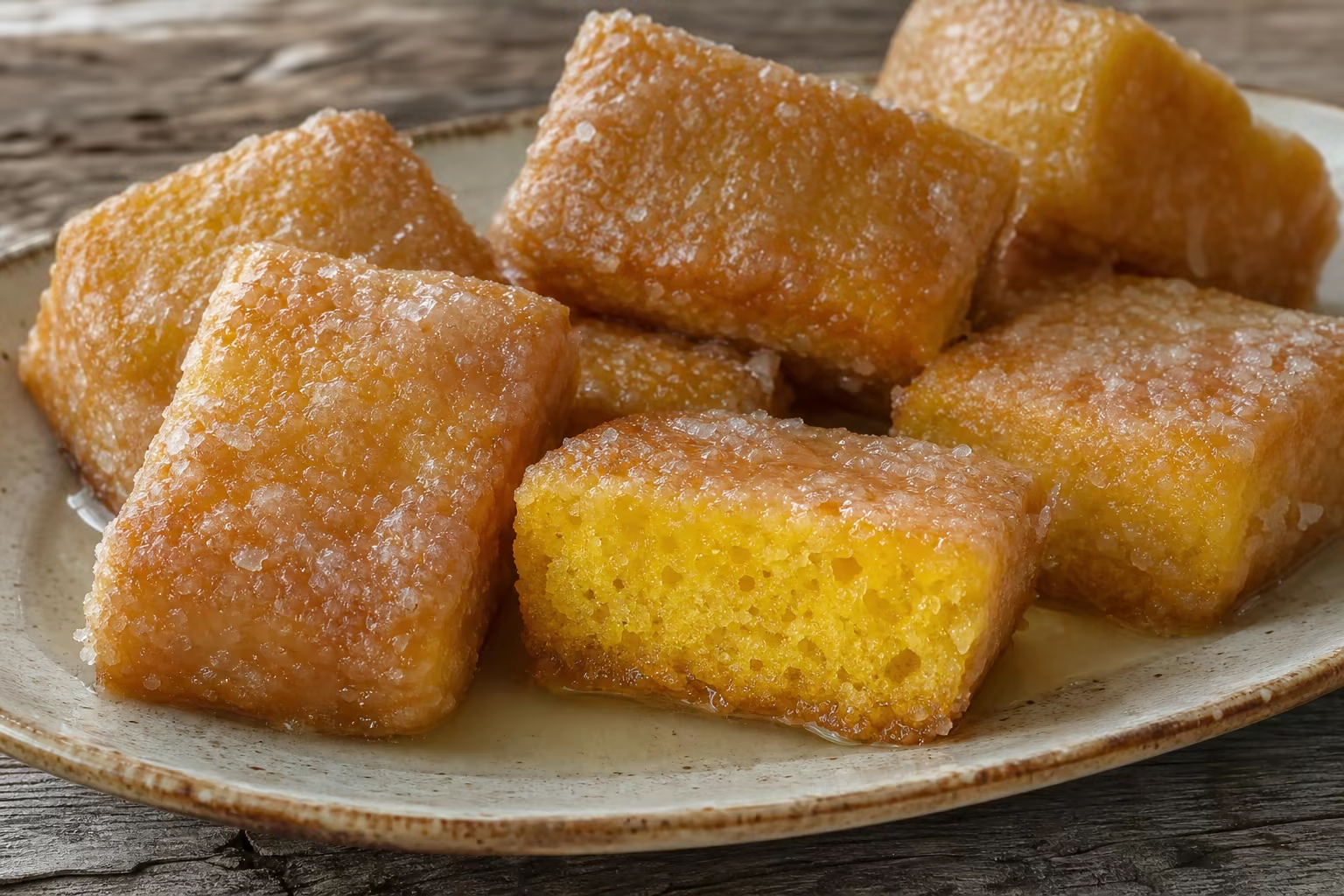
Resende Cavacas
Also known as: Resende Cavacas with syrup
Sponge cake drenched in syrup, dressed in white sugar.
- Origin
- Resende, Beira/Douro · convent and pilgrimage confectionery, documented since the 19th century
- Place
- Resende
- Region
- The North
- Category
- Cakes & Sweet Breads
- Season
- Year-round, especially at fairs and pilgrimages
- Evidence
- Well documented
DGADR describes Cavacas de Resende as small cakes about 5 × 2.5 × 2 cm, made from whole eggs, yolks, sugar and flour. After baking they receive a coating of cooked sugar syrup and flour, which produces a white exterior contrasting with the yellow centre.
The institutional source does not describe slices from a large sheet cake or pieces dripping with aromatic syrup. Modern recipes published under the same name offer mutually incompatible formulas; this page therefore retains only DGADR's documented small coated cavaca as the reference identity.
- Whole eggs
- Egg yolks
- Sugar
- Flour
- Water for the syrup
Very sweet and moist, the fluffy sponge crumb contrasting with a white sugar crust that crackles at the first bite, all underpinned by a syrup scented with cinnamon and lemon.
The exact traditional proportions are unpublished. Modern formulas under this name diverge in flour, shape and finish and should not be merged automatically into one canonical recipe. Nor should these be confused with the hollow, independently identified Cavacas das Caldas.
Found in traditional bakeries and confectioners around the municipality of Resende, in the Viseu district, and at regional fairs and pilgrimages, where they are still sold handmade and wood-oven baked.
They call for a strong coffee or tea to cut the sweetness; a glass of Moscatel or Port also sees them off nicely at the end of a meal.
DGADR records that Cavacas de Resende have been known ‘since time immemorial’, notes the fame of Cavacas do Rópia and reproduces a late-19th-century account of sweet-makers selling them to pilgrims. This supports their historical connection with fairs and pilgrimages, but provides no creation date.
The same record says makers' proportions and exact method proved practically impossible to obtain. It documents only very fresh eggs, a hand-operated device called a banco and baking in the wood-fired oven used for maize bread. The modern legend of a wedding cake preserved during a plague was not found in a sufficiently strong source and is not treated here as factual history.
Well documented
Identity supported by institutional, specialist or corroborating sources.
- tradicional.dgadr.gov.pt/pt/cat/doces-e-produtos-de-pastelaria/747-cavacas-de-resende (opens in a new tab)
- grafe-e-faca.com/doces/bolos/cavacas-de-resende/ (opens in a new tab)
- receitaseculinaria.pt/2022/03/cavacas-de-resende.html (opens in a new tab)
Pastries from here — The North
 Catalogue image
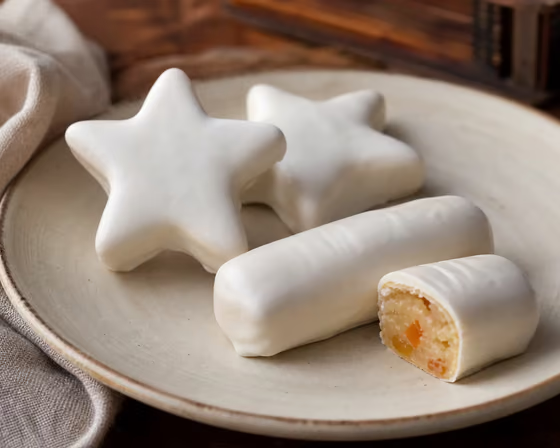
 A Bella Queijadinha de Barcelos
A white star of almond, preserved fruit and family memory.
The North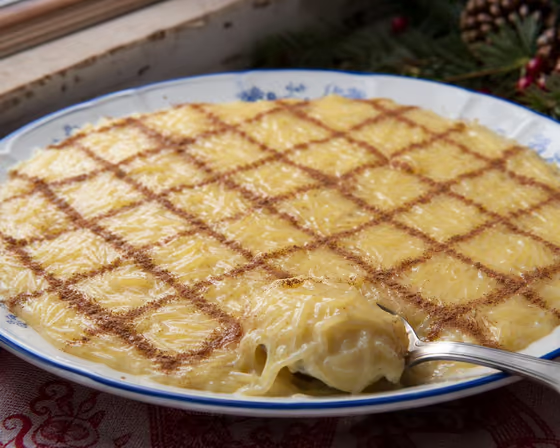 Catalogue image
 Sweet Vermicelli
Fine wheat threads simmered in milk and yolk, scored with cinnamon.
The North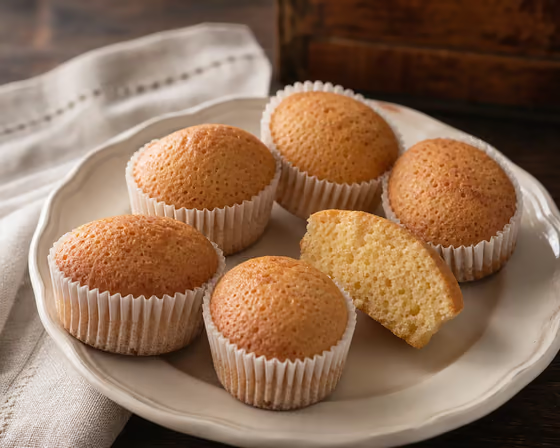 Catalogue image
 Amarantinos
Small egg, lemon and cinnamon cakes whose historical identity is not told consistently by the sources.
The North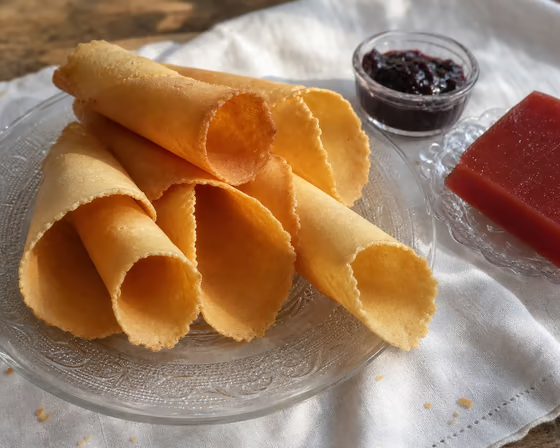 Catalogue image
 Vieira do Minho Cone Wafers
Paper-thin crisp wafers, iron-baked and rolled by hand while still hot.
The North