Pinhel Cavacas
The legacy of the Poor Clares, crowned in sugar, in the heart of the Beira.
- Origin
- 18th century · Convent of the Poor Clares of Pinhel
- Place
- Pinhel
- Region
- The Centre
- Category
- Convent Sweets
- Season
- Year-round
- Evidence
- Well documented
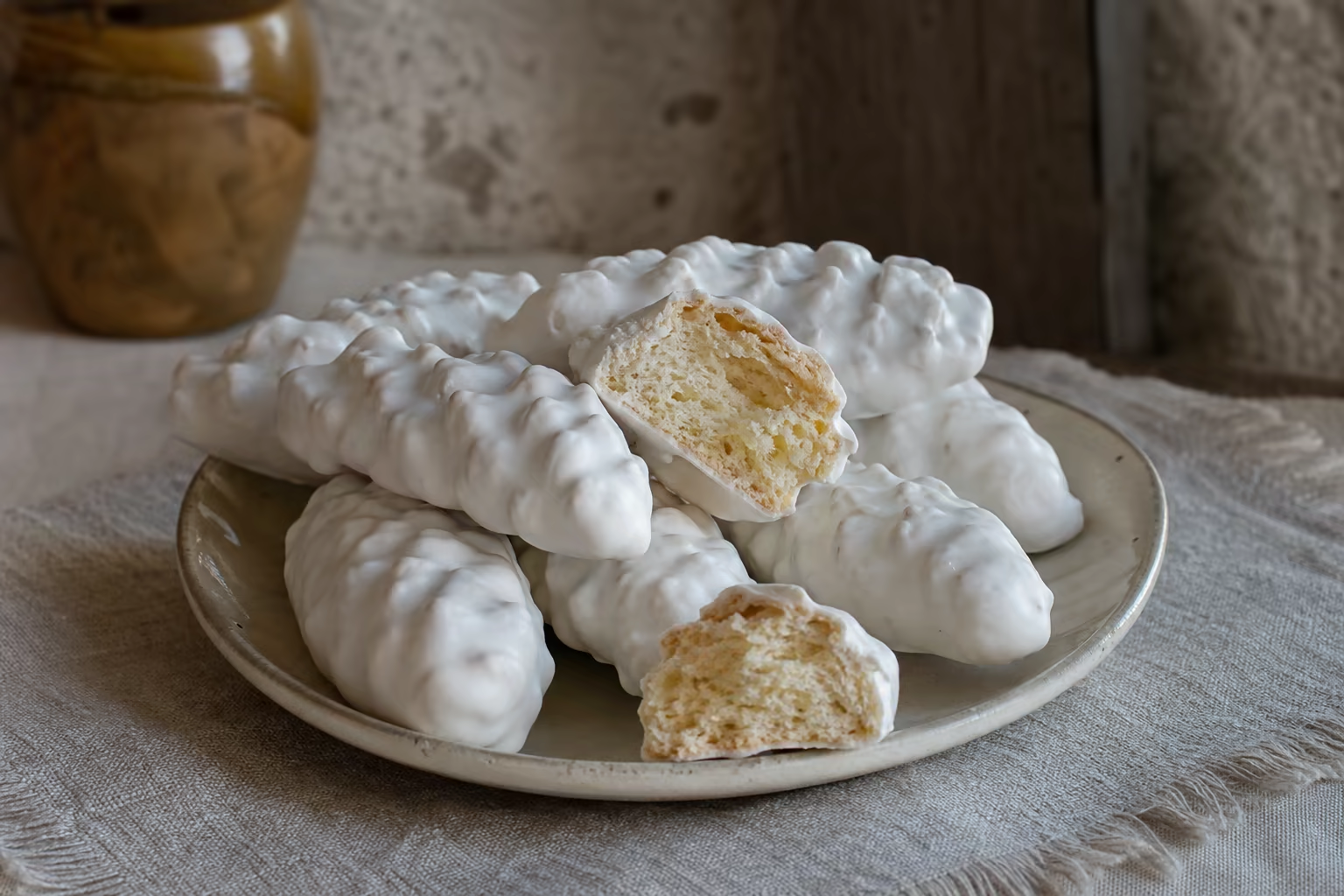
Cavacas de Pinhel are a convent sweet from the Beira Interior: small cakes of egg, flour and sugar that swell in the oven until they take on the wrinkled, beaked shape of a pinecone. Over that golden crust sits a coating of egg white beaten with icing sugar, which sets hard and matte — a chalky white that cracks sweetly at the first bite.
Inside they are light and dry, almost crumbling away, with that taste of fresh egg that betrays their convent origin. They contain no yeast or chemical raising agents — only the long beating of the batter gives the cavaca its air and height.
They are eaten at breakfast or with an afternoon snack, beside a coffee, and keep well in a closed tin, holding for days the sweetness that the cloistered nuns left as a bequest to the town.
- Fresh eggs
- Egg yolks
- Wheat flour
- Sugar
- Lemon zest
- Aguardente (grape brandy)
- Icing sugar (glaze)
- Egg whites (glaze)
A crisp, light crust over a dry, almost brittle crumb, with a frank taste of egg and a hint of lemon; the white glaze is sweet, hard and crackly, contrasting with the airy delicacy within.
Cavacas are found across Portugal — such as those of Caldas da Rainha — but the Pinhel version is set apart by its pinecone shape and its thick glaze of egg white and sugar; at home, bakers vary the batter with more or less aguardente and lemon.
They can be bought at the production unit in Pinhel's industrial zone, at the municipal tourism office, and at regional fairs. Production is artisanal and in small batches, so it is worth ordering ahead.
A strong coffee at breakfast, or a glass of moscatel or fortified Beira wine in the late afternoon.
For more than two centuries Pinhel was home to a convent of Poor Clares, and it was in their cloistered kitchens that the town's finest confectionery was born. The cavacas are linked to the reign of Dom José I, the era when the town was raised to city status and made the seat of a Diocese (1770), and the recipe passed down the generations guarded as a family secret.
When the religious community vanished, the tradition reached our day through domestic hands: the convent recipe was handed to someone raised among the nuns and went from there from one household to the next. In 2019 the Cavacas de Pinhel stood as a candidate for the "7 Sweet Wonders of Portugal", backed by the municipality, which has promoted the sweet as a gastronomic emblem of the district.
Well documented
Identity supported by institutional, specialist or corroborating sources.
- beira.pt/portal/noticias/turismo/cavacas-de-pinhel/ (opens in a new tab)
- cm-pinhel.pt/visitar-pinhel/beber-e-saborear/ (opens in a new tab)
- beira.pt/portal/noticias/sociedade/doceira-70-anos-unica-pinhel-as-tradicionais-cavacas-receita-conventual/ (opens in a new tab)
- ointerior.pt/regiao/cavacas-de-pinhel-candidatadas-as-sete-maravilhas-doces-de-portugal/ (opens in a new tab)
- jornalaguarda.com/regiao/pinhel/cavacas-sao-feitas-a-partir-de-receita-das-freiras-clarissas/ (opens in a new tab)
- raulvalente.pt/comidas/doces/cavacas-de-pinhel/ (opens in a new tab)
Pastries from here — The Centre
 Catalogue image
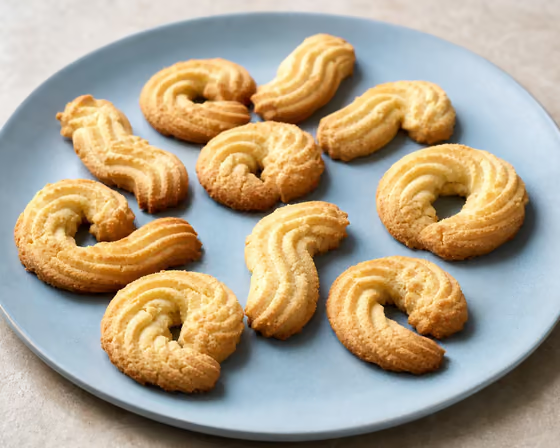
 Ílhavo Piped Butter Biscuits
Regional buttery biscuits piped into deeply ridged rings and curves.
The Centre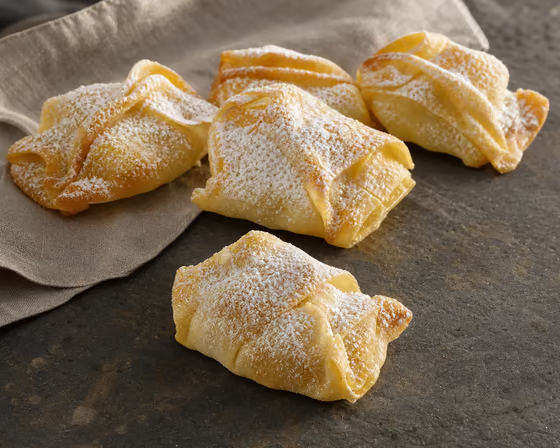 Catalogue image
 Saint Friar Gil’s Saddlebags
The small saddlebag-shaped pastry created at Vouzela’s vocational school and recognised as an innovative sweet.
The Centre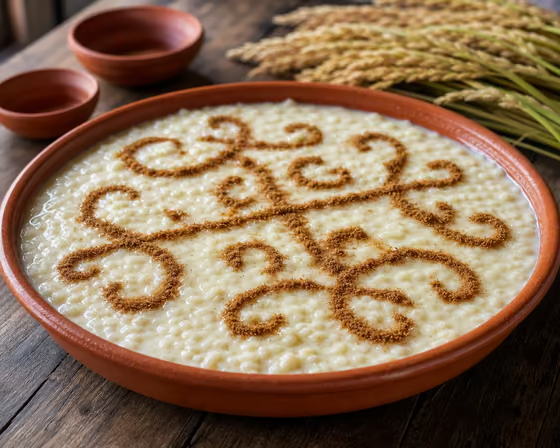 Catalogue image
 Baixo Mondego Rice Pudding
Mondego Carolino rice and Gândara milk, traced with cinnamon.
The Centre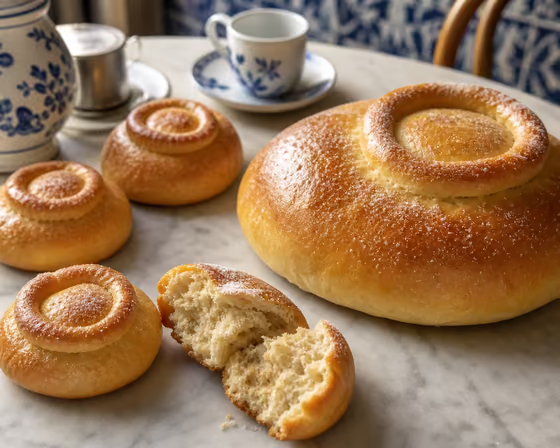 Catalogue image
 Arrufada de Coimbra
Coimbra's light, fragrant sweet bread, given by godparents at Easter.
The Centre