Arouca Cavacas
Also known as: Arouca Cavacas · Arouca Sugar-glazed Cakes
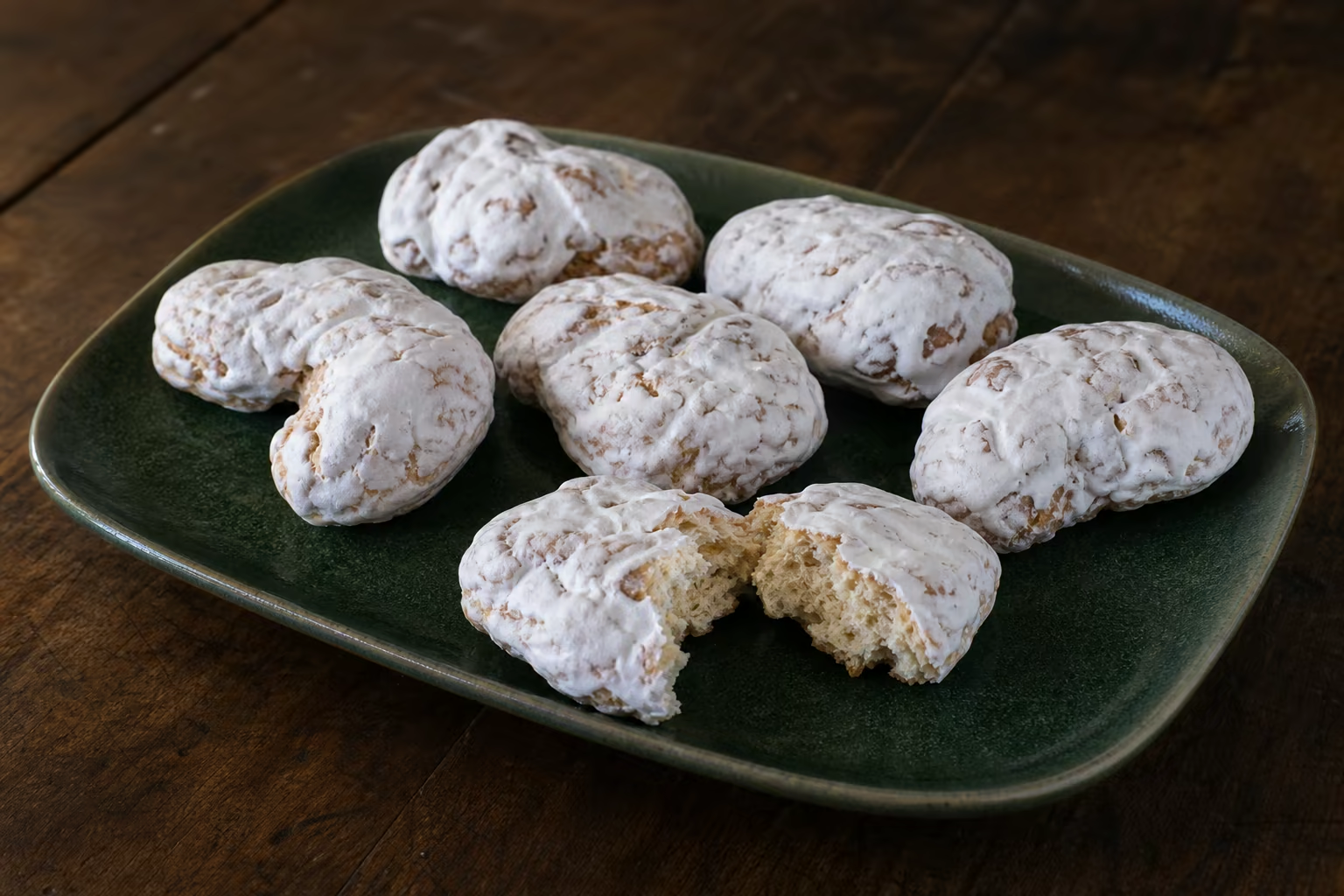
Oval regional cakes, wrinkled by a wood-fired oven and covered with a white sugar shell.
- Origin
- Arouca · Aveiro district
- Place
- Arouca
- Region
- The North
- Category
- Cakes & Sweet Breads
- Season
- Year-round
- Evidence
- Well documented
Cavacas de Arouca are individual oval, irregular cakes: low in profile, deeply wrinkled and coated in white sugar icing that dries in patches. Brown ridges of baked dough show through cracks in the glaze, giving every piece a different pattern.
The locally marketed version is made with flour, eggs, olive oil, cinnamon and sugar, with no yeast or preservatives, and baked in a wood-fired oven. Its interior is dry and airy while the coating adds a sugary snap. It should not be confused with the large ring-shaped cavaca also found in Portuguese assortments.
- wheat flour
- eggs
- olive oil
- sugar
- cinnamon
Sweet and dry, with warm cinnamon and olive-oil notes and a contrast between airy crumb and crisp coating.
The handmade shape is never perfectly regular: some pieces are longer or rounder and coatings vary in thickness. The Arouca version retains its deep wrinkles and discontinuous white shell.
At Arouca's regional sponge-cake and sweet shops, including family producers in Burgo, and at municipal food fairs.
Espresso, lemon tea or a small glass of Port.
Arouca Municipality and Arouca Geopark include cavacas among the municipality's reference regional sweets, alongside pão-de-ló and melindres. Unlike the convent repertoire associated with the Bernardines, local sources classify these three specialities as regional confectionery. Production remains connected with family businesses in Arouca and wood-fired baking.
Well documented
Identity supported by institutional, specialist or corroborating sources.
- cm-arouca.pt/visitar/a-mesa/ (opens in a new tab)
- aroucageopark.pt/gastronomia-e-vinhos/ (opens in a new tab)
- aroucadigital.pt/pt/marketplace/produtos/cavacas (opens in a new tab)
- cm-terrasdebouro.pt/images/noticias/2023/3/12/fdsg23.pdf (opens in a new tab)
Pastries from here — The North
 Catalogue image
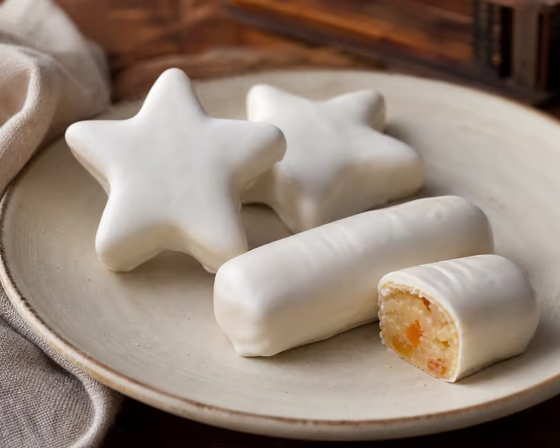
 A Bella Queijadinha de Barcelos
A white star of almond, preserved fruit and family memory.
The North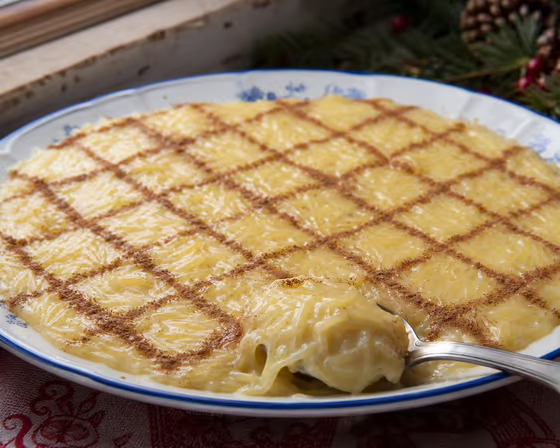 Catalogue image
 Sweet Vermicelli
Fine wheat threads simmered in milk and yolk, scored with cinnamon.
The North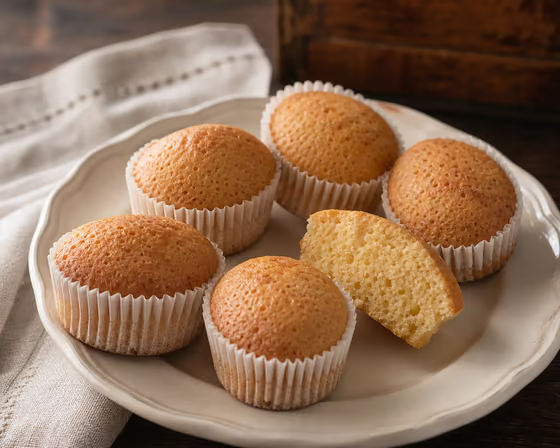 Catalogue image
 Amarantinos
Small egg, lemon and cinnamon cakes whose historical identity is not told consistently by the sources.
The North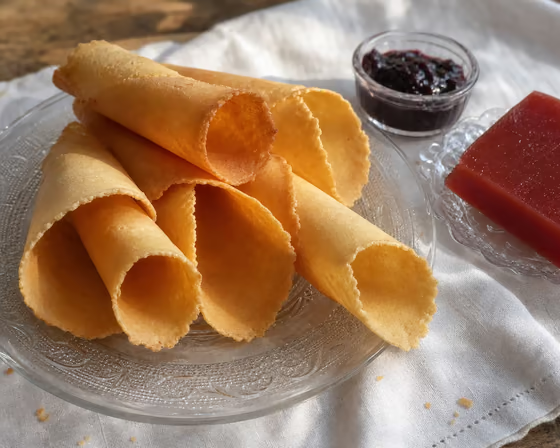 Catalogue image
 Vieira do Minho Cone Wafers
Paper-thin crisp wafers, iron-baked and rolled by hand while still hot.
The North