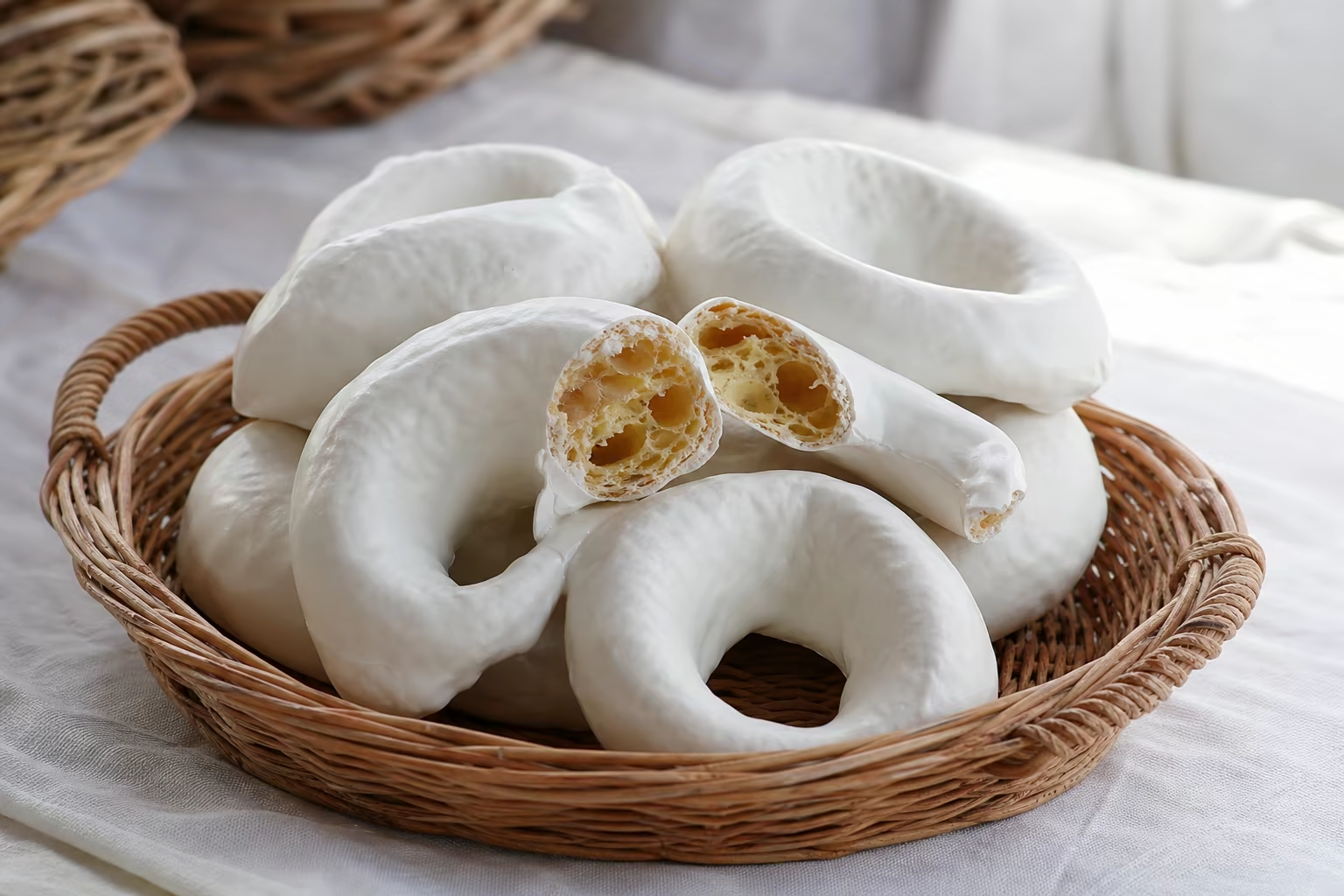
Cavacas das Caldas
Also known as: Cavacas · Caldas da Rainha Cavacas · Beijinhos das Caldas
Hollow, crackly shells dressed in glossy white sugar.
- Origin
- Caldas da Rainha, Oeste — documented from the late 19th century
- Place
- Caldas da Rainha
- Region
- The West
- Category
- Cakes & Sweet Breads
- Season
- Year-round
- Evidence
- Well documented
Cavacas das Caldas are small, concave hollow shells, baked from an egg-rich batter that puffs in the oven like a popover and dries to a brittle, crisp interior. Straight from the oven they are coated in a thick syrup of sugar and egg white that sets into a white, opaque, crackly crust.
Contrast is everything: the hard sugar shell snaps with an audible crack, and beneath it lies a light, airy, almost fragile structure that dissolves on the tongue. They are the signature sweet of Caldas da Rainha, sold for over a century beside the thermal hospital and carried home as a souvenir by those who came to take the waters.
For all their austere look and immaculate whiteness, they are surprisingly delicate — a dry cake that lives on texture as much as on flavour.
- Flour
- Eggs (plenty)
- Olive oil
- Aguardente (grape spirit)
- Sugar
- Egg whites (for the glaze)
Very sweet on the surface, where the sugar shell shatters into shards, and almost neutral within, with an eggy backbone and a faint warmth of aguardente. The texture is the star: crisp outside, hollow and dry inside, light as air.
The best-known variation is the beijinho das Caldas, a smaller version of the same cavaca. There is also a distinction between cavacas finas — sold in pastry shops, smaller and double-glazed in sugar — and cavacas saloias, given a single sugar bath with a more pronounced lemon note and typical of the region's fairs. Many modern recipes swap the olive oil for margarine, but the essentials stay the same: a batter that puffs and a hard white coating.
In Caldas da Rainha, especially in the historic centre between the Largo do Hospital Termal and the Praça da Fruta, at the town's pastry shops and grocers. The real cavaca is hollow, light and topped with an opaque white coating that cracks — be wary of any that feel heavy or merely varnished.
A strong coffee or a cup of tea, to cut the intense sweetness of the glaze. The more indulgent pair them with a small glass of moscatel or aguardente.
Portugal's traditional-products registry traces the cavaca das Caldas back to around 1874, when D. Jesuína da Conceição Garcia opened a shop on Rua do Hospício advertising "the genuine cavacas das Caldas". The business stayed in the family — a niece in 1919, a granddaughter in 1923 — and lies behind some of the town's historic houses, such as Pastelaria Machado.
Alongside this documented account runs a much-repeated local legend that credits the sweet's fame to two sisters from the São Gregório/Fanádia area, Rosalina and Gertrudes Carlota, said to have been court confectioners who, after the assassination of King Carlos I (1908) and the coming of the Republic, returned home and sold cavacas by the thermal hospital. Either way, it was the spa visitors who flocked to Caldas for its waters who carried the cavacas' reputation across the country.
Like many Portuguese regional sweets, the cavaca is built on an abundance of eggs and sugar — a formula shared with other cavacas found around the country, but here given a distinct identity. It is today listed in Portugal's inventory of traditional products, though without DOP or IGP certification.
Well documented
Identity supported by institutional, specialist or corroborating sources.
- tradicional.dgadr.gov.pt/pt/cat/doces-e-produtos-de-pastelaria/171-cavacas-das-caldas (opens in a new tab)
- sapo.pt/saborear/gastronomia/artigos/cavacas-o-doce-que-e-uma-das-imagens-de-marca-das-caldas-da-rainha (opens in a new tab)
- gocaldas.com/en/local-dry-cakes-of-caldas-da-rainha-cavacas/ (opens in a new tab)
- cozinhacomrosto.pt/as-cavacas-de-caldas-da-rainha/ (opens in a new tab)
- gramascomsabor.com/2018/03/29/hitoria-e-receita-das-cavacas-de-caldas-da-rainha/ (opens in a new tab)
Pastries from here — The West
 Catalogue image
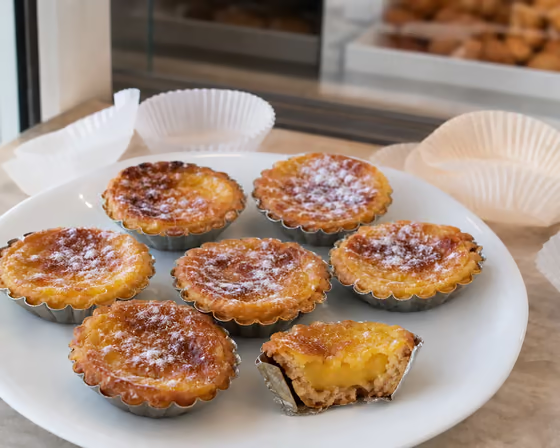
 Friends of Peniche
The sweet named after friends you should not trust.
The West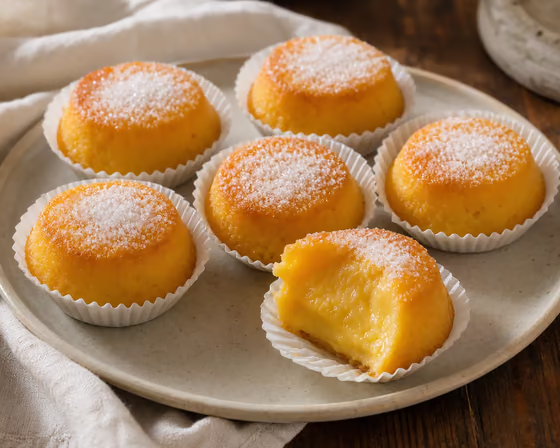 Catalogue image
 Areias Brancas
Small yolk-and-almond pudding cakes, named by the coast and covered with white sugar.
The West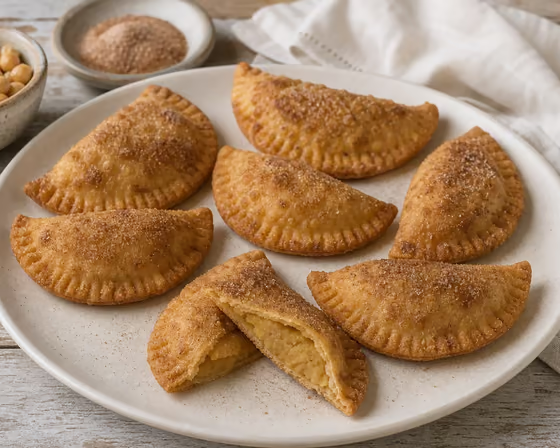 Catalogue image
 Peniche Chickpea Azevias
Thin fried half-moons with a sweet, creamy chickpea, almond and egg-yolk filling.
The West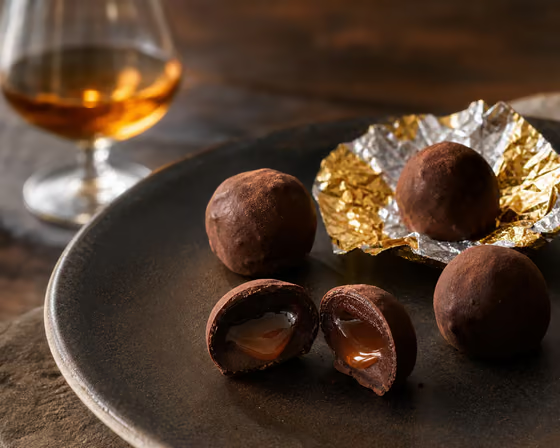 Catalogue image
 Lourinhã DOC Brandy Bonbon
A dark-chocolate bonbon with a Lourinhã DOC brandy heart.
The West