Almeirim Broas
Also known as: Almeirim honey broas · Ribatejo broas
Honey, olive oil and a single almond: the Ribatejo in one small oval broa.
- Origin
- Folk pastry of the Ribatejo · Almeirim
- Place
- Almeirim
- Region
- The Alentejo
- Category
- Festive & Seasonal
- Season
- Ribatejo feasts and fairs (Christmas, Easter, All Saints')
- Evidence
- Well documented
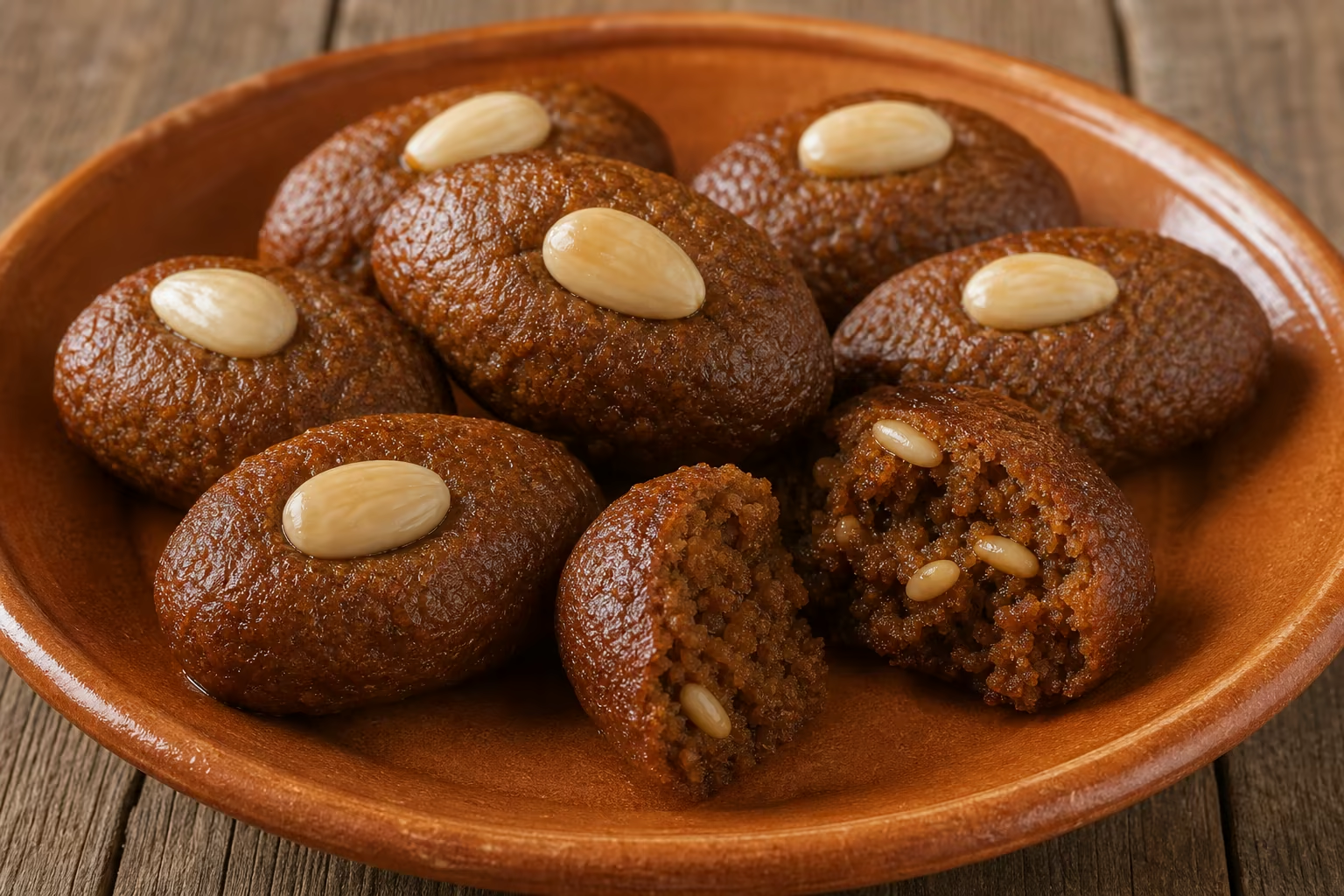
The broas de Almeirim are small oval broas — warm brown with a faint sheen — crowned by half an almond pressed into the surface. The dough begins with honey and olive oil heated together until they boil, which then scald the flour already spiced with cinnamon and aniseed, producing a dense, fragrant paste that is shaped by hand.
The crumb is soft and moist, dense without being heavy, with the golden gleam that an egg-yolk glaze leaves before baking. They are eaten one by one, by hand, and are of the sort that taste better the next day, when the honey and spices have settled.
These are celebration sweets: they appear at the fairs and romarias of the Ribatejo, at Christmas, Easter and All Saints' Day, never absent from the table when there is occasion to celebrate.
- Honey
- Olive oil
- Wheat flour
- Cinnamon
- Aniseed
- Pine nuts
- Almonds (half per broa)
- Egg yolk (for glazing)
- Yeast
- Sweet wine
Sweet and deeply aromatic: honey and olive oil lend a mellow richness, cinnamon and aniseed a warm spice, while the pine nuts and almond bring a toasted bite. The crumb is soft and slightly moist, beneath a glossy egg-glazed crust.
Sister broas are found across the Ribatejo: those of Torres Novas and Abrantes swap pine nuts for walnuts or almonds and sweet wine for coffee, sometimes adding corn flour. Broas de mel are another close cousin in the same family.
Look for them in the traditional bakeries and pastry shops of Almeirim and at the fairs and festivals of the Ribatejo, especially around Christmas and Easter, when local producers make them in quantity.
They call for a glass of sweet wine or Moscatel, or a strong coffee; at Christmas, they sit happily alongside the other broas and filhós on the table.
The broas belong to the popular Portuguese confectionery of rural origin, predating conventual pastry-making, in which honey and olive oil — rather than refined sugar and abundant eggs — were the base of all that was sweetened. In the Ribatejo, a land of olive oil and bread, this tradition took firm root, and the broas de Almeirim count among the most celebrated in the region, today recognised in the Register of Traditional Portuguese Products held by DGADR.
Their making once held a ritual gesture: after kneading, the surface of the dough in the bowl was smoothed and a cross was traced across its full width, with the words "Deus te acrescente, que é para muita gente" — God increase thee, for there are many to feed. By the crease one could see more easily when the dough had risen, after about two hours, before the broas were shaped by hand oiled with olive oil.
Well documented
Identity supported by institutional, specialist or corroborating sources.
- tradicional.dgadr.gov.pt/pt/ (opens in a new tab)
- tradicional.dgadr.gov.pt/en/categories/desserts-and-pastry/168-broas (opens in a new tab)
- descobriralmeirim.com/index.php/gastronomia/receitas/item/334-broas-de-almeirim (opens in a new tab)
- viagens.sapo.pt/saborear/gastronomia/artigos/docaria-regional-do-ribatejo-vamos-provar-as-broas-de-almeirim (opens in a new tab)
- acpp.pt/acervo-mlm-ribatejo/124-doces/3425-broas-de-almeirim (opens in a new tab)
Pastries from here — The Alentejo
 Catalogue image
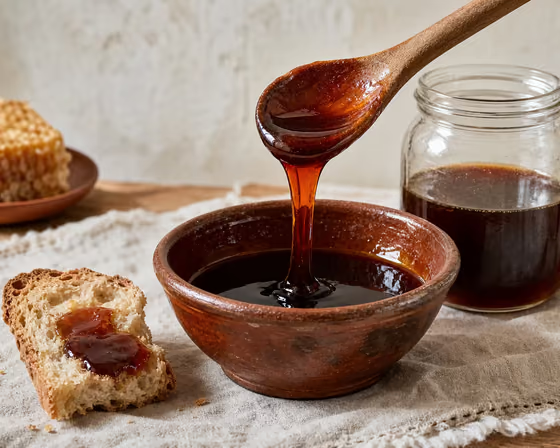
 Portuguese Água-mel Syrup
Water that recovers honey from combs after extraction, filtered and reduced for hours to 70–77° Brix.
The Alentejo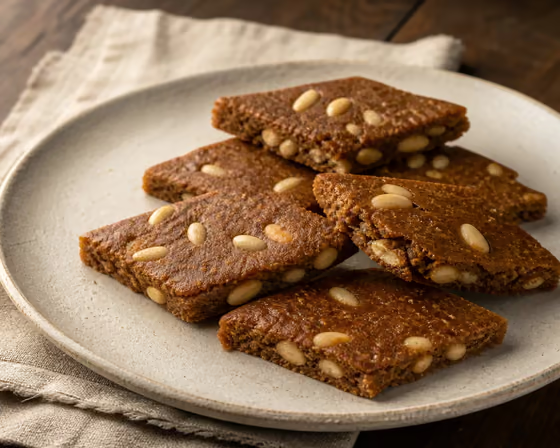 Catalogue image
 Alcomonias
Toasted coarse wheat flour, honey and pine nuts spread and cut into diamonds.
The Alentejo Catalogue image
 Amoreiras-Gare Alcôncoras
A large circular honey-and-olive-oil biscuit born from Amoreiras-Gare's promise-pole tradition.
The Alentejo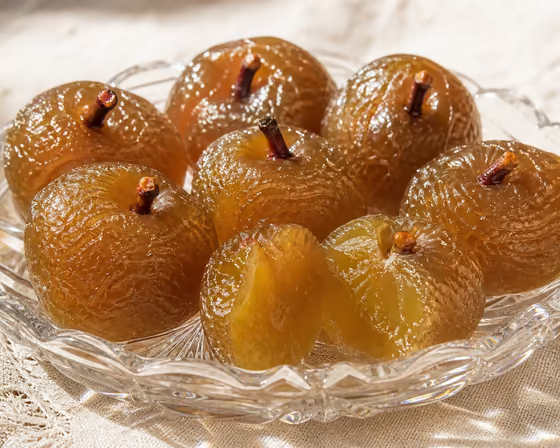 Catalogue image
 Elvas Plums
Protected Rainha Cláudia Verde greengages sold fresh, dried or candied—the sweet form requires at least seven days of slow candying.
The Alentejo