Castro Daire Bolo Podre
Also known as: Castro Daire Easter Bread · Lamelas Bolo Podre
Castro Daire's tall golden Easter bread, rich with eggs, olive oil and three fats.
- Origin
- Castro Daire · Montemuro Mountains
- Place
- Castro Daire · Montemuro Mountains
- Region
- The Centre
- Category
- Festive & Seasonal
- Season
- Year-round at some bakeries · strongest tradition at Easter
- Evidence
- Well documented
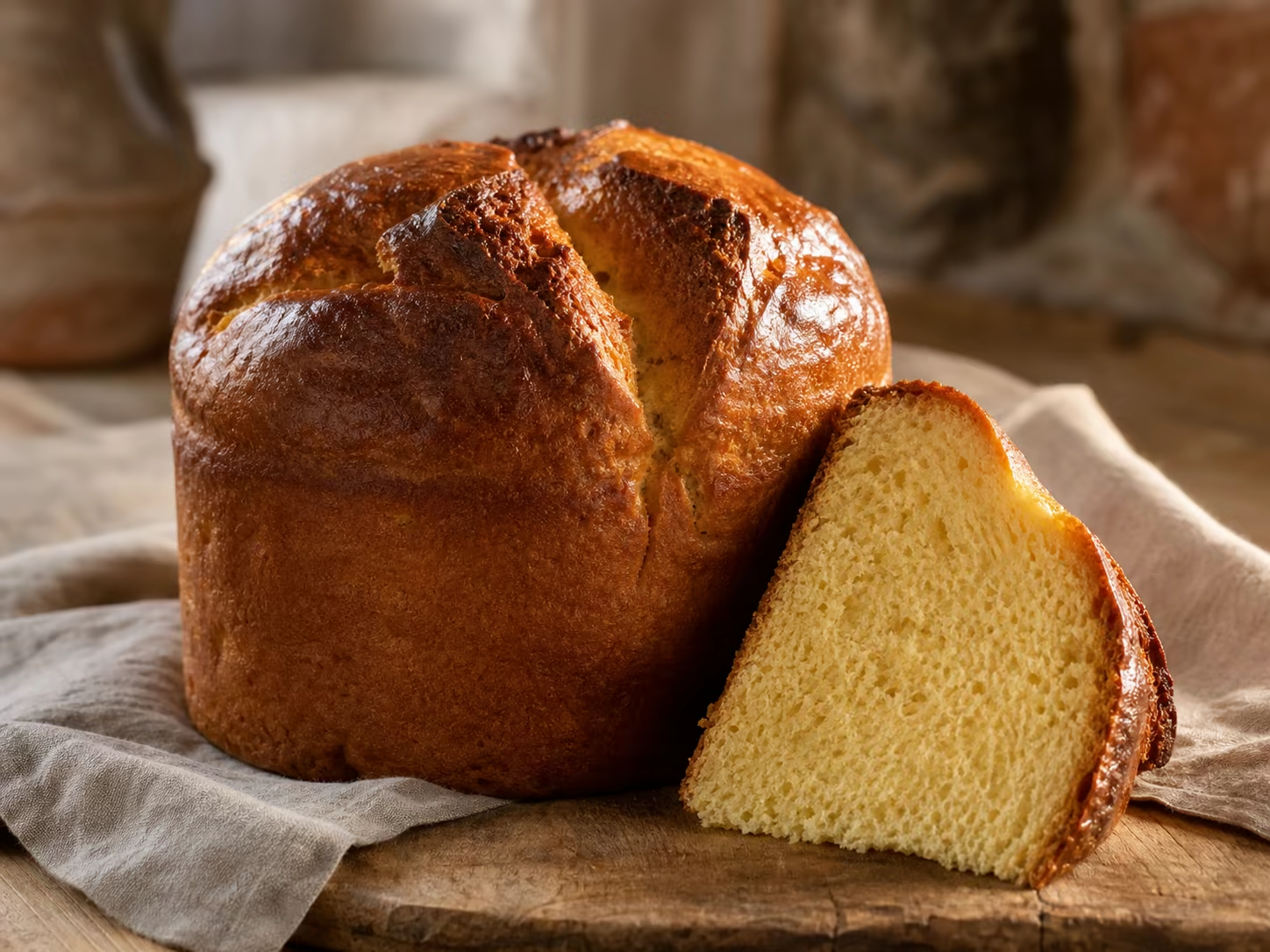
Bolo Podre de Castro Daire is a tall, round, sweet yeasted Easter bread with a deeply opened crown. Despite its name, it is neither spoiled cake nor dark bread: it has a golden-brown crust, a fine soft yellow crumb and unusual richness from many eggs, olive oil, butter and lard.
It is kneaded and shaped like bread. Flour receives sugar, cinnamon, yeast, salt and eggs; heated olive oil carries the butter and lard and is worked in until the dough releases from the hands. After a long rise, the dough is formed into balls, scored or allowed to split on top and traditionally baked in a wood-fired oven. Local sources stress a defining feature: beyond the fats and eggs, the Castro Daire version uses no other liquid.
- wheat flour
- eggs
- sugar
- olive oil
- butter
- pork lard
- baker's yeast
- cinnamon
- salt
Lightly sweet, rich yet balanced, with restrained cinnamon, a toasted crust and a soft elastic yellow crumb somewhere between bread and brioche.
Proportions change between villages and bakeries; some formulas add lemon, especially where the fruit was plentiful. Commercial variants now include cheese and ham and even Bolo Podre ice cream, but the historic product is the plain sweet Easter bread. A separate Alentejo Bolo Podre page avoids merging two different traditions merely because they share a name.
Forno da Serra on Avenida 5 de Outubro in Castro Daire publishes its ingredient list and accepts orders. Other bakeries in the municipality and Lamelas also make it, with especially strong demand at Easter; confirm availability outside the festive season.
Castro Daire goat cheese and ham for the traditional savoury contrast, or tea and coffee for a sweet snack.
The cake began as a domestic Easter folar. Castro Daire families kneaded it for the festive table and for godparents to give their godchildren, often accompanied by ham and goat cheese. A Polytechnic Institute of Viseu study records that regular commercial production only took hold in the early 1990s, although family baking is far older.
The Brotherhood of Bolo Podre and Montemuro Gastronomy was founded in 2011 and registered the ‘Bolo Podre de Castro Daire’ mark. In 2019 the sweet joined the 420 Seven Wonders of Portuguese Sweets nominees in the Festive Sweets category. It should not be confused with Alentejo Bolo Podre, which has its own composition, shape and page.
Well documented
Identity supported by institutional, specialist or corroborating sources.
- fornodaserra.pt/product/bolo-podre-de-castro-daire/ (opens in a new tab)
- repositorio.ipv.pt/bitstream/10400.19/5356/1/Sandra_Almeida_projeto.pdf (opens in a new tab)
- adrimag.com.pt/downloads/PROVERE/MAGazine/MAGazine_-_No8_-_Inverno2013.pdf (opens in a new tab)
- jornaldocentro.pt/pascoa-bolo-podre-de-castro-daire-com-quebra-de-60-nas-vendas/ (opens in a new tab)
- gazetarural.com/wp-content/uploads/2019/04/7-Maravilhas-Doces-de-Portugal-Lista-de-Nomeados.pdf (opens in a new tab)
Pastries from here — The Centre
 Catalogue image
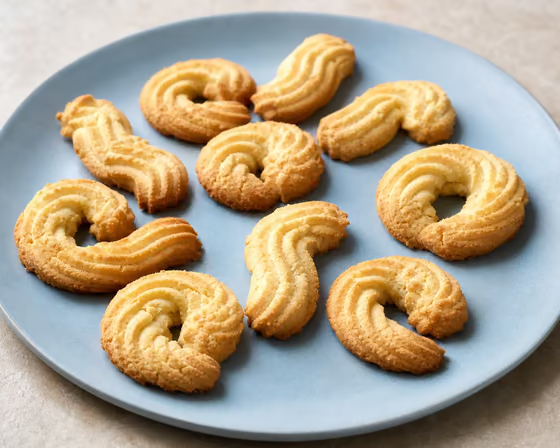
 Ílhavo Piped Butter Biscuits
Regional buttery biscuits piped into deeply ridged rings and curves.
The Centre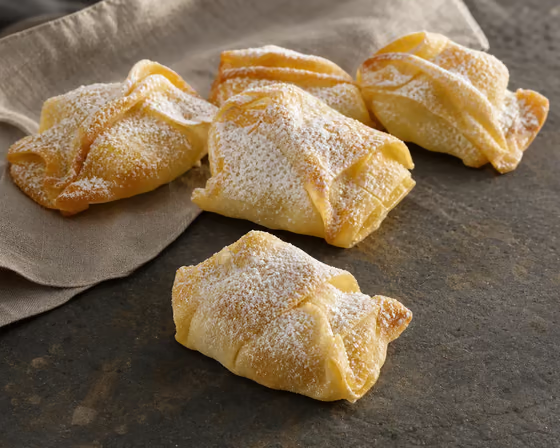 Catalogue image
 Saint Friar Gil’s Saddlebags
The small saddlebag-shaped pastry created at Vouzela’s vocational school and recognised as an innovative sweet.
The Centre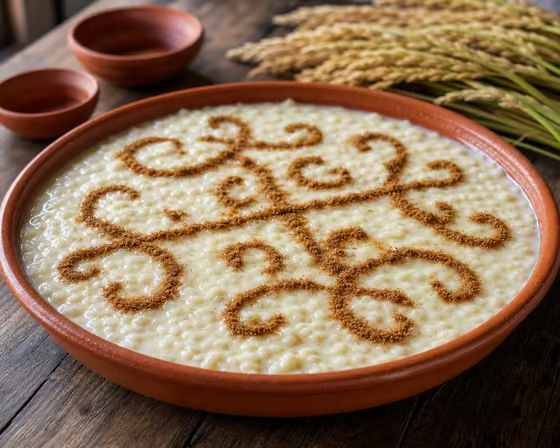 Catalogue image
 Baixo Mondego Rice Pudding
Mondego Carolino rice and Gândara milk, traced with cinnamon.
The Centre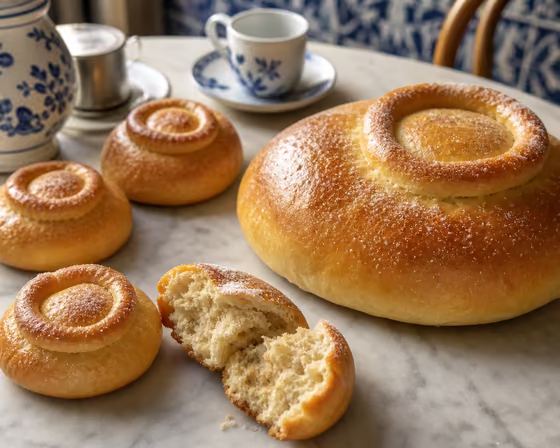 Catalogue image
 Arrufada de Coimbra
Coimbra's light, fragrant sweet bread, given by godparents at Easter.
The Centre