Loriga Black Cake
Also known as: Loriga Dark Cake
Portuguese with a faint English accent, stained with cinnamon.
- Origin
- Mid-19th century · Loriga, Serra da Estrela
- Place
- Loriga
- Region
- The Centre
- Category
- Cakes & Sweet Breads
- Season
- Year-round (once associated with Easter)
- Evidence
- Well documented
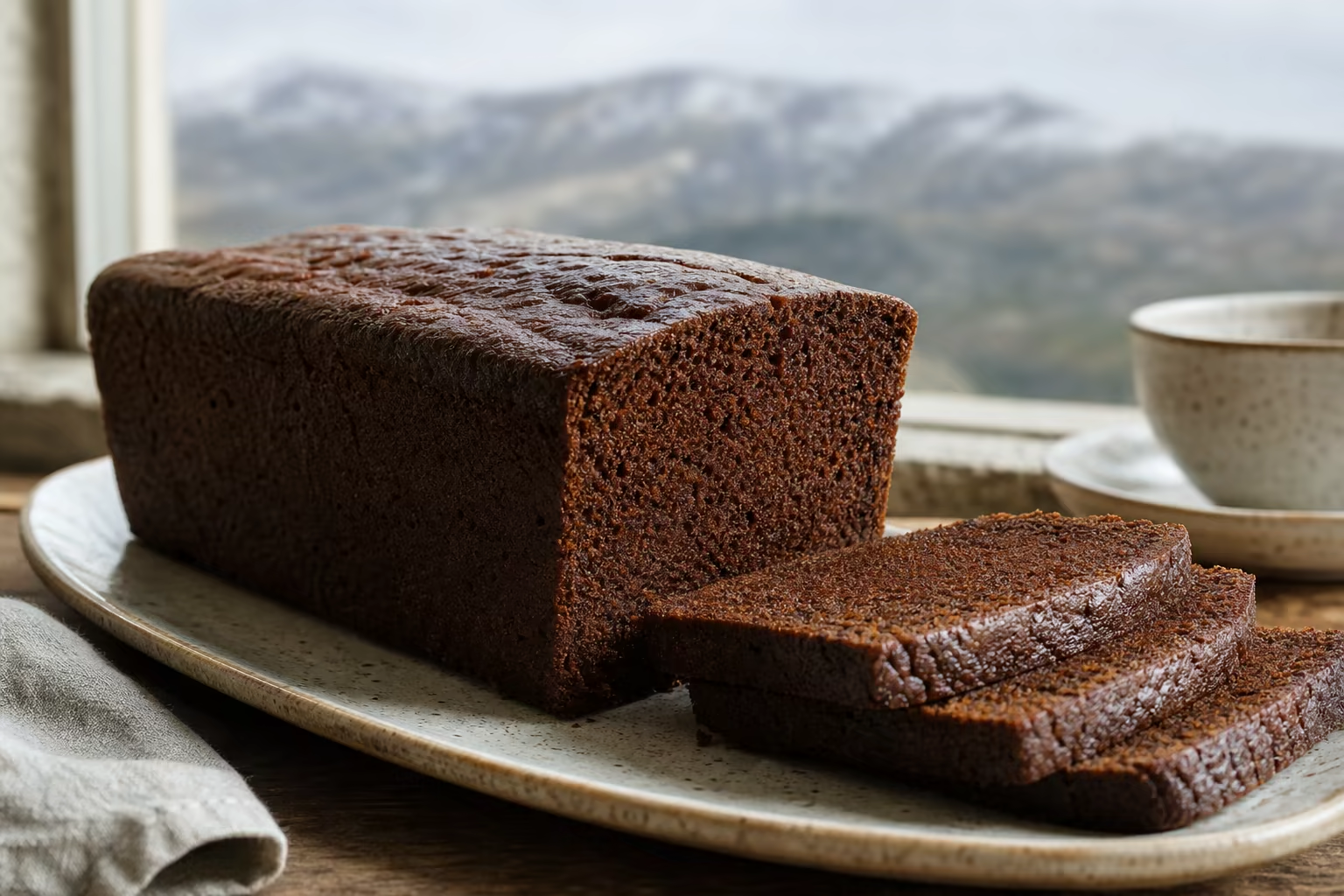
The Bolo Negro de Loriga is a dense, dark cake baked in a narrow, tall, rectangular tin that gives it the unmistakable shape of an English loaf cake. Its deep colour — almost chocolate — owes nothing to any cocoa: it comes entirely from cinnamon, used in a generous hand, which stains the crumb and perfumes the whole kitchen.
The cake is dry yet moist at once, with a close-textured, velvety crumb, made to be sliced and enjoyed with a cup of tea. The crust is firm and faintly glossy; the interior dense and tender, staying soft for many days.
It is served plain, in thin slices, at breakfast or tea. Its long keeping made it the cake one set aside to eat through the week — a faithful companion of mountain afternoons.
- Wheat flour
- Eggs
- Sugar
- Milk
- Cinnamon
- Bicarbonate of soda
An intense, warming cinnamon flavour, restrained sweetness and a dense crumb that is at once dry and moist, soft and lingering on the palate.
As a closely guarded recipe tied to a single village, it knows few variations; differences come down to each baker's hand and the dose of cinnamon. In Loriga it is often paired with broa, the village's other great tradition.
It is found almost exclusively in Loriga, in the municipality of Seia, today baked by the local Loripão bakery. Rare beyond the village, it is well worth seeking out on the spot, in the Serra da Estrela.
A cup of tea, true to the cake's English heritage, or a coffee; in Loriga it is enjoyed alongside the local broa.
With more than one hundred and fifty years of history, the Bolo Negro is a sweet exclusive to Loriga — singular in the Serra da Estrela and in the whole country. Its probable origin is linked to the English community resident in the town from the mid-nineteenth century to the early twentieth, drawn by the wool-textile industry — hence the resemblance to the traditional English loaf cake that accompanies tea, a drink also deeply rooted in the place.
Adapted to Portuguese taste and to the locally abundant cinnamon, the cake was once beaten by hand and baked in the old communal wood-fired ovens, especially at festive seasons such as Easter. Today it is made year-round and is produced by a single local bakery, Loripão, which keeps the recipe alive. The sweet was a contestant in the 7 Wonders of Portuguese Sweets competition and is today recognised as a traditional product of the region.
Well documented
Identity supported by institutional, specialist or corroborating sources.
- tradicional.dgadr.gov.pt/pt/cat/doces-e-produtos-de-pastelaria/1047-bolo-negro-de-loriga (opens in a new tab)
- noticiasdecoimbra.pt/ha-um-bolo-que-so-encontra-em-loriga-e-portugues-com-um-leve-sotaque/ (opens in a new tab)
- confrariadeloriga.com/index.php/bolo-negro/historia (opens in a new tab)
- portugalnummapa.com/bolo-negro-de-loriga/ (opens in a new tab)
Pastries from here — The Centre
 Catalogue image
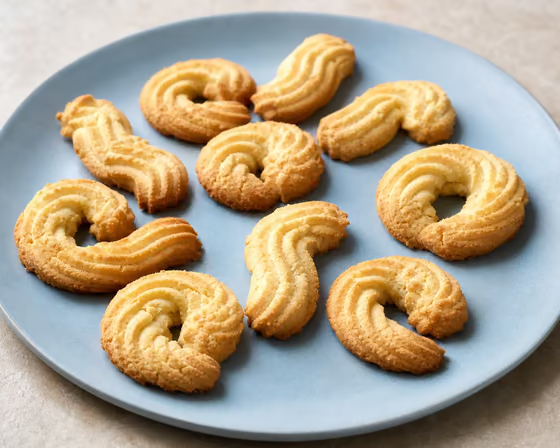
 Ílhavo Piped Butter Biscuits
Regional buttery biscuits piped into deeply ridged rings and curves.
The Centre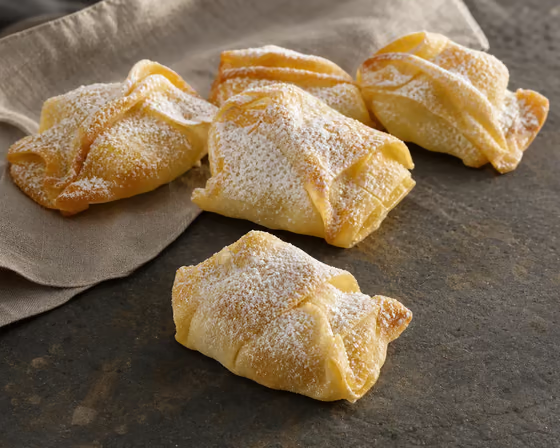 Catalogue image
 Saint Friar Gil’s Saddlebags
The small saddlebag-shaped pastry created at Vouzela’s vocational school and recognised as an innovative sweet.
The Centre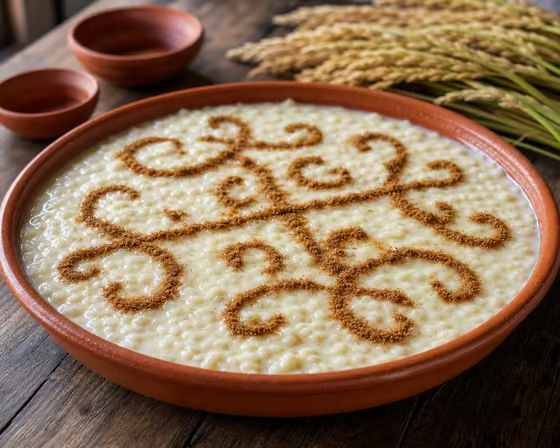 Catalogue image
 Baixo Mondego Rice Pudding
Mondego Carolino rice and Gândara milk, traced with cinnamon.
The Centre Catalogue image
 Arrufada de Coimbra
Coimbra's light, fragrant sweet bread, given by godparents at Easter.
The Centre