Guarda Easter Folar
Also known as: Guarda Easter Folar · Guarda Olive-Oil Easter Bread
Guarda's long folded Easter bread, enriched with eggs, olive oil and aguardente.
- Origin
- Guarda · Beira Interior
- Place
- Guarda · Beira Interior
- Region
- The Centre
- Category
- Festive & Seasonal
- Season
- Easter
- Evidence
- Well documented
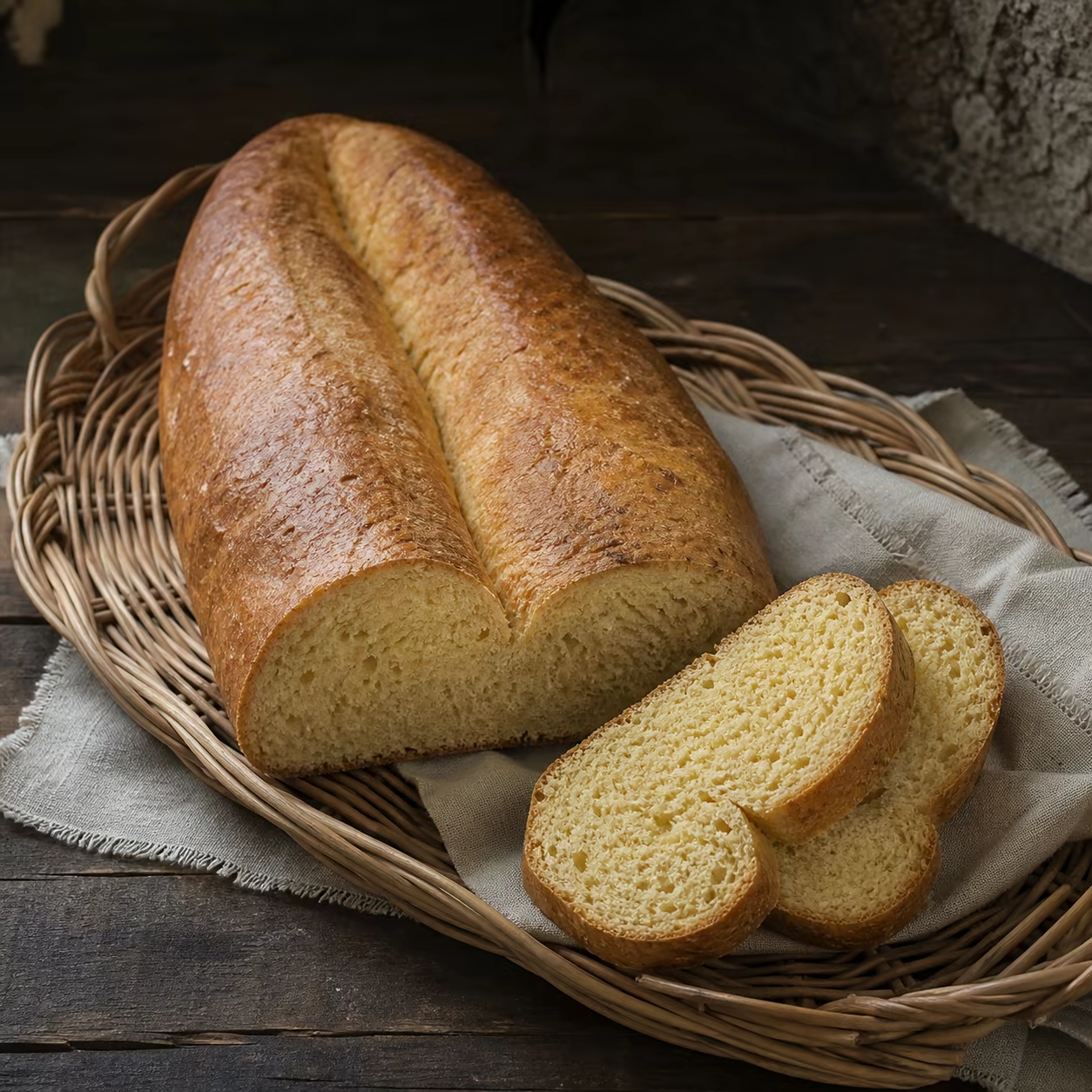
Bolo Folar da Guarda is a festive wheat-and-egg bread, elongated and marked by a lengthwise fold. The DGADR reference lists flour, eggs, baker's yeast, aguardente, olive oil, salt, water and, in commercial production, ascorbic acid. After kneading, the dough rises, is divided with olive-oiled hands, rests again and is traditionally baked in a wood-fired oven.
The deep fold visually separates the two sides and gives slices a shape resembling an imperfect heart. Its crust is toasted yellow and relatively crisp; the yellow crumb is dry, porous and coarse. Loaves range from half a kilogram to two kilograms and are best eaten fresh, ideally within 48 hours.
- wheat flour
- eggs
- baker's yeast
- olive oil
- aguardente
- salt
- water
- ascorbic acid (in the registered commercial formula)
With no sugar in the documented traditional identity, it is aromatic, with olive-oil and aguardente notes, a firm crust and a dry, porous yellow crumb.
The traditional record described here is a long, folded, unfilled and unsweetened bread. Current versions may be filled with chouriço, while sweet ‘Bolo da Páscoa’ adaptations use sugar, orange and cinnamon. They should be identified as distinct formulas rather than projected onto DGADR's identity.
At bakeries, markets and fairs across Guarda district, especially near Easter. Look for the long loaf with a central fold and confirm whether it is the plain olive-oil version or a filled variant.
Editorial suggestion: coffee, tea or Serra da Estrela cheese.
In Guarda, this folar was one of the gifts godparents gave their godchildren at Easter. The custom relates it to Pão Santoro de Pêga, offered in the same district on All Saints' Day, but the two products have distinct calendars and shapes.
The DGADR preserves its description in Portugal's Traditional Products inventory, citing a 2001 source. Turismo Centro de Portugal still presents ‘Bolo de Ovos ou Folar da Páscoa’ as an essential specialty of the Guarda municipality and documents hand-kneading, two rises and wood-fired baking.
Well documented
Identity supported by institutional, specialist or corroborating sources.
- tradicional.dgadr.gov.pt/pt/cat/pao-e-produtos-de-panificacao/283-bolo-folar-da-guarda (opens in a new tab)
- ocentrofazbem.pt/portfolios/pa%CC%83o-broas-folares/ (opens in a new tab)
- turismodocentro.pt/artigo/pascoa-receitas-centro-de-portugal/ (opens in a new tab)
- tradicional.dgadr.gov.pt/pt/cat/pao-e-produtos-de-panificacao/324-pao-santoro-de-pega (opens in a new tab)
- simplybycristina.blogs.sapo.pt/folar-a-moda-da-guarda-40170 (opens in a new tab)
- gulosoqb.blogspot.com/2019/04/bolo-da-pascoa-um-folar-da-guarda.html (opens in a new tab)
Pastries from here — The Centre
 Catalogue image
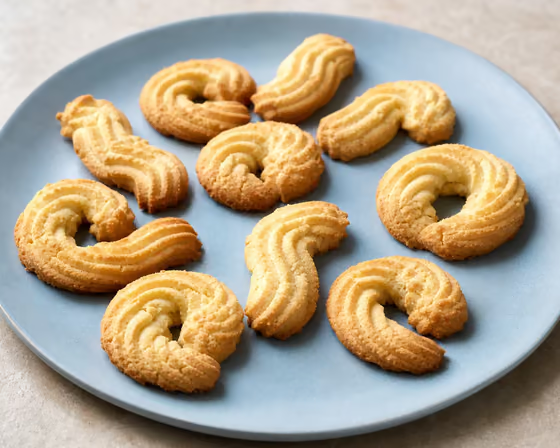
 Ílhavo Piped Butter Biscuits
Regional buttery biscuits piped into deeply ridged rings and curves.
The Centre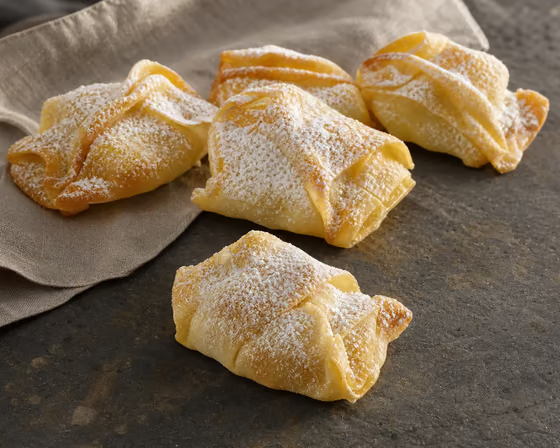 Catalogue image
 Saint Friar Gil’s Saddlebags
The small saddlebag-shaped pastry created at Vouzela’s vocational school and recognised as an innovative sweet.
The Centre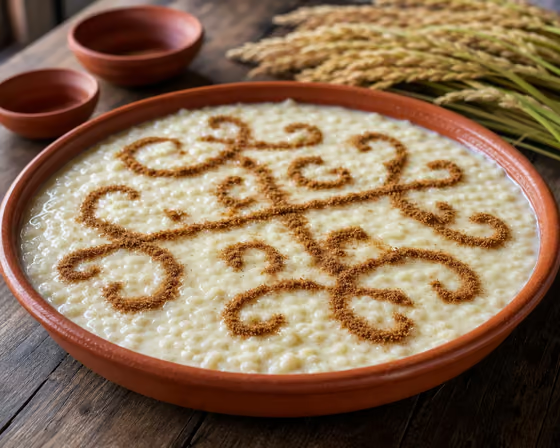 Catalogue image
 Baixo Mondego Rice Pudding
Mondego Carolino rice and Gândara milk, traced with cinnamon.
The Centre Catalogue image
 Arrufada de Coimbra
Coimbra's light, fragrant sweet bread, given by godparents at Easter.
The Centre