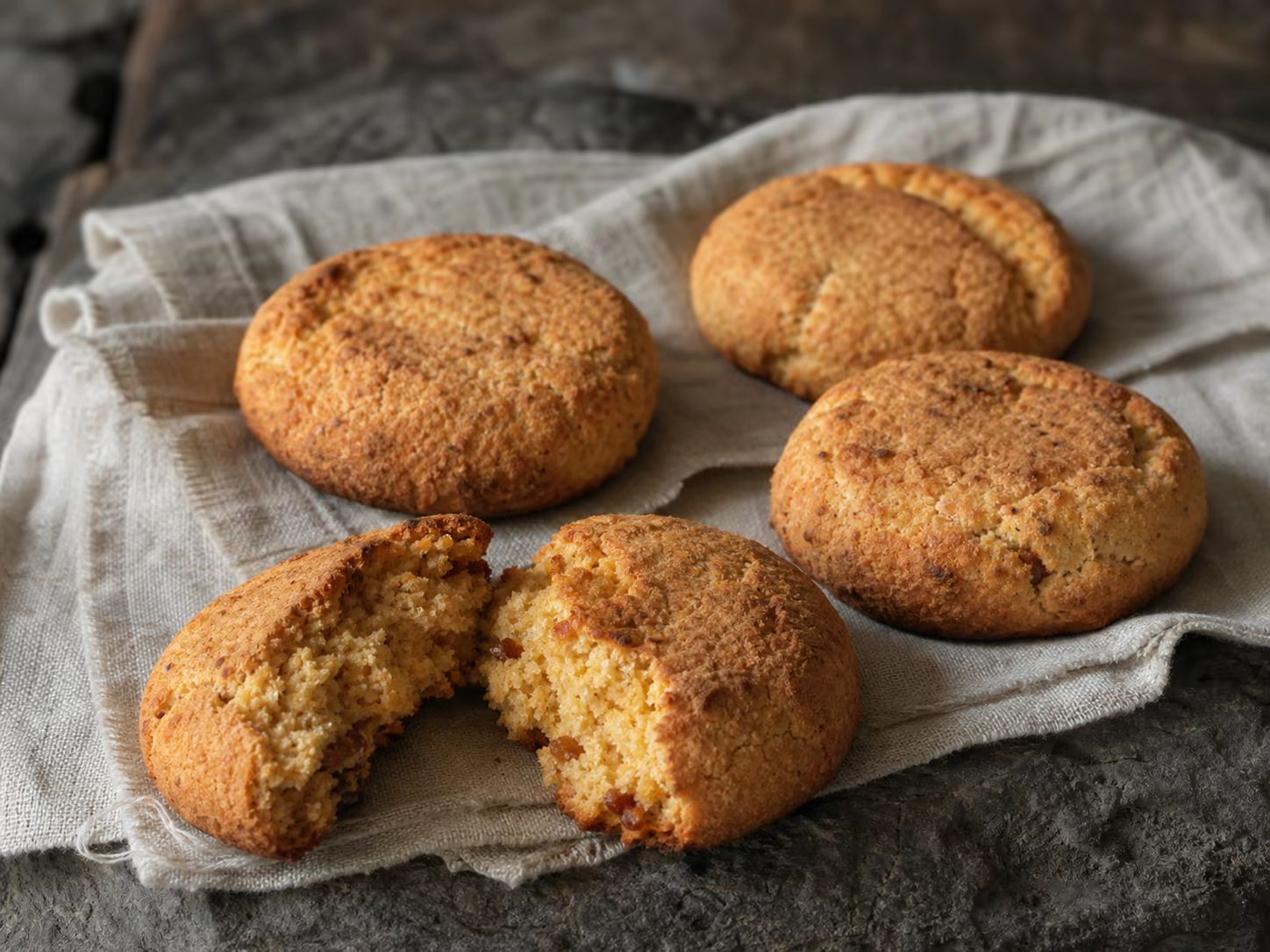
Azorean Crackling-Foot Cake
Also known as: Azorean Crackling-Foot Cake · São Miguel Pork-Crackling Cake
An old Azorean corn cake enriched with sugar and crackling sediment, dry and lightly toasted.
- Origin
- São Miguel · Azores · rural sweet from communal bread-baking days
- Place
- São Miguel · Azores
- Region
- The Azores
- Category
- Cakes & Sweet Breads
- Season
- Traditionally on bread-baking and pig-slaughter days; now year-round
- Evidence
- Well documented
Bolo de Pé de Torresmo is a rustic cake-bread from São Miguel made with corn flour, sugar and pé de torresmo—the flavourful little remnants left at the bottom of the pan after pork fat has been rendered. Portugal's official record also describes milk and, sometimes, cinnamon. It is shaped into low round cakes about the size of a tangerine, or spread in a tray and cut into squares or triangles. Baking makes it golden, rather dry and lightly toasted: an old combination of sweet corn and sugar with the savoury richness of pork fat.
- corn flour
- wheat flour
- crackling sediment
- chopped pork cracklings
- sugar
- eggs
- lard or butter
- milk
- raising agent
- cinnamon (optional)
A dense, grainy crumb with moderate sweetness and a toasted crust, carrying subtle savoury and roasted notes from the cracklings.
The older formula began with corn-bread dough or scraps; present-day recipes combine corn and wheat flours, eggs and raising agent. Cinnamon may be added, chopped cracklings can supplement the pan sediment, and the dough may be shaped into flattened rounds or baked in a tray.
It is now a rare speciality. Look for it at São Miguel traditional-food events, Azorean restaurants preserving older dishes, or household bakes connected with the old pig-slaughter festivities.
Coffee, Azorean black tea or a small glass of aguardente.
In rural São Miguel homes, the cake reused scraps of corn-bread dough and the sediment from rendering cracklings. It was made on bread-baking day, often within the household pig-slaughter cycle, turning two valuable remnants into a dessert that could share the oven with the main batch. Portugal's DGADR records the sweet in Azorean ethnographic tradition and notes that in São Miguel a corn-bread bake rarely passed without at least one such cake. The local saying ‘Dia de cozer, dia de roer’—baking day is nibbling day—preserves that custom. The recipe is now uncommon, though Azorean cooks continue to revive it, and it appeared among the 2019 Seven Wonders of Portuguese Sweets nominees.
Well documented
Identity supported by institutional, specialist or corroborating sources.
- tradicional.dgadr.gov.pt/pt/cat/pratos-a-base-de-carne/270-torresmos (opens in a new tab)
- foodwithameaning.com/2020/07/05/bolo-de-pe-de-torresmo-tradicao-acoriana/ (opens in a new tab)
- gazetarural.com/wp-content/uploads/2019/04/7-Maravilhas-Doces-de-Portugal-Lista-de-Nomeados.pdf (opens in a new tab)
Pastries from here — The Azores
 Catalogue image
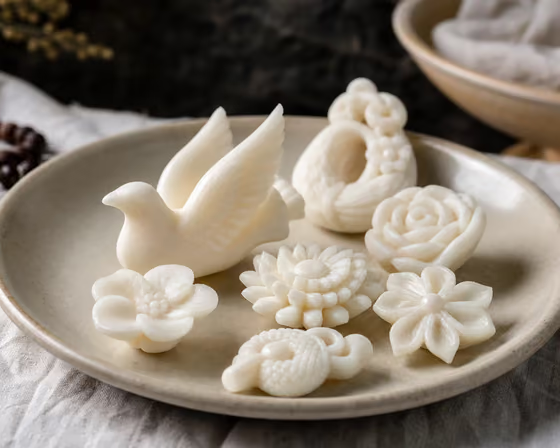
 Alfenim Pulled Sugar
Hand-pulled sugar shaped into animals, flowers, hearts and votive figures.
The Azores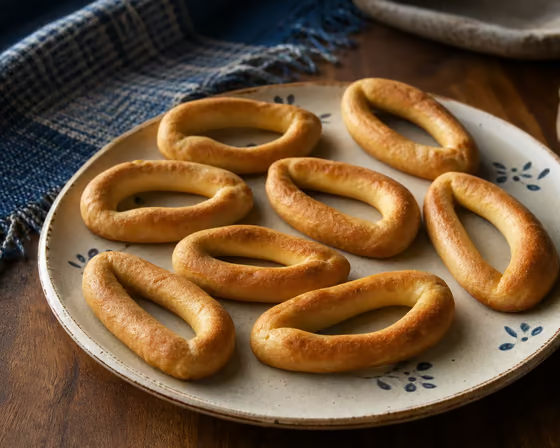 Catalogue image
 Brandy Biscuits
Crisp Santa Maria rings kneaded with eggs, rich fats and a glass of brandy.
The Azores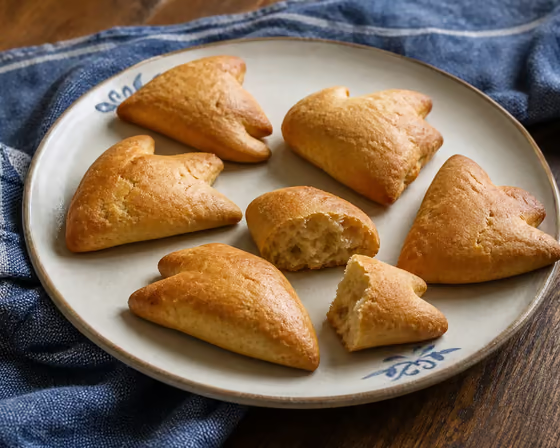 Catalogue image
 Ear-Shaped Biscuits
Santa Maria's triangular enriched biscuits, clipped at the tips like little ears.
The Azores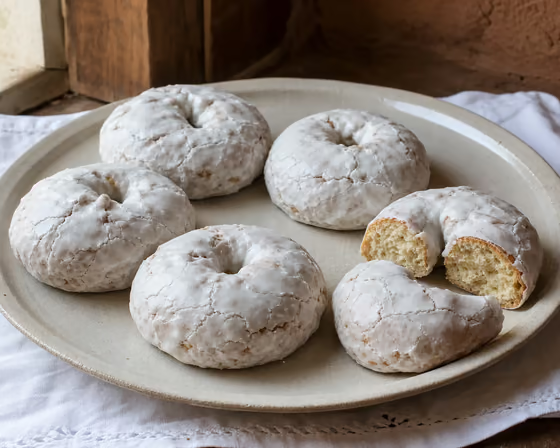 Catalogue image
 Santa Maria Encanelado Biscuits
Santa Maria's yeasted rings under a thick white sugar glaze.
The Azores