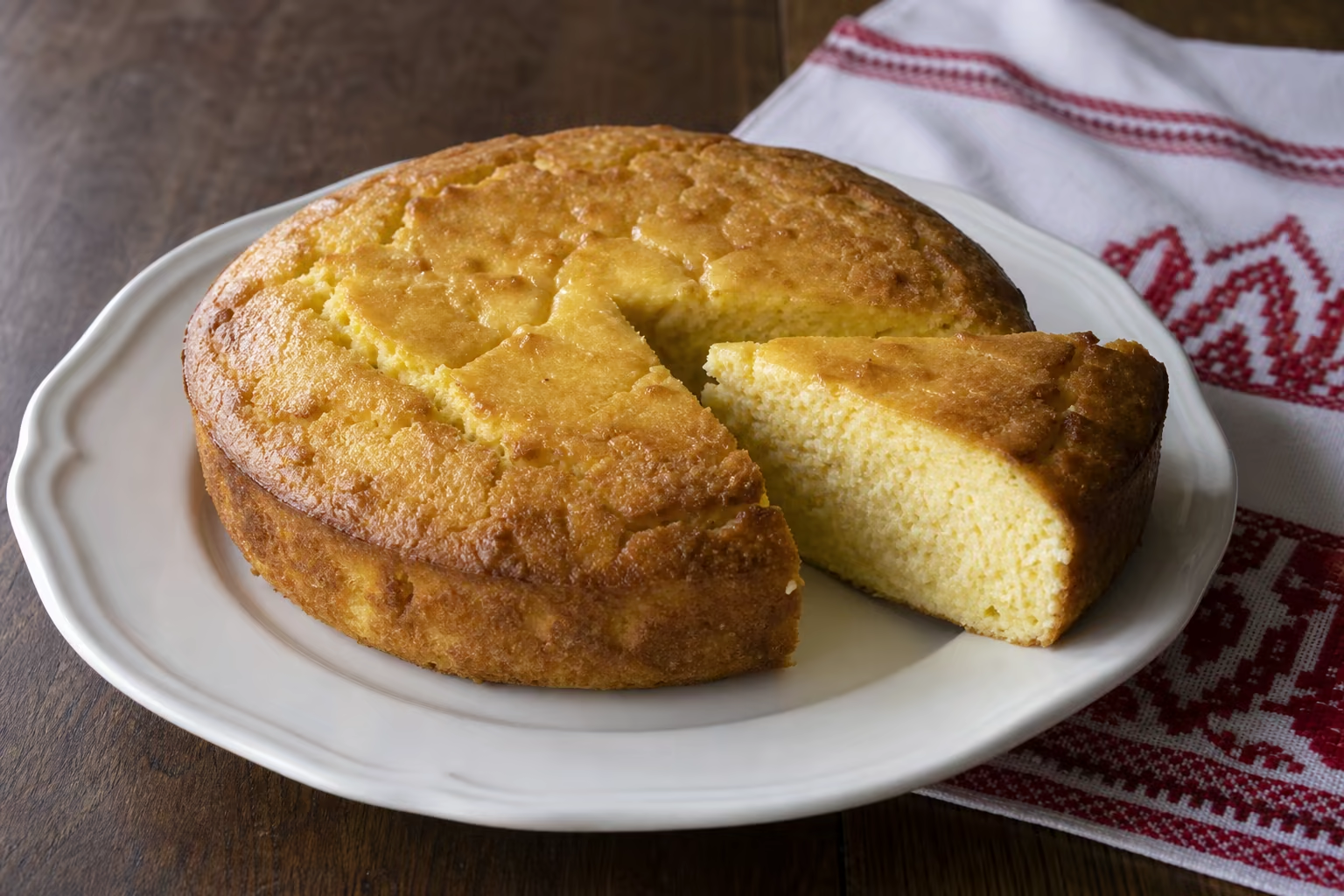
Azorean Curd Cake
A nearly forgotten curd cake with maize, anise, lemon and brandy.
- Origin
- São Jorge · Azores
- Place
- São Jorge
- Region
- The Azores
- Category
- Cakes & Sweet Breads
- Season
- May to September · Holy Spirit festivals
- Evidence
- Well documented
DGADR's published Bolo de Coalhada formula lists four litres of milk, powdered rennet, wheat and maize flours, eggs, sugar, butter, anise, lemon zest and brandy. The same record publishes no method, yield, pan, temperature or duration, so these data cannot be reconstructed into an executable recipe without another source.
Oral transmission includes versions with cinnamon, ginger or oil. The Azores Tourism Portal locates the living tradition on São Jorge's north coast, especially Santo António, during Holy Spirit festivities.
- curdled milk
- wheat flour
- maize flour
- sugar
- eggs
- butter
- anise
- lemon
- brandy
Dairy-rich, dense and moderately sweet, with maize, anise, lemon and brandy's warmth.
DGADR records variants with cinnamon, ginger or oil. Its own record contains a geographic inconsistency: the delimitation field says ‘Graciosa Island’, while the entire history, availability section and official Azorean sources locate the product on São Jorge. We retain São Jorge as the origin and disclose the contradiction rather than hiding it.
At Holy Spirit festivals on São Jorge from May to September, especially in Santo António; regular commercial supply is rare.
Editorial suggestion: Azorean black tea, coffee or vinho de cheiro.
The tradition circulated orally across São Jorge and is closely tied to the cycle of Holy Spirit festivities. The Azores Tourism Portal documents the cakes as having been made and distributed throughout the island for as long as living memory, while acknowledging that the sweet is at risk of being forgotten. Its clearest continuity survives on the north coast, in the parish of Santo António, where the recipe passes between generations and is made especially on the weekends of the Holy Spirit and Trinity celebrations. The use of milk curd connects the cake to the island's dairy and cheese-making culture.
Well documented
Identity supported by institutional, specialist or corroborating sources.
- tradicional.dgadr.gov.pt/pt/cat/doces-e-produtos-de-pastelaria/694-bolo-de-coalhada (opens in a new tab)
- turismo.azores.gov.pt/sao-jorge/ (opens in a new tab)
- turismo.azores.gov.pt/pin/imperio-do-divino-espirito-santo-de-santo-antonio/ (opens in a new tab)
- visitazores.com/explorar/imperio-do-divino-espirito-santo-1 (opens in a new tab)
- culturacores.azores.gov.pt/ea/pesquisa/default.aspx (opens in a new tab)
- info-fajas.pt/index.php/2026/05/29/famoso-bolo-coalhada-santo-antonio-ilha-sao-jorge-28-05-2026-c-video/ (opens in a new tab)
- youtube.com/watch (opens in a new tab)
Pastries from here — The Azores
 Catalogue image
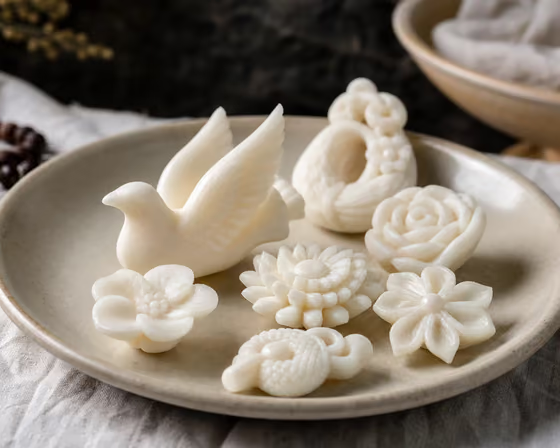
 Alfenim Pulled Sugar
Hand-pulled sugar shaped into animals, flowers, hearts and votive figures.
The Azores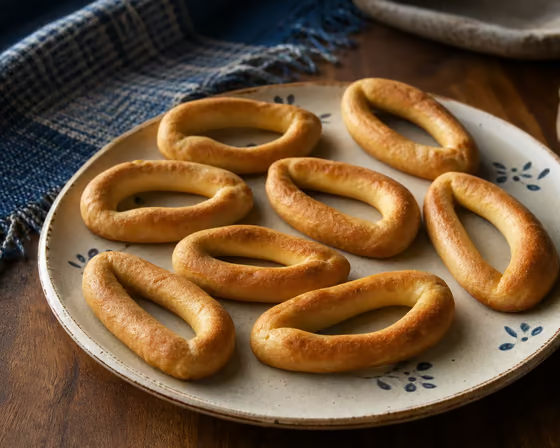 Catalogue image
 Brandy Biscuits
Crisp Santa Maria rings kneaded with eggs, rich fats and a glass of brandy.
The Azores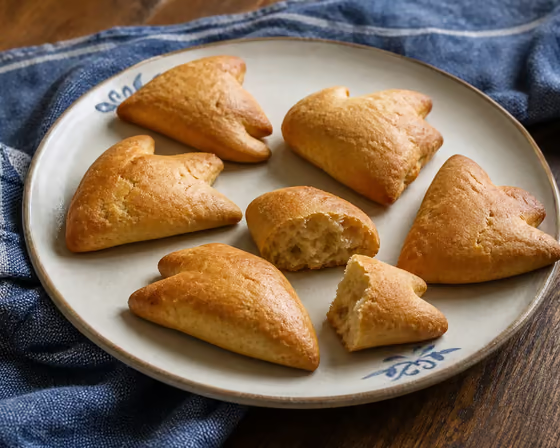 Catalogue image
 Ear-Shaped Biscuits
Santa Maria's triangular enriched biscuits, clipped at the tips like little ears.
The Azores Catalogue image
 Santa Maria Encanelado Biscuits
Santa Maria's yeasted rings under a thick white sugar glaze.
The Azores