Biscuit Cake
Also known as: Traditional Portuguese biscuit cake
Layers of coffee-soaked biscuits and buttercream, served chilled.
- Origin
- Dessert in Portuguese cooking · creator and date of origin not established
- Place
- Nationwide
- Region
- Nationwide
- Category
- Cakes & Sweet Breads
- Season
- Seasonality not documented
- Evidence
- Well documented
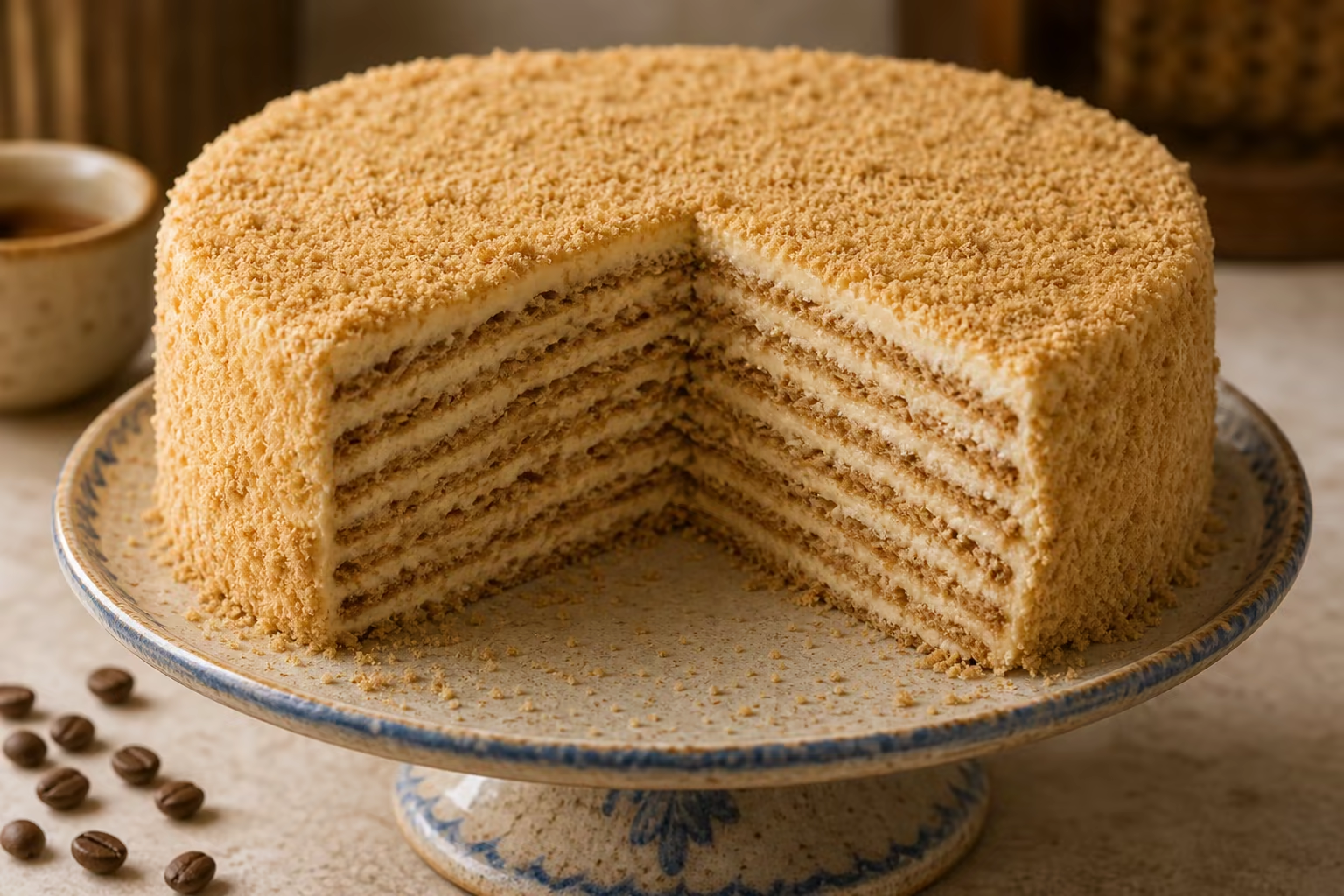
Bolo de bolacha is a layered dessert chilled after assembly, without baking the finished structure. In Teleculinária's published traditional recipe, toasted biscuits are dipped in sweetened coffee and alternated with a whipped cream of butter, icing sugar, egg yolks and strong coffee. The cake is finished with cream and may be decorated with coffee beans.
Repeated biscuit and cream layers create the striped cut that identifies the dessert. Continente confirms its popularity on Portuguese tables and publishes another interpretation: toasted biscuits, coffee, egg yolk, icing sugar and cream cheese, assembled in a rectangular tin and finished with cocoa and crushed biscuit.
- Toasted biscuits
- Coffee
- Butter
- Icing sugar
- Egg yolks
In the documented traditional version, coffee adds bitterness and roasted aroma to the sweet, rich mixture of butter, sugar and yolk. Chilling firms the cream, while the soaked biscuits lose some rigidity so the layers can be sliced as a cake.
Teleculinária documents a cream of butter, icing sugar, yolks and coffee; Continente publishes a version using cream cheese, yolk and icing sugar. Shape, biscuit and finish also vary: coffee beans in one recipe, cocoa and crushed biscuit in the other. These are published variations, not a proven hierarchy between an “original” recipe and later adaptations.
The sources present it as a dessert of Portuguese tables and cooking, but the consulted pages do not support a nationwide list of current pastry shops or restaurants. Check the composition: bolo de bolacha may refer to different creams and formats.
As an editorial suggestion, unsweetened coffee or black tea.
The consulted culinary sources describe bolo de bolacha as a popular, classic or traditional Portuguese dessert. They do not, however, identify an inventor, first published recipe, place of creation or decade of popularisation. This page therefore does not repeat circulating timelines and genealogies as fact without verifiable documentary references.
The diversity of current recipes itself calls for historical caution: Teleculinária publishes the butter-and-yolk construction, while Continente uses cream cheese and a rectangular tin. That comparison demonstrates continuity in the principle of biscuit-and-coffee layers, but it cannot establish the relative age of every variation.
Well documented
Identity supported by institutional, specialist or corroborating sources.
- media.rtp.pt/anossatarde/receitas/bolo-de-bolacha-com-gelado-de-frutos-vermelhos-nilsa-carona/ (opens in a new tab)
- teleculinaria.pt/receitas/bolo-de-bolacha-tradicional/ (opens in a new tab)
- feed.continente.pt/receitas/bolo-de-bolacha (opens in a new tab)
- publico.pt/2020/05/02/fugas/noticia/inconfundivel-bolo-bolacha-1914039 (opens in a new tab)
Pastries from here — Nationwide
 Catalogue image
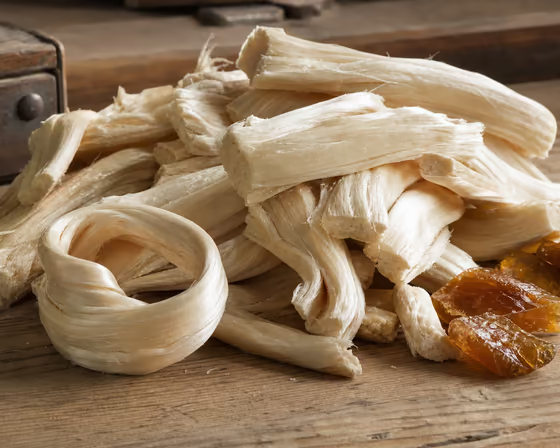
 Alféloa
Sugar or molasses cooked to a hard stage and worked until pale.
Nationwide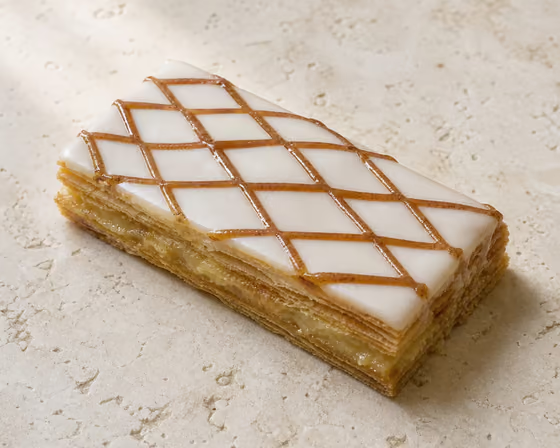 Catalogue image
 Portuguese Gila Allumette
A rectangular puff pastry with cream, gila and cinnamon beneath diamond-patterned royal icing.
Nationwide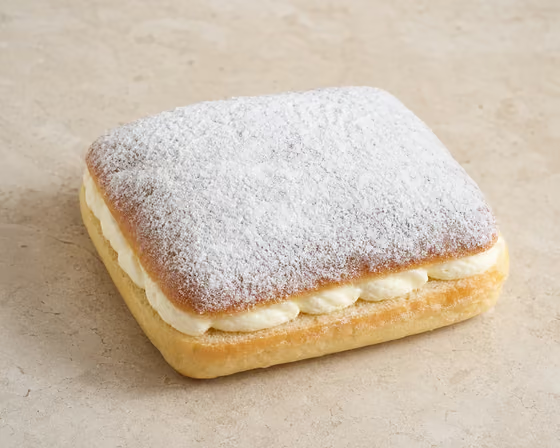 Catalogue image
 Portuguese Brioche Almofada
Light brioche dough, fresh buttercream and icing sugar.
Nationwide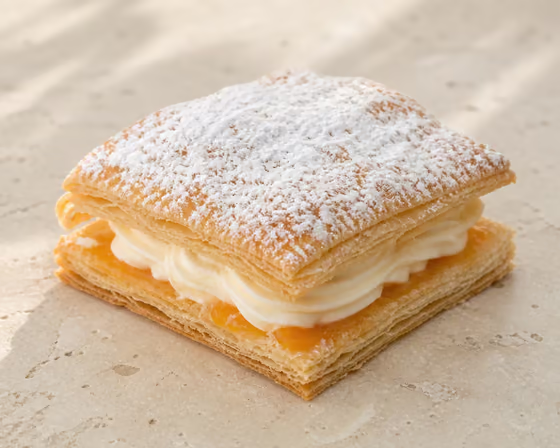 Catalogue image
 Portuguese Puff-Pastry Almofada
Puff pastry with white cream, egg sweet and icing sugar—the laminated Almofada variant.
Nationwide