Rice Muffin
Also known as: Portuguese rice-flour cake · Bolo de arroz
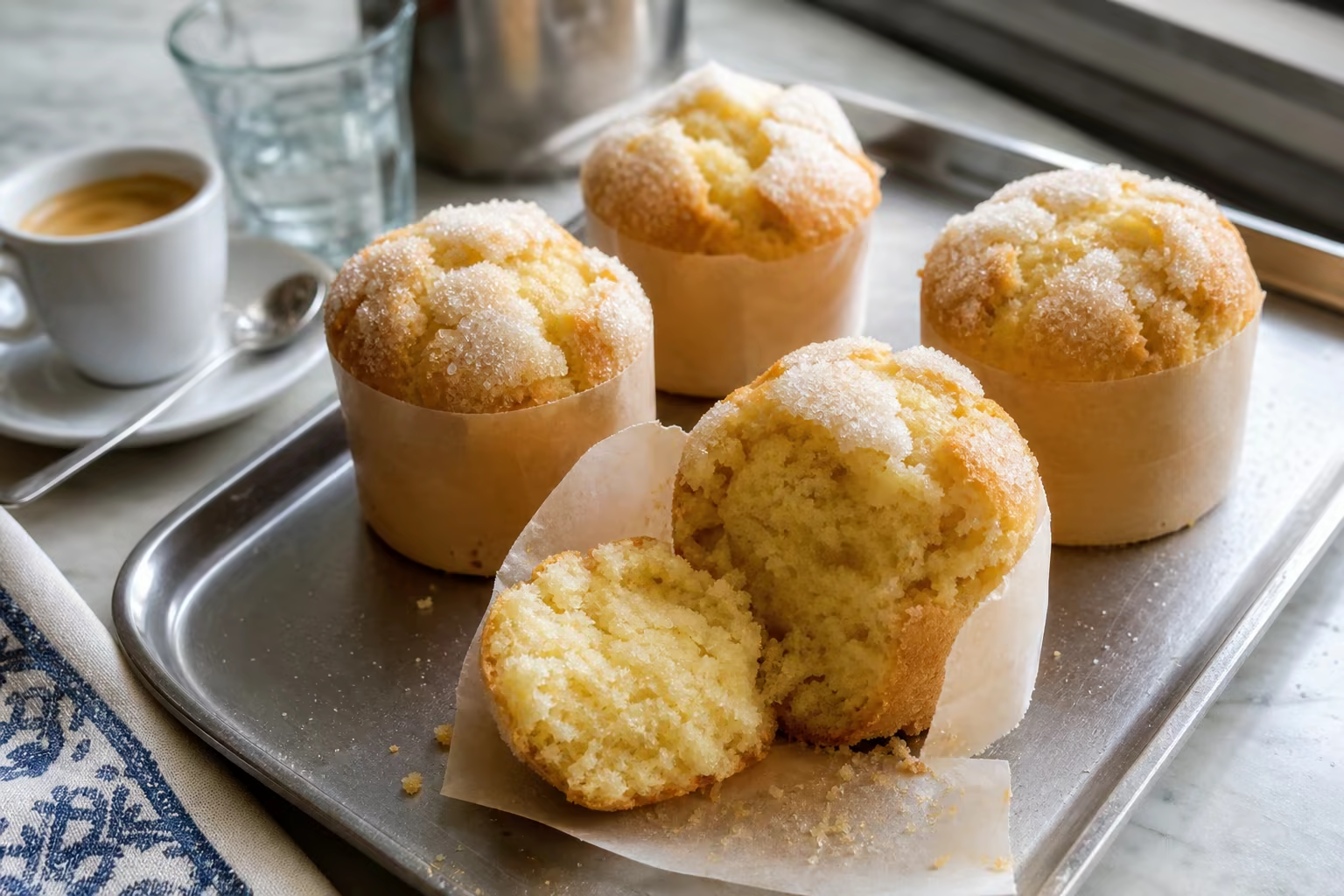
The individual rice-flour cake baked in its characteristic paper collar.
- Origin
- Portugal · pastry tradition; creation date and place not documented
- Place
- Nationwide
- Region
- Nationwide
- Category
- Cakes & Sweet Breads
- Season
- Seasonality not documented
- Evidence
- Well documented
Bolo de arroz is an individual cake in the Portuguese pastry tradition. A dissertation deposited at NOVA University Lisbon describes it as made with rice flour, eggs and sugar and baked wrapped in paper, which gives it its cylindrical shape. Continente's published Yämmi recipe likewise uses moulds or rings lined with paper strips and identifies it as a classic of traditional Portuguese pastry.
Formulas are not uniform. The Yämmi version combines rice flour with butter, sugar, eggs, milk, raising agent and lemon zest. An RTP recipe uses rice flour and corn starch alongside butter, sugar, eggs, milk, raising agent and lemon, finishing the cake with sugar before its final period in the oven. These sources show that wheat flour is not compulsory and that no single ingredient list should be presented as a universal formula.
- Rice flour
- Eggs
- Sugar
- Butter in published recipes
- Milk in published recipes
- Raising agent in published recipes
- Lemon zest in published recipes
- Corn starch in the RTP version
Continente describes its version as dense yet soft, light and mild in flavour; its published formula also includes butter and lemon. Results can vary with the proportion of rice flour and the other starches used, so no single sensory profile is demonstrated for every bakery.
The Yämmi recipe lists rice flour as its only flour; the RTP recipe adds corn starch. Commercial products sold as bolo de arroz also exist with wheat flour and only a smaller proportion of rice flour. The name therefore identifies a recognisable cake family, not one fixed quantitative formula.
Sources present it as a classic of Portuguese pastry shops, but availability varies. Check directly with the bakery and consult its allergen information: the name does not guarantee the absence of wheat or gluten.
As an editorial suggestion, espresso, galão or tea.
The consulted record confirms that bolo de arroz belongs to Portuguese tradition but identifies no inventor, originating bakery, city or creation date. This page therefore does not repeat attributions to the late nineteenth century, Lisbon, Brazil or Asian rice cakes without demonstrable historical evidence.
The paper collar is a documented functional characteristic: it surrounds the batter during baking and contributes to the cylindrical form. This is corroborated by both the academic description and the practical instructions in the Yämmi recipe.
Well documented
Identity supported by institutional, specialist or corroborating sources.
- run.unl.pt/bitstream/10362/143936/1/Araujo_2022.pdf (opens in a new tab)
- media.rtp.pt/praca/rubricas/bolo-arroz-culinaria/ (opens in a new tab)
- feed.continente.pt/receitas/yammi/bolo-de-arroz (opens in a new tab)
- fondazioneslowfood.com/en/ark-of-taste-slow-food/bolo-de-arroz/ (opens in a new tab)
- amensagem.pt/2023/01/02/bolo-de-arroz-da-confeitaria-nacional-baixa-lisboa-cronica-diogo-filipe/ (opens in a new tab)
Pastries from here — Nationwide
 Catalogue image
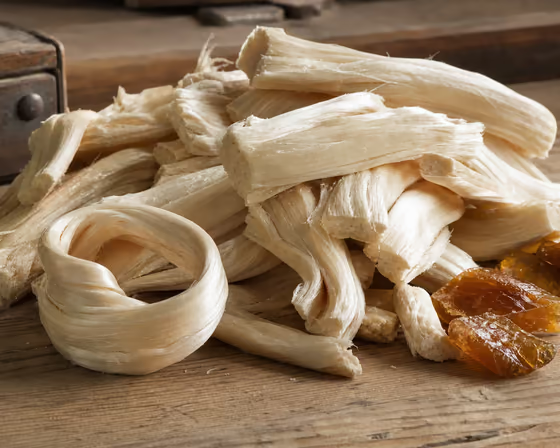
 Alféloa
Sugar or molasses cooked to a hard stage and worked until pale.
Nationwide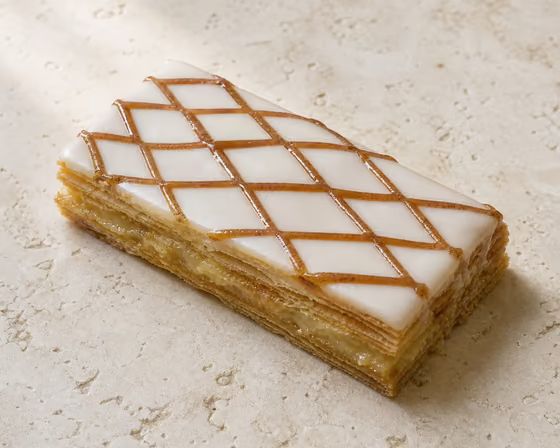 Catalogue image
 Portuguese Gila Allumette
A rectangular puff pastry with cream, gila and cinnamon beneath diamond-patterned royal icing.
Nationwide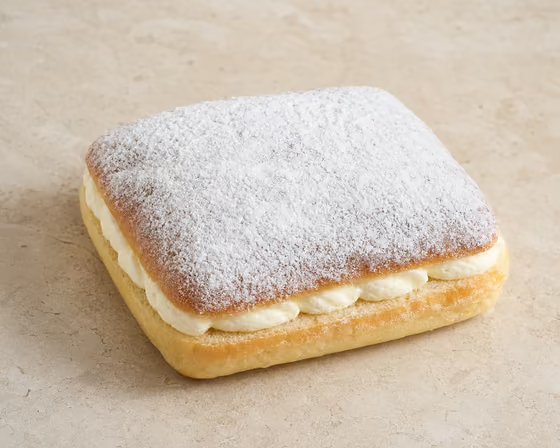 Catalogue image
 Portuguese Brioche Almofada
Light brioche dough, fresh buttercream and icing sugar.
Nationwide Catalogue image
 Portuguese Puff-Pastry Almofada
Puff pastry with white cream, egg sweet and icing sugar—the laminated Almofada variant.
Nationwide