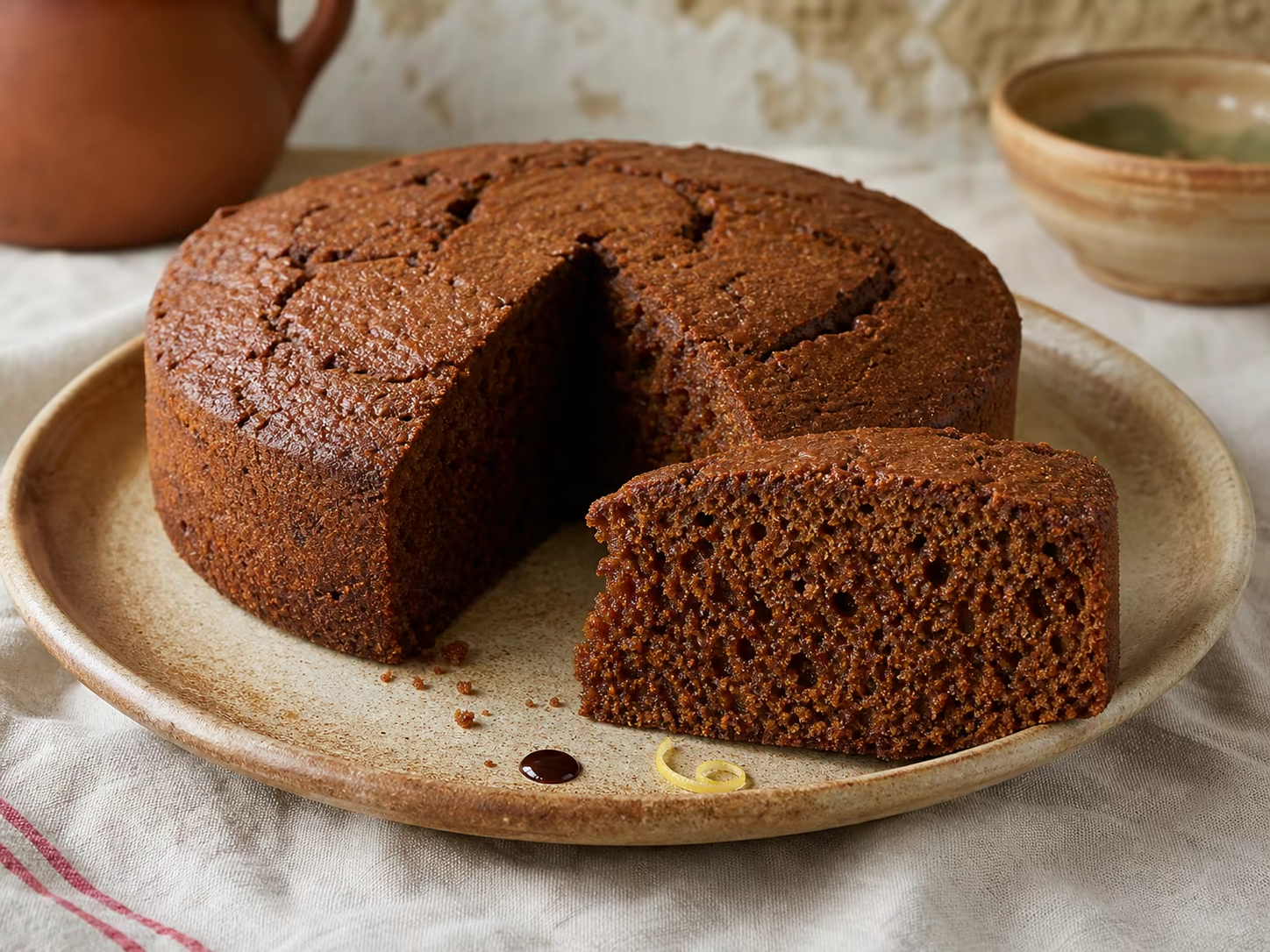
Alentejo Água-mel Cake
Also known as: Alentejo Água-mel Cake · Seda Água-mel Cake
A dark, moist rural cake lifted with whipped egg whites and scented with água-mel, olive oil, lemon and cinnamon.
- Origin
- Alentejo · with a documented version from Seda, Alter do Chão
- Place
- Alentejo · documented version from Seda
- Region
- The Alentejo
- Category
- Cakes & Sweet Breads
- Season
- Festive occasions · honey fairs
- Evidence
- Well documented
Bolo de Água-mel is a festive cake from rural southern Portugal that uses água-mel, the dark syrup made by reducing water used to wash honeycombs. It colours the batter brown, keeps it moist and adds a deeper toasted flavour than ordinary honey. Olive oil or neutral oil, plenty of eggs, sugar, flour, lemon and sometimes cinnamon complete the formula.
It is a plain cake, without filling and usually without decoration. Whipped egg whites keep the crumb airy despite the generous fat and syrup. In Seda, Alter do Chão municipality, the Alentejo Gastronomic Charter records a tray-baked version called “Bolacha de Água-mel”, optionally finished with a thin egg-white-and-sugar coating.
- água-mel syrup
- eggs
- sugar
- olive or neutral oil
- flour
- baking powder
- lemon zest
- cinnamon
- salt
Airy yet moist, with dark sweetness, toasted-caramel and cooked-honey notes, cinnamon warmth and a restrained lift of lemon.
Household proportions vary considerably. Some formulas use only olive oil, others add neutral oil; versions may include milk or coffee, cinnamon and aguardente. It can be round or tray-baked. Seda's Bolacha de Água-mel may receive a coating of whipped egg white and sugar after baking. None should be confused with Madeira bolo de mel, a fermented sugarcane-honey cake rich in spices and nuts.
Look for it at beekeeping and food fairs in the Alentejo, especially where água-mel is still produced, including Avis and other Upper Alentejo communities. It is less regularly stocked by pastry shops than better-known honey cakes, so check availability or bake it at home with genuine água-mel.
Coffee, black tea, fresh cheese or a small glass of pennyroyal liqueur.
The cake belongs to beekeeping communities that sold their more valuable honey and used água-mel at home. What began as household thrift became a preparation for feast days, associated with rural tables in the Alentejo and Algarve.
The Alentejo Gastronomic Charter preserves a formula collected in 2012 from Antónia Rita Casqueiro, born in Seda in 1942. The record classifies it as a festive sweet and describes a tray-baked batter. Scientific studies of água-mel also identify the cake as one of the syrup's typical culinary uses in southern Portugal.
Well documented
Identity supported by institutional, specialist or corroborating sources.
- visitalentejo.pt/fotos/editor2/pdfs/carta_gastronomica_do_alentejo.pdf (opens in a new tab)
- sapientia.ualg.pt/server/api/core/bitstreams/93aa8c1b-a251-4086-85fd-8acc5d250ff4/content (opens in a new tab)
- meldocortico.pt/2020/02/03/bolo-de-agua-mel/ (opens in a new tab)
- aguasdoalgarve.pt/content/receitas-com-agua (opens in a new tab)
Pastries from here — The Alentejo
 Catalogue image
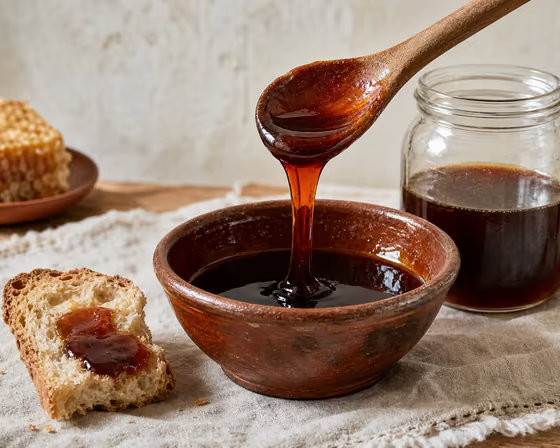
 Portuguese Água-mel Syrup
Water that recovers honey from combs after extraction, filtered and reduced for hours to 70–77° Brix.
The Alentejo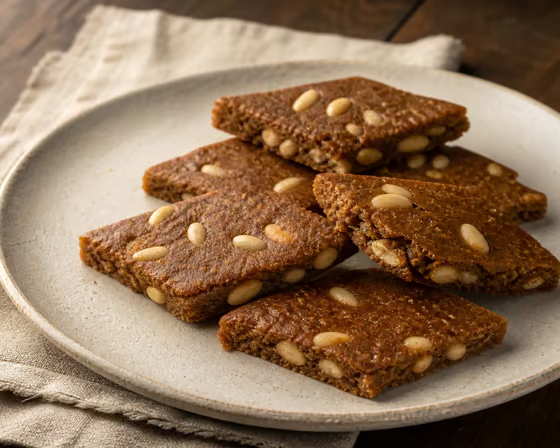 Catalogue image
 Alcomonias
Toasted coarse wheat flour, honey and pine nuts spread and cut into diamonds.
The Alentejo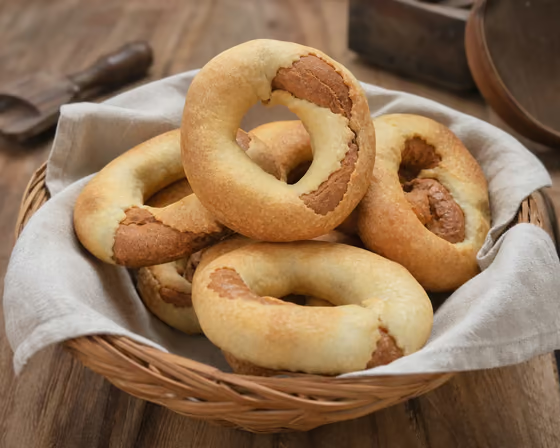 Catalogue image
 Amoreiras-Gare Alcôncoras
A large circular honey-and-olive-oil biscuit born from Amoreiras-Gare's promise-pole tradition.
The Alentejo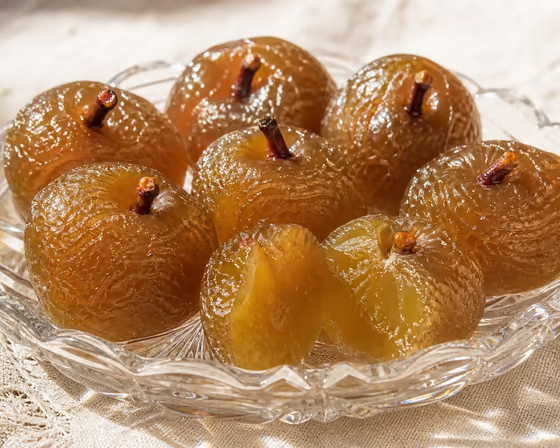 Catalogue image
 Elvas Plums
Protected Rainha Cláudia Verde greengages sold fresh, dried or candied—the sweet form requires at least seven days of slow candying.
The Alentejo