Vizela Bolinhol
Also known as: Vizela Covered Sponge Cake · Pão-de-ló Coberto de Vizela · Bolinhol
The rectangular sponge cake dressed in sugar.
- Origin
- 19th century · Vizela, Minho — documented since 1884
- Place
- Vizela
- Region
- The North
- Category
- Cakes & Sweet Breads
- Season
- Year-round
- Evidence
- Well documented
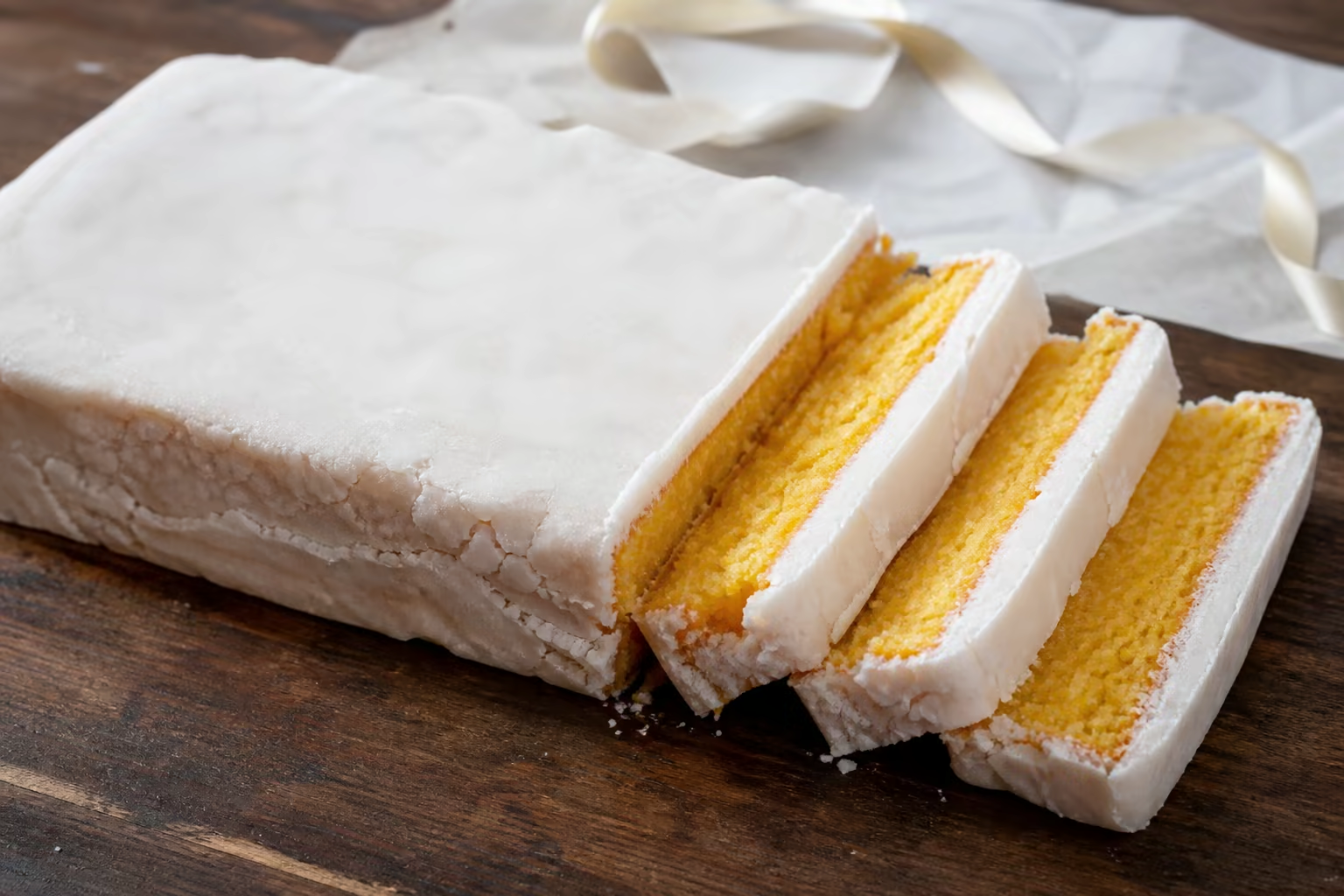
The Bolinhol de Vizela is a cake of egg yolks, sugar and flour, almost always rectangular in shape, set apart from any ordinary pão-de-ló by the thick sugar-syrup glaze that coats it entirely. Beneath that opaque, whitish crust hides a vivid yellow crumb, moist and airy, dense with yolk, that dissolves in the mouth with a warm sweetness.
Its silhouette is unmistakeable: a low, even rectangle, wrapped in paper and tied with a ribbon, as though it contained a gift. It is cut into slices and eaten at room temperature, after a meal or at teatime, always alongside something to cut the sugar.
It is produced entirely by hand by a handful of houses in Vizela, each of which guards its own syrup consistency as a family secret — for it is in the brushing of the glaze over the still-warm cake that the bolinhol's true identity is decided.
- Eggs
- Egg yolks
- Sugar
- Wheat flour
- Sugar and water (for the glaze syrup)
Very sweet and deeply egg-rich, with a soft, moist crumb set against a thin, lightly crisp shell of sugar. It is a frank, round, lingering sweetness without any acidity to cut it.
Each Vizela house keeps its own proportion of yolks and the exact set of the syrup, so the thickness and gloss of the glaze vary from maker to maker. The rectangular shape is the traditional and most recognised form.
The genuine article is found in the artisanal houses of the town of Vizela itself, in pastry shops that bake it daily and sell it wrapped. It is a local counter sweet, available year-round.
It calls for a strong coffee or an unsweetened tea to balance its sweetness; the more indulgent pair it with a glass of Port or Moscatel.
The earliest known reference to the bolinhol dates to the Industrial Exhibition of Guimarães in 1884, where the "pão-de-ló (bolinhol)" was listed among the sweets in regular production in the region. The making of the Pão-de-ló Coberto de Vizela is placed around 1880, with the creation of this distinctive glazed sponge attributed to Joaquina Ferreira Pedrosa da Silva (1874–1922), a professional confectioner.
The reputation of the sweet grew alongside the development of the Vizela spa and the improvement of transport links in the early 20th century, which brought visitors to the town. Its rectangular shape is said to have been officially registered in 1921. Today it is a traditional product recognised by the DGADR, and in 2019 it was crowned one of the "7 Sweet Marvels of Portugal".
Well documented
Identity supported by institutional, specialist or corroborating sources.
- tradicional.dgadr.gov.pt/pt/cat/doces-e-produtos-de-pastelaria/1098-bolinhol-de-vizela (opens in a new tab)
- tradicional.dgadr.gov.pt/en/categories/desserts-and-pastry/1098-bolinhol-de-vizela (opens in a new tab)
- vizela.pt/bolinhol/ (opens in a new tab)
- publico.pt/2001/07/30/jornal/o-paodelo-quadrado-de-vizela-e-a-familia-que-sempre-o-fabricou-160359 (opens in a new tab)
Pastries from here — The North
 Catalogue image
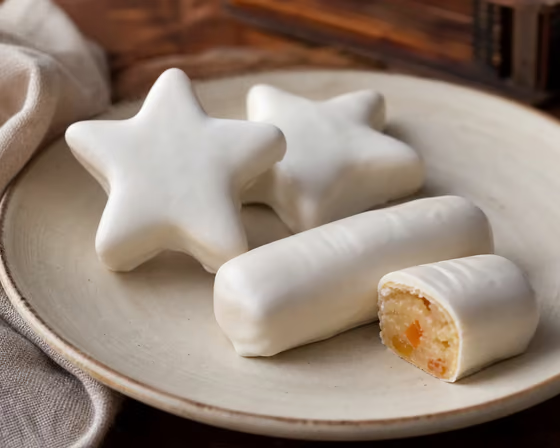
 A Bella Queijadinha de Barcelos
A white star of almond, preserved fruit and family memory.
The North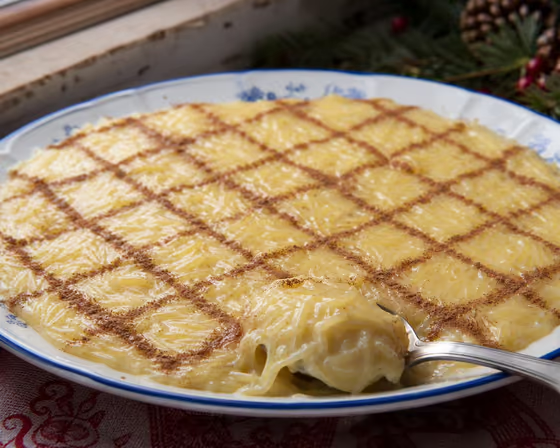 Catalogue image
 Sweet Vermicelli
Fine wheat threads simmered in milk and yolk, scored with cinnamon.
The North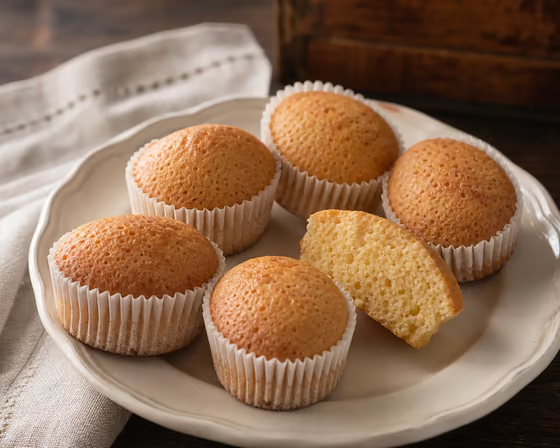 Catalogue image
 Amarantinos
Small egg, lemon and cinnamon cakes whose historical identity is not told consistently by the sources.
The North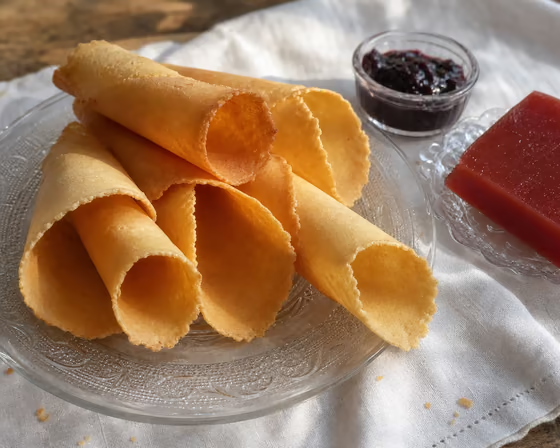 Catalogue image
 Vieira do Minho Cone Wafers
Paper-thin crisp wafers, iron-baked and rolled by hand while still hot.
The North