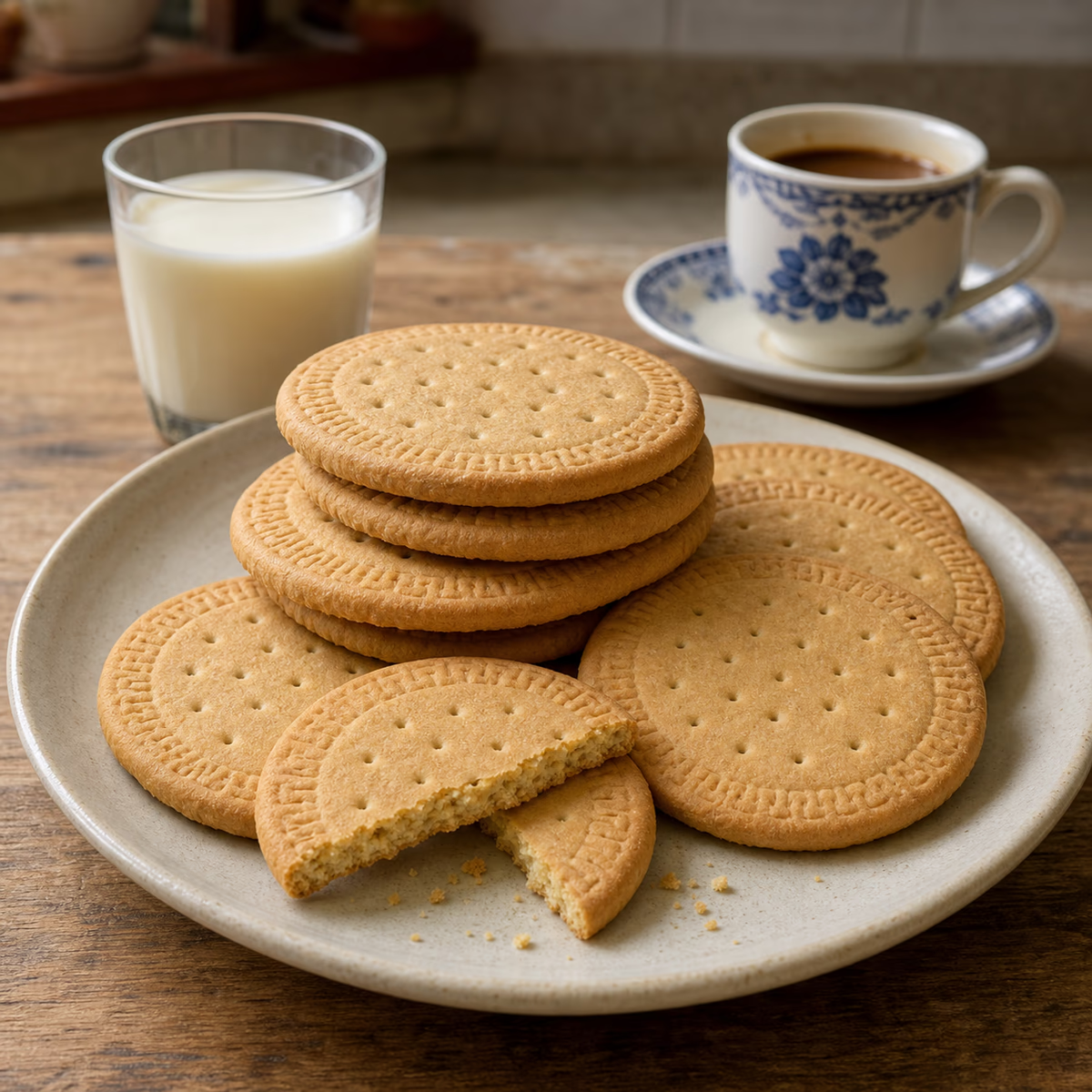
Maria Biscuit in Portugal
Also known as: Maria Biscuit · Marie Biscuit
The thin, mildly sweet round biscuit that spans Portuguese generations and underpins dozens of desserts.
- Origin
- British creation from 1874 · manufactured and culturally embedded in Portugal
- Place
- Nationwide
- Region
- Nationwide
- Category
- Cakes & Sweet Breads
- Season
- Year-round
- Evidence
- Well documented
The Maria biscuit is a thin, round, dry, crisp, mildly sweet biscuit, usually patterned with docking holes and a decorative rim. In Portugal it is eaten plain with milk, tea or coffee and used crushed or whole in bolo de bolacha, serradura, chocolate salami, natas do céu, puddings and dessert bases.
It did not originate in Portugal: it was created in London in 1874 to mark the marriage of the Duke of Edinburgh and Maria Alexandrovna. Its inclusion here documents long Portuguese adoption, industrial production and culinary importance, not a false national origin.
- Wheat flour
- Sugar
- Vegetable fat or butter
- Glucose syrup
- Milk or derivatives
- Malt
- Raising agents
- Salt
Mildly sweet and malty, dry, light and crisp, with a restrained flavour designed to accompany or absorb other ingredients.
Brands vary in fat, toasting and sugar. Golden, wholegrain, sugar-free, lactose-free and chocolate-coated versions are sold.
In supermarkets, grocers, cafés, hospitals, schools and homes nationwide; also as a dessert ingredient.
Milk, coffee, tea, hot chocolate or cream desserts.
The formula spread internationally after 1874. Portuguese food-science research describes Maria as a sweet biscuit highly typical of Portugal and Spain, while contemporary industrial research continues to treat its formulation as a benchmark product in national manufacturing.
Portuguese production has deep roots. Lisbon's nineteenth-century Fábrica da Pampulha sold Maria biscuits, and later Portuguese manufacturers made the format ubiquitous. Its neutral flavour, dry texture and low cost helped turn it into both an everyday snack and a building block of home desserts.
Well documented
Identity supported by institutional, specialist or corroborating sources.
- repositorio.ipv.pt/bitstream/10400.19/1774/1/PEREIRA%2C%20Daniela%20Filipa%20Cardoso%20Pereira_Estudo%20comparativo%20de%20bolacha%20Maria%20de%20diferentes%20marcas.pdf (opens in a new tab)
- repositorio.ucp.pt/entities/publication/66793028-bead-44ae-a23b-2d07e1ad0058 (opens in a new tab)
- museudasmarcas.pt/pecas/lata-da-fabrica-da-pampulha/ (opens in a new tab)
- insular.pt/produto/bolacha-maria/ (opens in a new tab)
Pastries from here — Nationwide
 Catalogue image
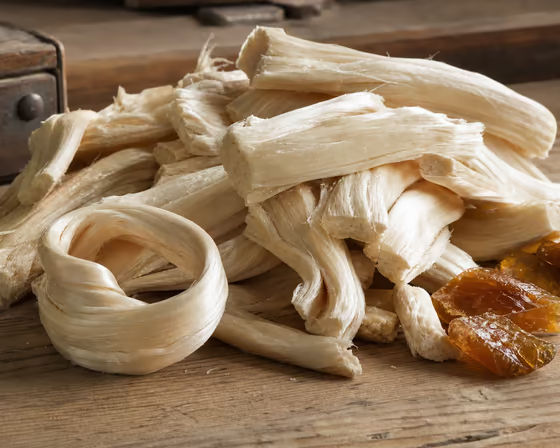
 Alféloa
Sugar or molasses cooked to a hard stage and worked until pale.
Nationwide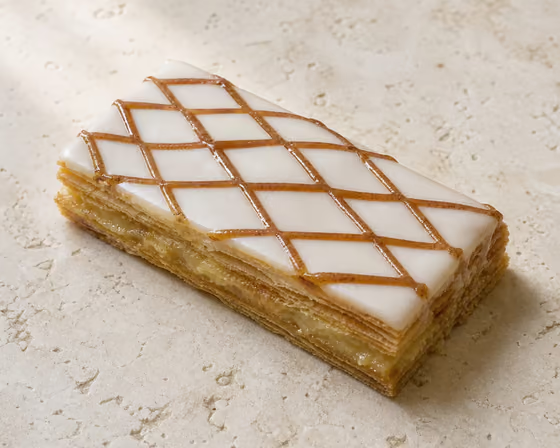 Catalogue image
 Portuguese Gila Allumette
A rectangular puff pastry with cream, gila and cinnamon beneath diamond-patterned royal icing.
Nationwide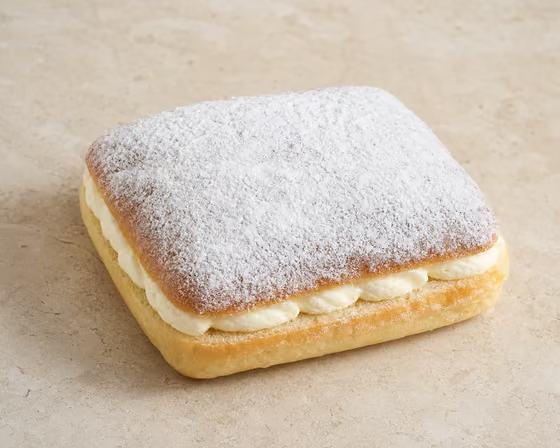 Catalogue image
 Portuguese Brioche Almofada
Light brioche dough, fresh buttercream and icing sugar.
Nationwide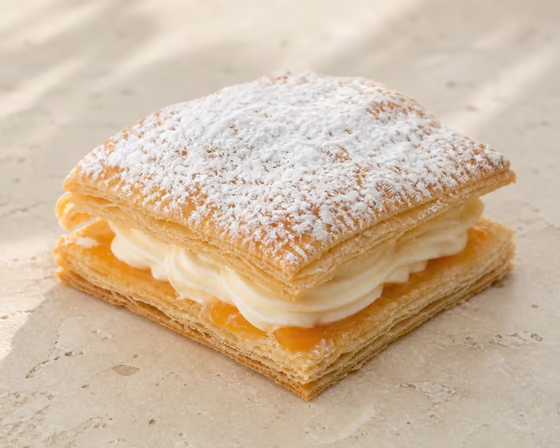 Catalogue image
 Portuguese Puff-Pastry Almofada
Puff pastry with white cream, egg sweet and icing sugar—the laminated Almofada variant.
Nationwide