Lamego Filled Bread
Also known as: Lamego Filled Bread · Lamego Meat Bread
Lamego's low rectangular enriched bread, filled with cured meats or fish.
- Origin
- Lamego · Douro
- Place
- Lamego · Douro
- Region
- The North
- Category
- Cakes & Sweet Breads
- Season
- Year-round; traditionally associated with Saint John's Eve
- Evidence
- Well documented
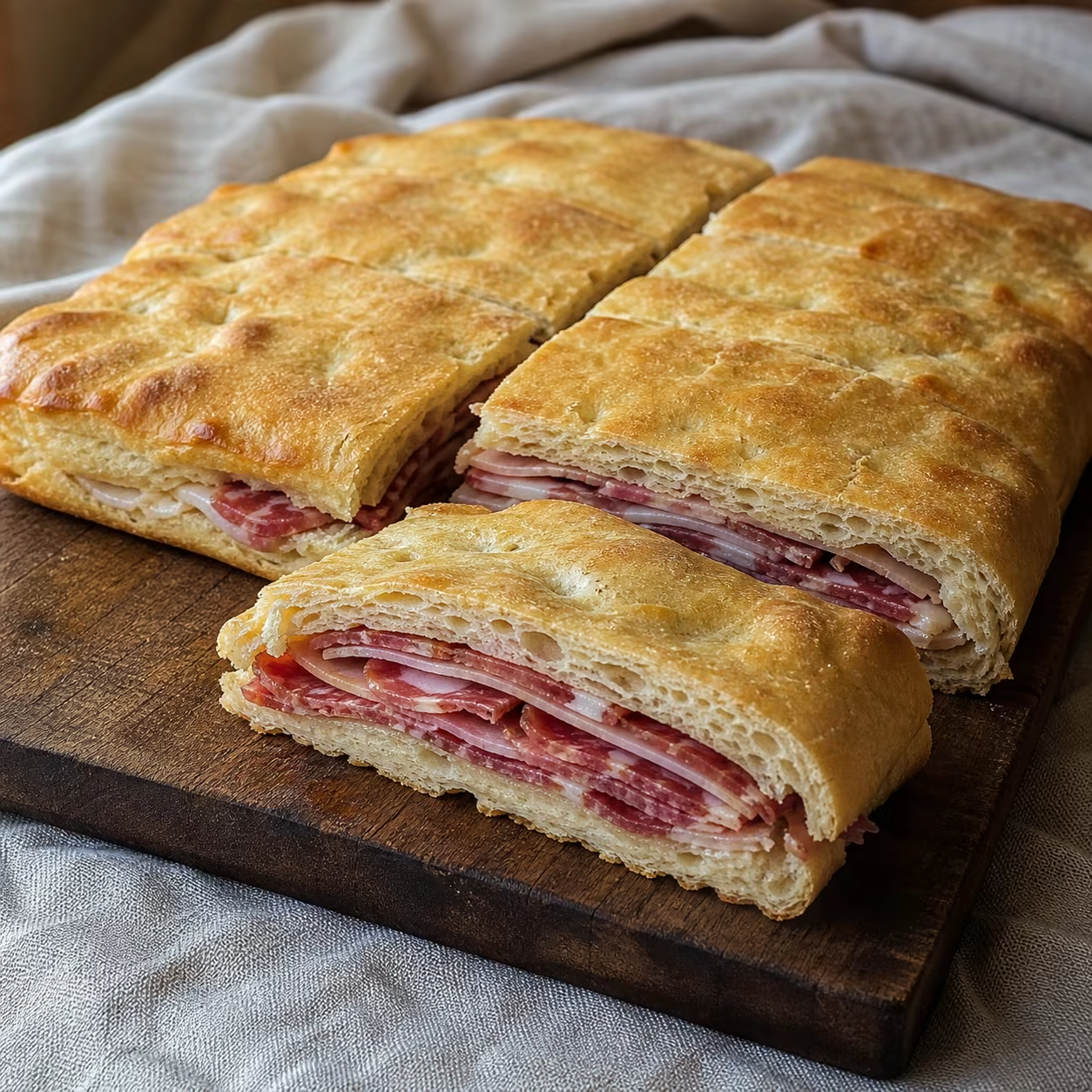
Bola de Lamego is a low rectangular filled bread weighing about 850 grams to one kilogram. Its wheat-flour, water, salt and yeast dough rises first and is then kneaded again with butter and lard or olive oil. One layer lines the baking tin, the filling is added and the remaining dough seals the top before baking.
For the meat version, Portugal's national record specifies sliced presunto, partly cured pork belly and/or salpicão; the baked bread is brushed with butter. Cod and sardine versions use olive oil: shredded cod or boned, butterflied sardines, both with onion. It is cut into squares or rectangles that clearly show dough above and below the filling.
- wheat flour
- water
- salt
- baker's yeast
- butter
- lard or olive oil
- presunto
- partly cured pork belly
- salpicão
Soft, moderately rich dough with a golden crust and the salty, smoky flavour of presunto and salpicão.
Besides the meat bread, cod and sardine versions are traditional. Current producers also make wine-and-garlic pork, salpicão, and presunto-and-ham combinations. Fish versions use olive oil for the tin and top instead of the fats used for meat bread.
At pastry shops in Lamego, including Pastelaria Dalila, which offers several fillings at shops on Avenida 5 de Outubro, Avenida Dr. Alfredo Sousa and Avenida Visconde Guedes Teixeira. Compare local versions and confirm opening hours directly.
Douro red wine, Távora-Varosa sparkling wine or coffee.
The DGADR dates recognition of the Bola de Lamego's distinctive local character to the early 19th century, drawing on testimony from Maria Baguinho, a custodian of recipes from Lamego's former convent. Production moved from homes and former taverns into pastry shops without disappearing from family baking.
It was traditionally eaten as a snack and as an appetiser at festive meals, particularly on Saint John's Eve. It is now available year-round. Pastelaria Dalila documents the local transmission of its recipe by ‘Chiquinho da Seara’ and continues to make versions with presunto and ham, salpicão, pork in wine-and-garlic marinade, cod and sardine.
Well documented
Identity supported by institutional, specialist or corroborating sources.
- tradicional.dgadr.gov.pt/pt/cat/pao-e-produtos-de-panificacao/281-bola-de-lamego (opens in a new tab)
- ptpt.pt/produtos/bola-de-lamego (opens in a new tab)
- pastelariadalila.pt/bolas-de-lamego (opens in a new tab)
- cm-lamego.pt/cmlamego/uploads/document/file/880/08_de_julho_de_2019.pdf (opens in a new tab)
Pastries from here — The North
 Catalogue image
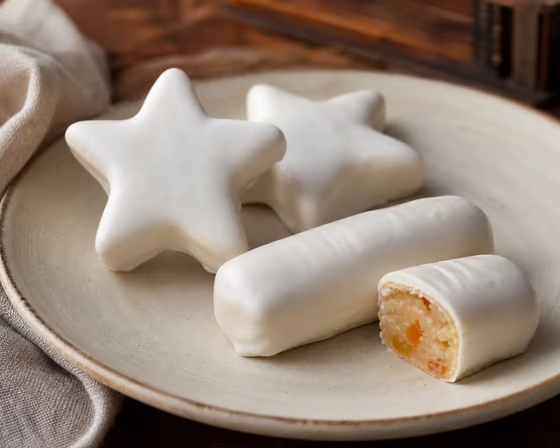
 A Bella Queijadinha de Barcelos
A white star of almond, preserved fruit and family memory.
The North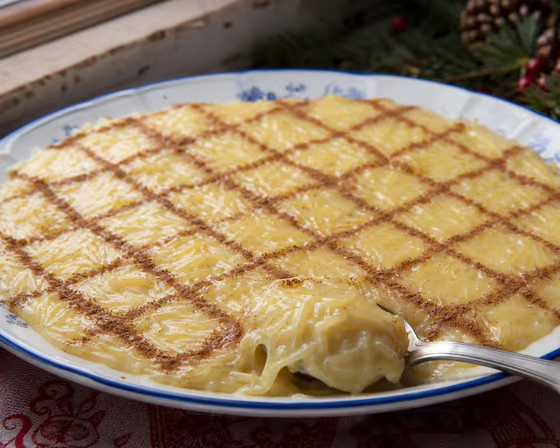 Catalogue image
 Sweet Vermicelli
Fine wheat threads simmered in milk and yolk, scored with cinnamon.
The North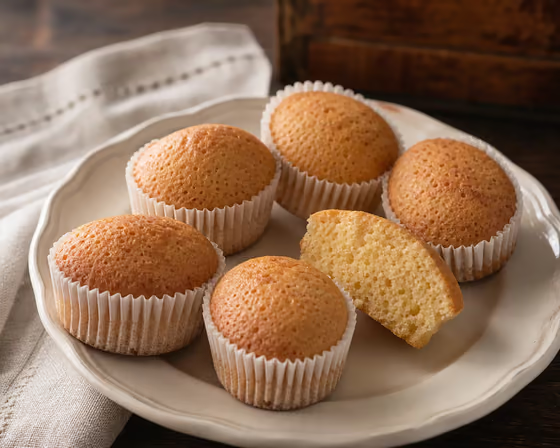 Catalogue image
 Amarantinos
Small egg, lemon and cinnamon cakes whose historical identity is not told consistently by the sources.
The North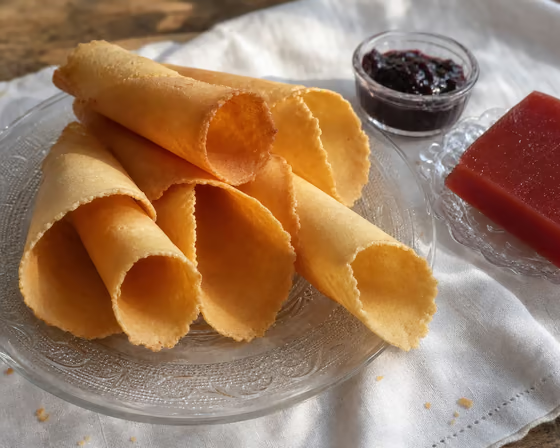 Catalogue image
 Vieira do Minho Cone Wafers
Paper-thin crisp wafers, iron-baked and rolled by hand while still hot.
The North