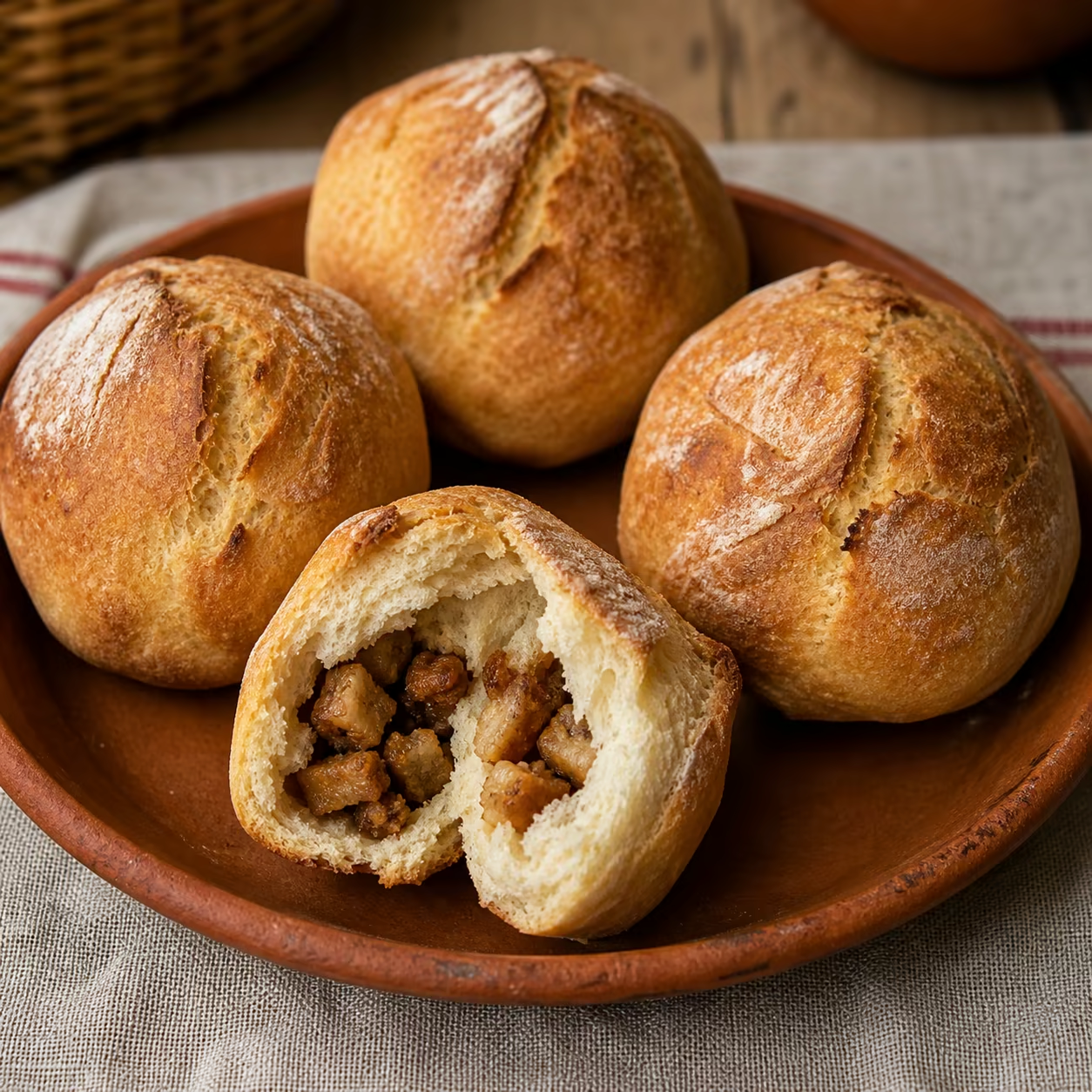
Alentejo Crackling Bread
Also known as: Alentejo Crackling Bread · Crackling-Filled Bread Roll
A small Alentejo bread roll filled with cracklings and baked alongside the household loaf.
- Origin
- Alentejo
- Place
- Alentejo · bread-making tradition
- Region
- The Alentejo
- Category
- Cakes & Sweet Breads
- Season
- Year-round; traditionally linked to bread-making and pig-slaughter season
- Evidence
- Well documented
Bola com Torresmos is an individual, roughly spherical bread no larger than a fist, enclosing pork cracklings at its centre. It starts with a portion of risen pão finto dough—wheat flour, water, salt and yeast. The dough may be kneaded again with a little lard, divided, filled, sealed, dusted with flour and baked alongside the household loaf.
The result is savoury: a golden flour-dusted crust, wheat crumb and rich pieces of pork inside. This structure distinguishes it from Enxovalhada de Torresmos, a large sweet cake in which brown sugar, cinnamon and cracklings are mixed through the dough, and from the Azorean Bolo de Pé de Torresmo, based chiefly on maize and the residue from rendering cracklings.
- wheat flour
- water
- salt
- baker's yeast
- pork cracklings
- lard (optional)
- flour for dusting
Savoury and rustic, with a bread crust, soft crumb and the roasted richness of cracklings concentrated in the filling.
The DGADR records versions filled with linguiça or another sausage. Lard in the dough is optional. The names Bolo or Torta de Torresmos also occur, but they should not automatically be applied to similarly named sweet cakes from other regions.
At traditional bakeries and fairs in the Alentejo. The Torta de Torresmos tradition remains documented in Safara; check availability directly because it is an artisanal product and may be seasonal.
Coffee, Alentejo red wine or tomato soup.
Portugal's Directorate-General for Agriculture and Rural Development records this preparation in its Traditional Portuguese Products inventory, citing the DGDR's 2001 publication. It belongs to the old economy of Alentejo bread-making: part of the household dough and products from pig-slaughter season became breakfast, a snack or a savoury bite without requiring a separate firing of the oven.
The alternative name ‘Torta de Torresmos’ remains documented in Safara, in the municipality of Moura, where a regional bakery continues to make these so-called baking-day breads from family recipes.
Well documented
Identity supported by institutional, specialist or corroborating sources.
- tradicional.dgadr.gov.pt/en/ (opens in a new tab)
- pastelinhos-de-safara.pt/bolos/ (opens in a new tab)
- terrasdesol.pt/PDF/terrasdesol2.pdf (opens in a new tab)
- minhaterra.pt/IMG/pdf/jornalMT11-WEB.pdf (opens in a new tab)
Pastries from here — The Alentejo
 Catalogue image
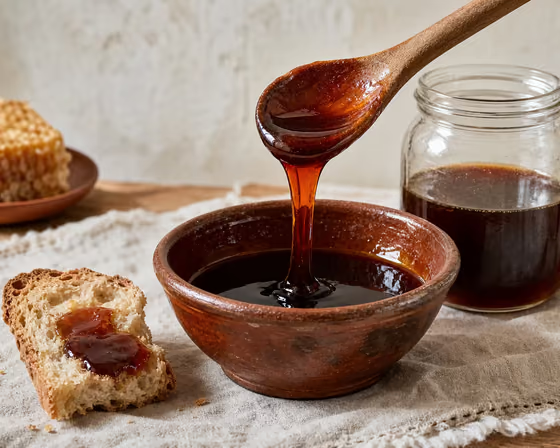
 Portuguese Água-mel Syrup
Water that recovers honey from combs after extraction, filtered and reduced for hours to 70–77° Brix.
The Alentejo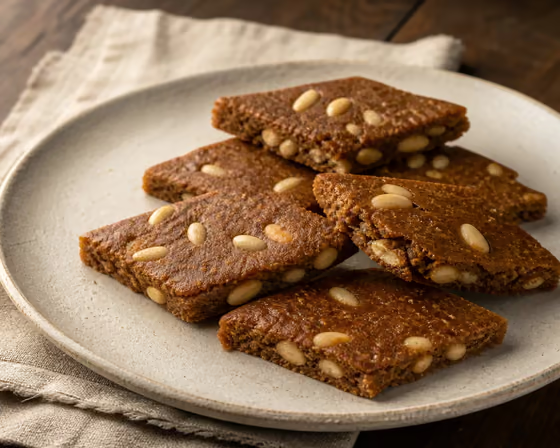 Catalogue image
 Alcomonias
Toasted coarse wheat flour, honey and pine nuts spread and cut into diamonds.
The Alentejo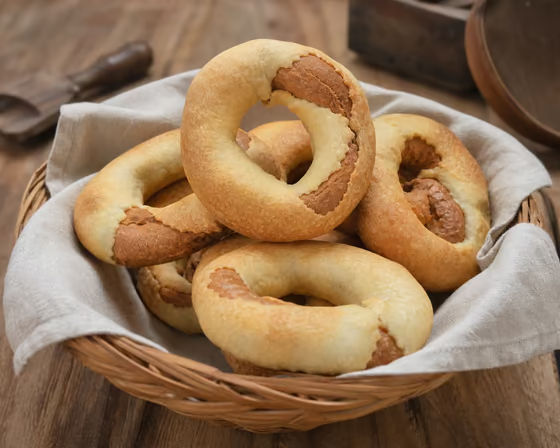 Catalogue image
 Amoreiras-Gare Alcôncoras
A large circular honey-and-olive-oil biscuit born from Amoreiras-Gare's promise-pole tradition.
The Alentejo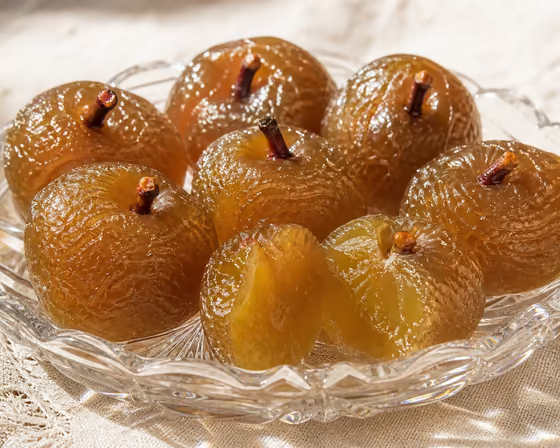 Catalogue image
 Elvas Plums
Protected Rainha Cláudia Verde greengages sold fresh, dried or candied—the sweet form requires at least seven days of slow candying.
The Alentejo