Teixeira Biscuit
Also known as: Doce da Teixeira · Teixeira Sweet
The faithful companion of every Douro fair and pilgrimage.
- Origin
- 19th century · Parish of Teixeira, Baião (Douro)
- Place
- Teixeira · Baião, Douro
- Region
- The North
- Category
- Cakes & Sweet Breads
- Season
- Year-round · at its peak during summer pilgrimages
- Evidence
- Well documented
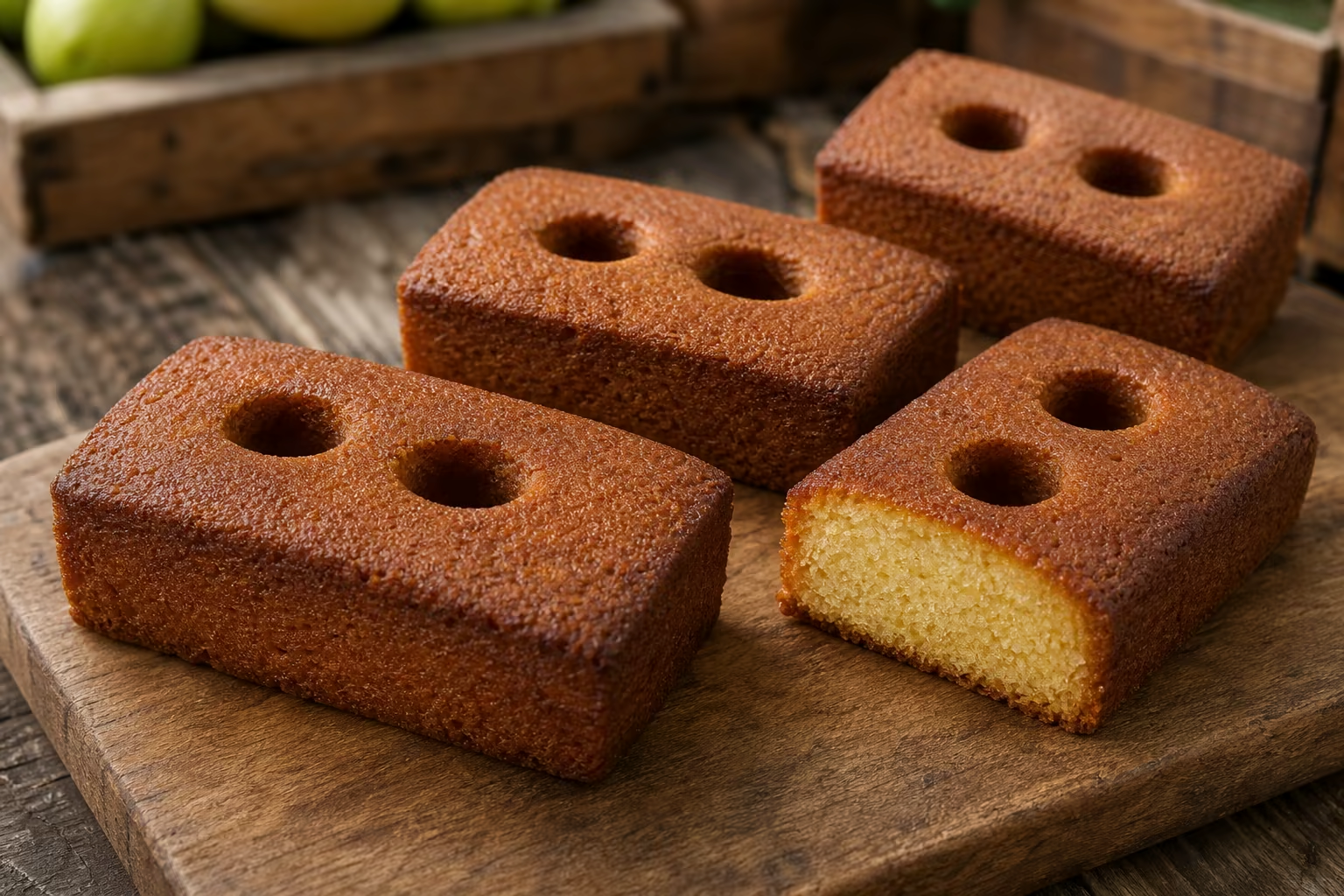
The Biscoito da Teixeira is less biscuit, more cake: a dense, compact piece, moulded into a rectangular shape and baked in a wood-fired oven, emerging dark on the outside and firm within. The more robust versions from the southern Douro, around Lamego, have a tight crumb and an almost toasted crust, marked on top by two holes that form a figure-of-eight on its side.
In the mouth it is not excessively sweet. Lemon dominates — both zest and juice — at times accompanied by a hint of cinnamon, set in a dough that stays moist and keeps for days at room temperature. That staying power is what made it inseparable from the fairs: it was sold by the piece, wrapped in a plastic bag, to be eaten by hand throughout the pilgrimage.
Served plain, cut into thick slices, warm or already cold. It is pocket food and road food, made to last and to be shared at a summer festival table.
- Flour
- Yellow sugar
- Eggs
- Lemon zest
- Lemon juice
- Salt
- Yeast
- Cinnamon (in some versions)
Restrained in sweetness and decidedly citrusy, with lemon leading the way and, at times, a whisper of cinnamon. The texture is dense and compact, moist within and firm-crusted, closer to a cake than a biscuit.
Two broad families exist: the pale, white-crumbed and crisper one, where only lemon speaks; and the dark, yellower one with eggs and cinnamon, closer to a cake — the latter most associated with the Lamego area. There is also a "fine biscuit" version made with less water.
Seek it out at the fairs, festivals and pilgrimages of the Douro, especially in summer, where it is sold by the piece in plastic bags. Bakeries and artisan producers in Lamego and Baião make it year-round.
It calls for a coffee to cut the citrus, though locals never turn down a glass of Port — or, on a festive day, a flute of sparkling wine.
Unlike so many Portuguese sweets born behind convent grilles, the Biscoito da Teixeira has humble origins. The simplicity of the ingredients — flour, sugar, lemon, salt and leavening — points to the modest communities of the parish of Teixeira, in Baião, from which it takes its name. There are records of its presence at pilgrimages in the 19th century, sold from fair to fair along both banks of the Douro.
From the hills of Baião the biscuit spread across the whole Douro valley, picking up local accents as it went. In the Lamego area, south of the river, the darker, more cake-like version took hold, distinct from the paler, crisper-crumbed one made elsewhere. In 2008 a space dedicated to its promotion opened in Teixeira itself, a mark of the regional pride invested in a sweet that has been a fixture at every festival for generations.
Well documented
Identity supported by institutional, specialist or corroborating sources.
- pt.wikipedia.org/wiki/Biscoito_da_Teixeira (opens in a new tab)
- tradicional.dgadr.gov.pt/pt/cat/doces-e-produtos-de-pastelaria/996-biscoito-da-teixeira-doce-da-teixeira (opens in a new tab)
- viagens.sapo.pt/saborear/gastronomia/artigos/biscoito-da-teixeira-de-lamego-para-saborear-com-cafe-vinho-do-porto-ou-champanhe (opens in a new tab)
- douroalliance.org/gabineteturismo/pt/gabinete-de-turismo/ofertas/ofertas/biscoito-da-teixeira-o-compadre-das-feiras-e-romarias.html (opens in a new tab)
Pastries from here — The North
 Catalogue image
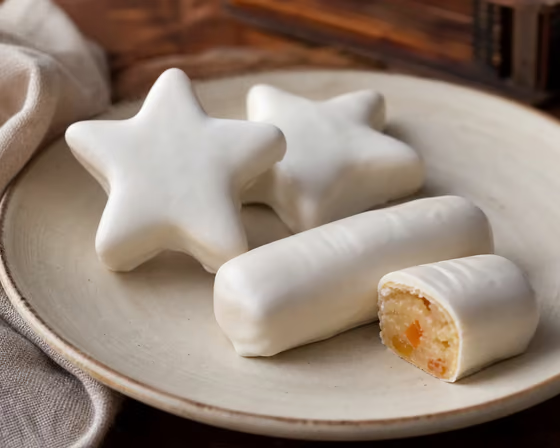
 A Bella Queijadinha de Barcelos
A white star of almond, preserved fruit and family memory.
The North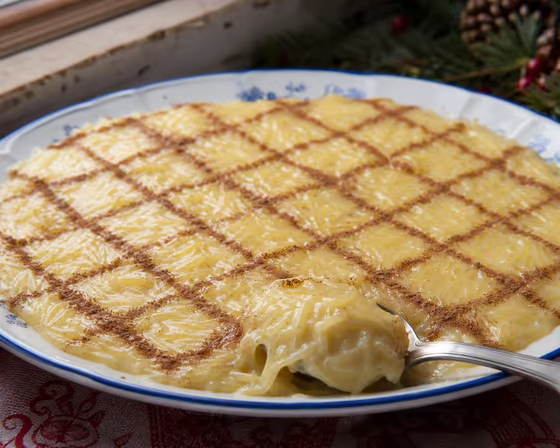 Catalogue image
 Sweet Vermicelli
Fine wheat threads simmered in milk and yolk, scored with cinnamon.
The North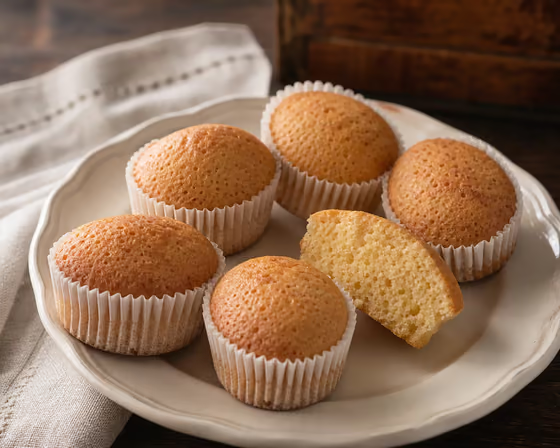 Catalogue image
 Amarantinos
Small egg, lemon and cinnamon cakes whose historical identity is not told consistently by the sources.
The North Catalogue image
 Vieira do Minho Cone Wafers
Paper-thin crisp wafers, iron-baked and rolled by hand while still hot.
The North