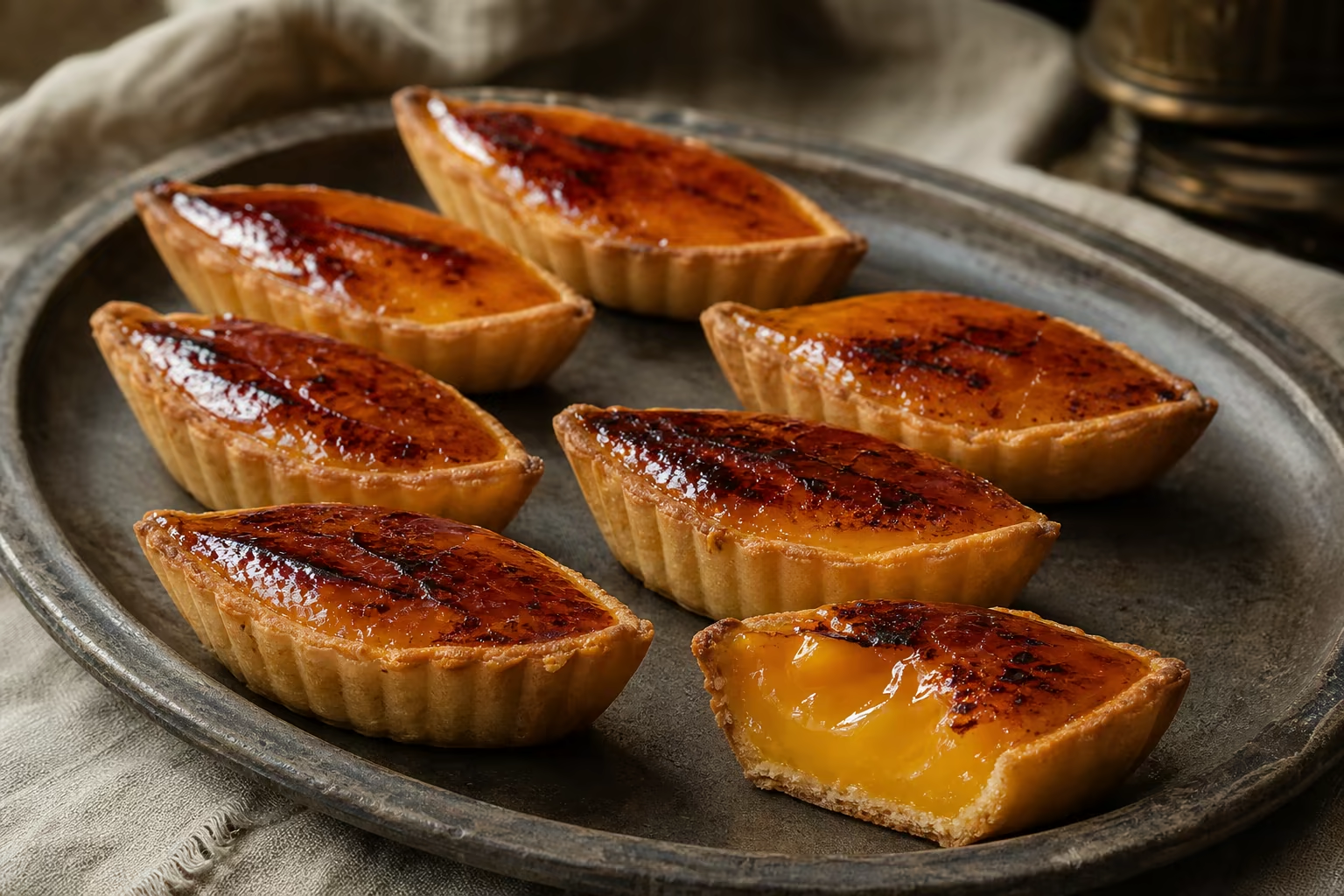
Lamego Santa Clara Egg-Yolk Boats
Also known as: Lamego Santa Clara Boats · Santa Clara Egg-Yolk Boats
Buttery boats of egg-yolk cream and Port, sealed beneath an iron-burned sugar crust.
- Origin
- Lamego · convent-style confectionery preserved by Pastelaria da Sé
- Place
- Lamego · Douro
- Region
- The North
- Category
- Convent Sweets
- Season
- Seasonality not documented; availability requires confirmation
- Evidence
- Limited documentation
Lamego's Barquinhos de Santa Clara are small open pastries shaped like boats. A thin, lightly buttered shell holds creamy egg-yolk sweet scented with Port wine. A very fine layer of sugar is burned with a hot iron on top: it breaks with a crack and reveals the golden cream beneath.
A tasting published in 2024 directly documents the product at Pastelaria da Sé and describes its shell, filling, wine and finish. At a national fair in 2025, confectioner Anabela Pereira independently confirmed that the house's boats are 'burned with Port wine'. Accessible sources do not publish the house proportions or complete method, so this page describes the sweet without presenting an invented recipe.
The image on this page is an original editorial photograph created from the documented characteristics. It does not reproduce the producer's display, packaging, branding or photographic composition.
- Thin buttered pastry shell
- Egg-yolk sweet
- Port wine
- Sugar for caramelizing
A thin buttery shell, rich yolk cream with a wine-like aroma and a glassy toasted-caramel cap that cracks at the first touch.
Do not confuse these with ovos-moles boats from other regions or Amarante's Brisas do Tâmega. The documented Lamego version is distinguished by Port wine and sugar burned with a hot iron.
At Pastelaria da Sé — Casa das Bôlas in Lamego and at convent-pastry fairs attended by the shop. Confirm availability before visiting, as artisanal production may vary.
As an editorial suggestion, espresso, black tea or a small glass of tawny Port.
Pastelaria da Sé opened in Lamego in 1966, and the family behind it says it gathered convent recipes passed on by local confectioners and customers. Barquinhos de Santa Clara now belong to that collection alongside Peixinhos de Chila, Lamegos, Lusitanos and Morgadinhos.
The speciality remains active and identifiable: it was recorded on a research route devoted to Portuguese confectionery, appears in reports on the shop's range and was presented again by its maker at the National Convent Confectionery Fair in Lorvão in 2025.
Its name connects the sweet to Portugal's broad Clarissan tradition, but the consulted sources do not establish which convent transmitted this formula or give it a documented early creation date. Its historical link is therefore presented as the house tradition, not as settled convent history.
Limited documentation
The identity is documented, but its origin, composition or availability has limited sourcing.
- pastelariadase.pt (opens in a new tab)
- uol.com.br/nossa/noticias/redacao/2024/12/12/brasileira-desbravou-portugal-atras-de-doces-e-virou-jurada-do-masterchef.htm (opens in a new tab)
- beiradigitaltv.pt/video-sabor-e-tradicao-marcam-presenca-na-mostra-nacional-de-docaria-conventual-de-lorvao/ (opens in a new tab)
- youtube.com/watch (opens in a new tab)
- nit.pt/comida/cafes-e-bares/casa-das-bolas-porto (opens in a new tab)
- portugaleconomyprobe.org/pt/o-que-fazer/ (opens in a new tab)
Pastries from here — The North
 Catalogue image
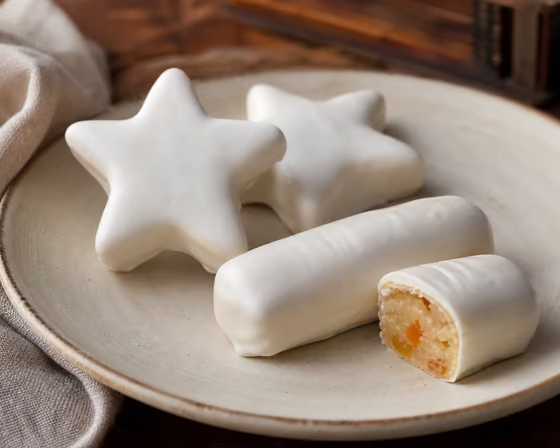
 A Bella Queijadinha de Barcelos
A white star of almond, preserved fruit and family memory.
The North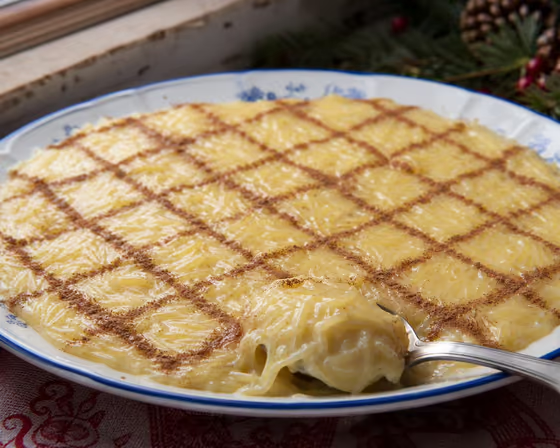 Catalogue image
 Sweet Vermicelli
Fine wheat threads simmered in milk and yolk, scored with cinnamon.
The North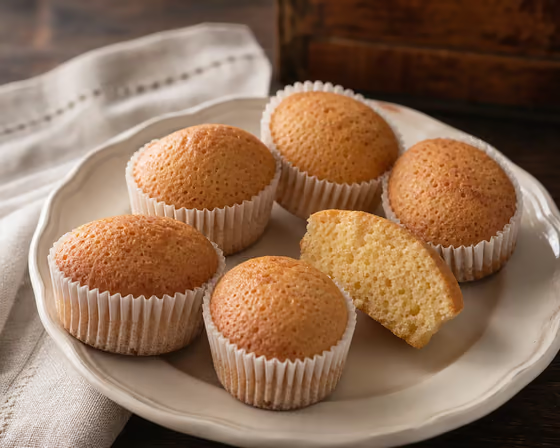 Catalogue image
 Amarantinos
Small egg, lemon and cinnamon cakes whose historical identity is not told consistently by the sources.
The North Catalogue image
 Vieira do Minho Cone Wafers
Paper-thin crisp wafers, iron-baked and rolled by hand while still hot.
The North