Sanguedo Santa Maria Chestnut Bundles
Also known as: Santa Maria Bundles · Chestnut Bundles of Sanguedo Monastery
Handmade chestnut parcels recovered by a social institution in Sanguedo.
- Origin
- Sanguedo · Santa Maria da Feira
- Place
- Sanguedo · Santa Maria da Feira
- Region
- The North
- Category
- Convent Sweets
- Season
- No specific season documented in the sources reviewed
- Evidence
- Well documented
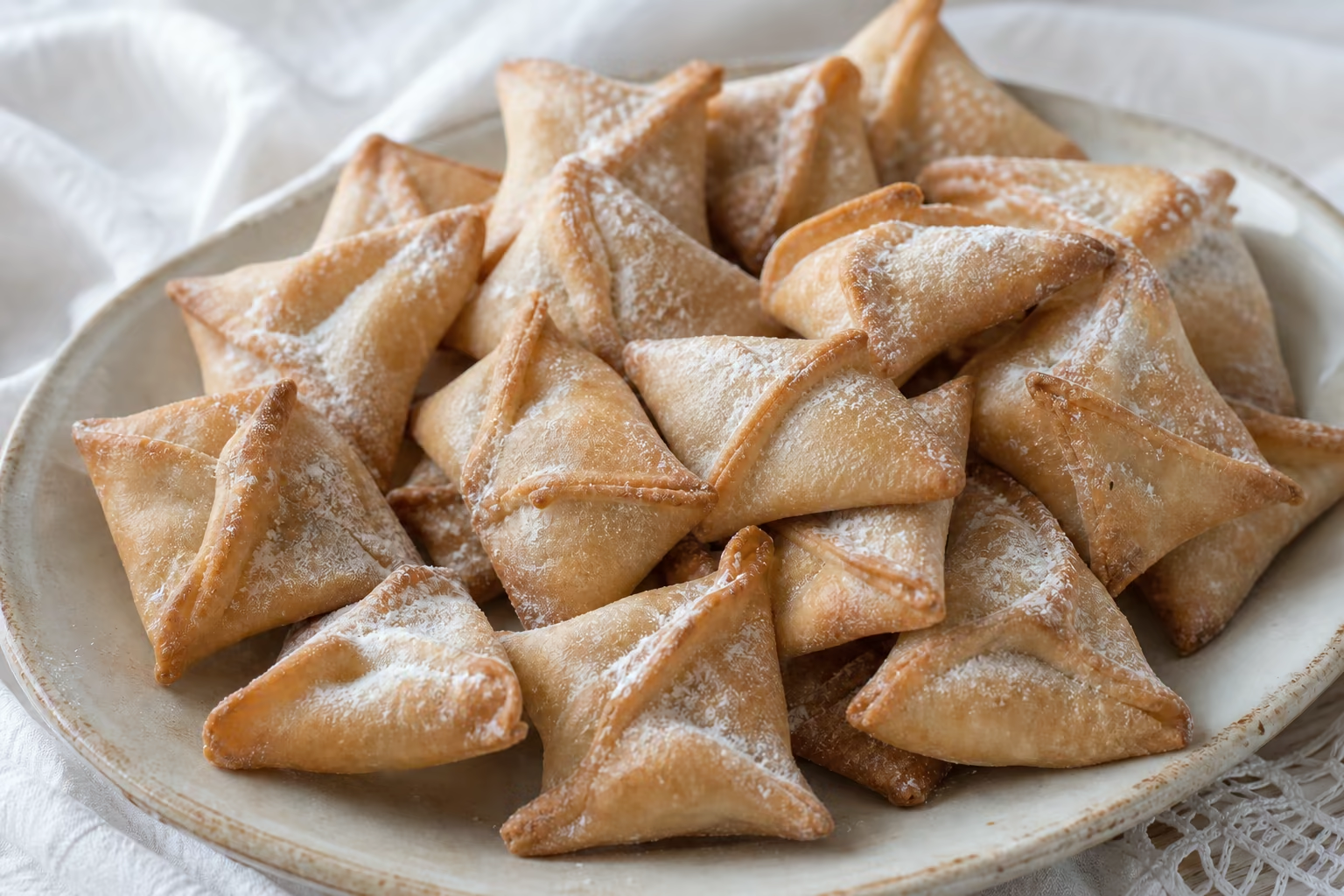
Trouxas de Santa Maria are chestnut sweets associated with Sanguedo in the municipality of Santa Maria da Feira. The municipality includes “Trouxas de Santa Maria de Sanguedo” among the strongly traditional delicacies of its gastronomic heritage. A Portuguese traditional-products list records the more descriptive identity “Chestnut Bundles of Sanguedo Monastery (Santa Maria da Feira)”.
A 2013 case study published by CNIS documents a project by CASTIIS, Sanguedo's social-assistance centre: handmade chestnut sweets based on a convent recipe recovered after three years of research. At that time, the document said the product was ready for launch and commercialization would begin shortly; it does not establish that production continued to the present.
A photograph in the case study shows small, thin and irregular golden parcels, closed at four points and dusted with sugar. This page uses a newly created editorial reconstruction of those documented visual traits, not the CASTIIS photograph or a certified reproduction of the product.
- Chestnut
- Remaining ingredients of the convent recipe — formula unpublished
Chestnut is the only ingredient and flavour explicitly identified. The reviewed sources document no interior texture, aromatics, sweetness level or tasting assessment.
“Trouxas de Santa Maria” is the name used by the municipality and the CASTIIS study; “Chestnut Bundles of Sanguedo Monastery” is the extended form in the traditional-products list. The sources treat these as the same Sanguedo identity, distinct from egg-yolk trouxas and the Madeira and Malveira products.
The municipality continues to recognise the sweet as Sanguedo gastronomic heritage, but the reviewed sources do not establish a current producer or outlet. Contact CASTIIS or the municipality directly before travelling.
Not documented in the sources reviewed.
The convent connection is supported by two complementary pieces of evidence: the CASTIIS study calls it a convent recipe, while the traditional-products list includes Sanguedo Monastery in the sweet's name. None of the open sources publishes the recipe, identifies its author or dates the original creation.
The existence of Sanguedo's religious community is documented in an Universidade Aberta dissertation. It places the creation of the Monastery of Reparation at Sanguedo between the late eighteenth century and the beginning of Portugal's Liberal period, through the initiative of Rosa de Jesus Tavares, a nun from Lisbon's Monastery of Reparation, with the agreement of the Bishop of Porto and help from local faithful. This historical context does not, by itself, date the sweet.
The project described in 2013 sought both to preserve local culture and to generate income supporting underfunded social services, including a residential centre for children and young people. That social purpose is documented; claims of present-day production or sales would require new confirmation.
Well documented
Identity supported by institutional, specialist or corroborating sources.
- cm-feira.pt/en_US/patrim%C3%B3nio-gastron%C3%B3mico (opens in a new tab)
- pasipss.cnis.pt/images/pdf/CasoPiloto_CASTIIS.pdf (opens in a new tab)
- eubrdialogues.com/sites/default/files/acoes/documentos/049xlix_lista_de_produtos_tradicionais_portugueses_v_19_0.pdf (opens in a new tab)
- repositorioaberto.uab.pt/server/api/core/bitstreams/af640883-33ca-49ad-b698-bd08501f0e61/content (opens in a new tab)
- cm-feira.pt/documents/20142/0/Plano%26Or%C3%A7amento2022.pdf/1ba4719e-518c-55f5-8606-64d9b9719eba (opens in a new tab)
Pastries from here — The North
 Catalogue image
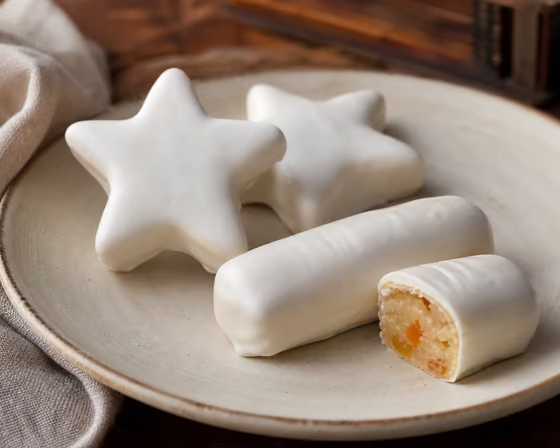
 A Bella Queijadinha de Barcelos
A white star of almond, preserved fruit and family memory.
The North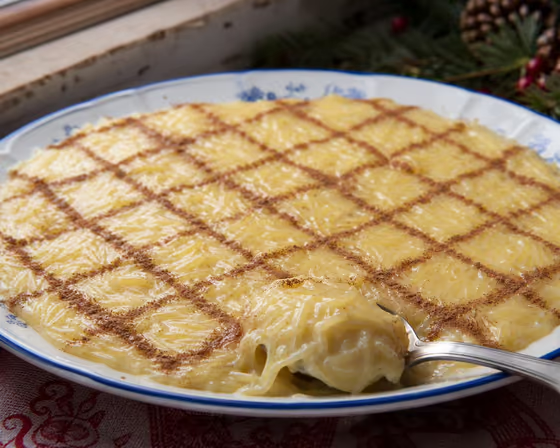 Catalogue image
 Sweet Vermicelli
Fine wheat threads simmered in milk and yolk, scored with cinnamon.
The North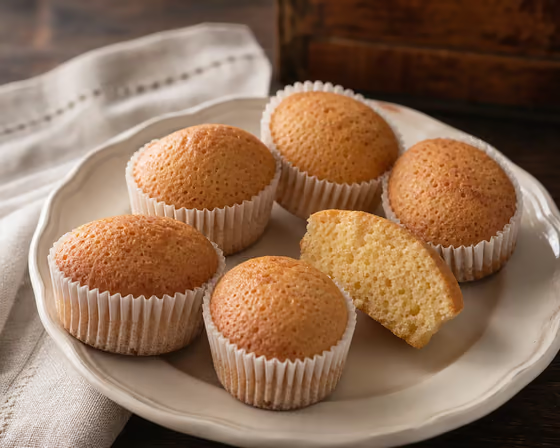 Catalogue image
 Amarantinos
Small egg, lemon and cinnamon cakes whose historical identity is not told consistently by the sources.
The North Catalogue image
 Vieira do Minho Cone Wafers
Paper-thin crisp wafers, iron-baked and rolled by hand while still hot.
The North