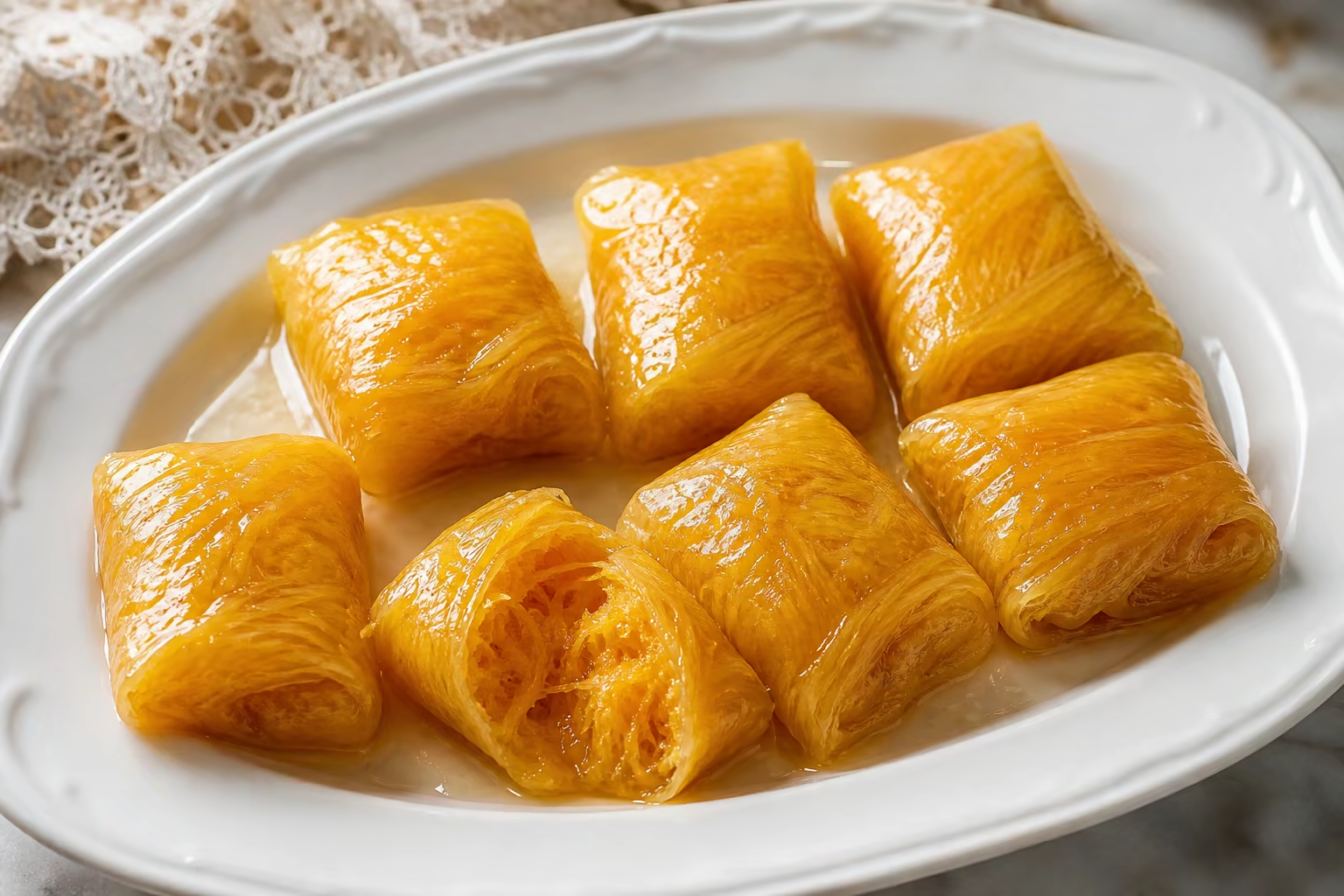
Trouxas de Ovos
Also known as: egg bundles · egg yolk bundles
Sheets of egg yolk poached in syrup and rolled into glossy little golden bundles.
- Origin
- Convent sweet · Caldas da Rainha, Oeste region
- Place
- Caldas da Rainha
- Region
- The West
- Category
- Egg-Yolk Sweets
- Season
- Year-round
- Evidence
- Well documented
Trouxas de ovos are among the most distinctive egg sweets of the Oeste and a speciality firmly tied to Caldas da Rainha. They are made from almost nothing — yolks, sugar and water — but the cleverness lies in the technique: a spoonful of yolk is dropped into boiling syrup, where it sets into a thin sheet that is then flipped, drained and trimmed. The trimmings are kept for the centre and the whole thing is rolled up, forming a small trouxa — a glossy yellow bundle.
Once shaped, the bundles are generously dipped in more syrup, which leaves them shiny and soaked through. Each one is small — about five centimetres long — and weighs just enough for a bite or two. It is a festive sweet: it once graced banquets, weddings and Christmas suppers, and remains a fixture in the bakeries of Caldas to this day.
- egg yolks
- eggs (with little white)
- sugar
- water
- sugar syrup
- cinnamon or lemon (to scent)
Very sweet and intensely yolky, with that deep, velvety flavour of egg cooked in sugar. The texture is tender and faintly jelly-like, moist from the syrup that soaks them inside and out; the surface glistens and all but melts on the tongue. At the centre of each bundle sits a slightly denser core made from the rolled trimmings.
Each region and former convent fixed its own version, varying the syrup's stage and the filling: some roll only the sheet of yolk, while others tuck egg threads into the centre or a yolk cream thickened with flour and ground almond. Some houses scent the syrup with cinnamon or lemon peel. The Caldas version stays plain — yolk, sugar and water — letting the egg speak for itself.
In the traditional pastry shops and bakeries of Caldas da Rainha and the Oeste, where they are a long-standing local speciality. Look for them hand-made, small, glossy and steeped in syrup — often sold by weight, by the piece or in small boxes, alongside the region's other convent sweets.
A tawny Port or a Moscatel sits well with the sweetness; a short espresso cuts the richness of the yolk. It pairs naturally with the Oeste region's other egg sweets.
Like all egg-yolk confectionery, trouxas were born of convent logic. The whites were spent starching habits and clarifying wine, and the yolks that piled up by the dozen were turned into rich, golden sweets. The recipe spread through the most refined convent confectionery, with distinct versions from north to south — from Vila do Conde to Beja — and Caldas da Rainha settled on a strong tradition of making and eating them.
The exact origin is lost, but the know-how is traditionally credited to the cloisters: in the region, the Convento de Cós, tied to the Monastery of Alcobaça, is named as a house with a confectionery tradition, while the Convento de Nossa Senhora da Conceição in Beja is cited as one of the great centres that spread these sweets. The fame of trouxas is old — Eça de Queirós mentioned them in his 19th-century writing. Today the Trouxas de Ovos das Caldas are recognised as a Portuguese traditional product.
Well documented
Identity supported by institutional, specialist or corroborating sources.
- tradicional.dgadr.gov.pt/pt/cat/doces-e-produtos-de-pastelaria/271-trouxas-de-ovos-das-caldas (opens in a new tab)
- tradicional.dgadr.gov.pt/en/categories/desserts-and-pastry/271-trouxas-de-ovos-das-caldas (opens in a new tab)
- virgiliogomes.com/index.php/cronicas/509-trouxas-de-ovos (opens in a new tab)
- amesadosportugueses.pt/receitas/docaria/trouxas-de-ovos-do-convento-de-cos (opens in a new tab)
- www3.gertal.pt/receitas/trouxas-de-ovos/ (opens in a new tab)
- tesourosdojardim.com/trouxas-de-ovos-um-tesouro-da-docaria-conventual-portuguesa/ (opens in a new tab)
Pastries from here — The West
 Catalogue image
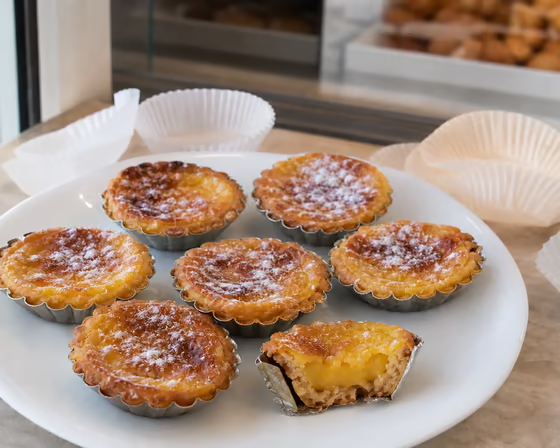
 Friends of Peniche
The sweet named after friends you should not trust.
The West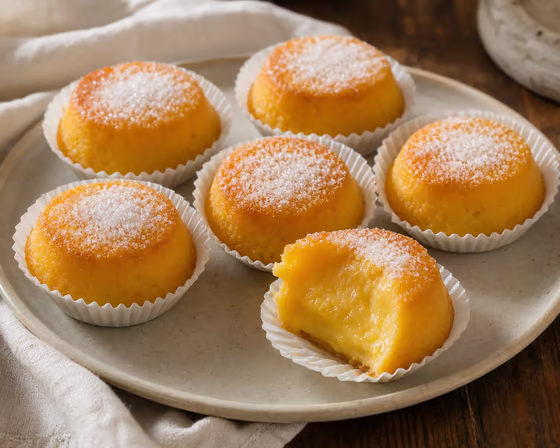 Catalogue image
 Areias Brancas
Small yolk-and-almond pudding cakes, named by the coast and covered with white sugar.
The West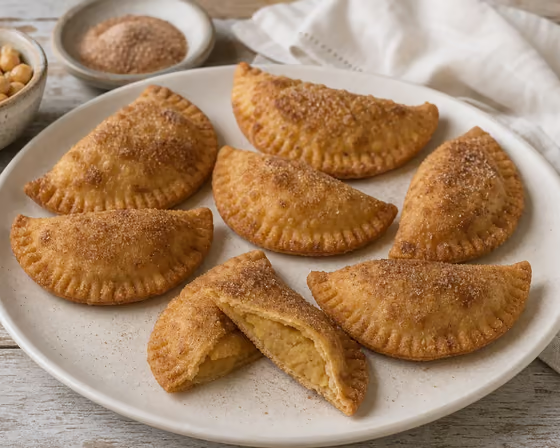 Catalogue image
 Peniche Chickpea Azevias
Thin fried half-moons with a sweet, creamy chickpea, almond and egg-yolk filling.
The West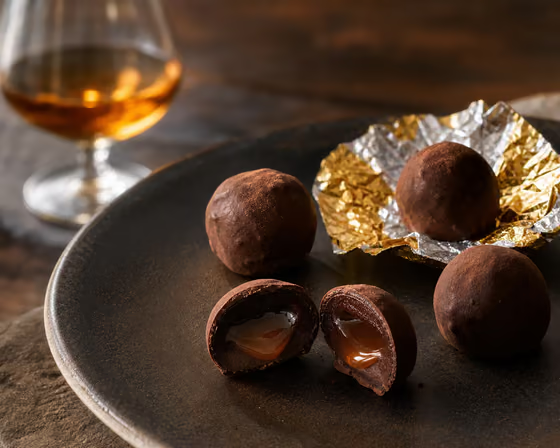 Catalogue image
 Lourinhã DOC Brandy Bonbon
A dark-chocolate bonbon with a Lourinhã DOC brandy heart.
The West