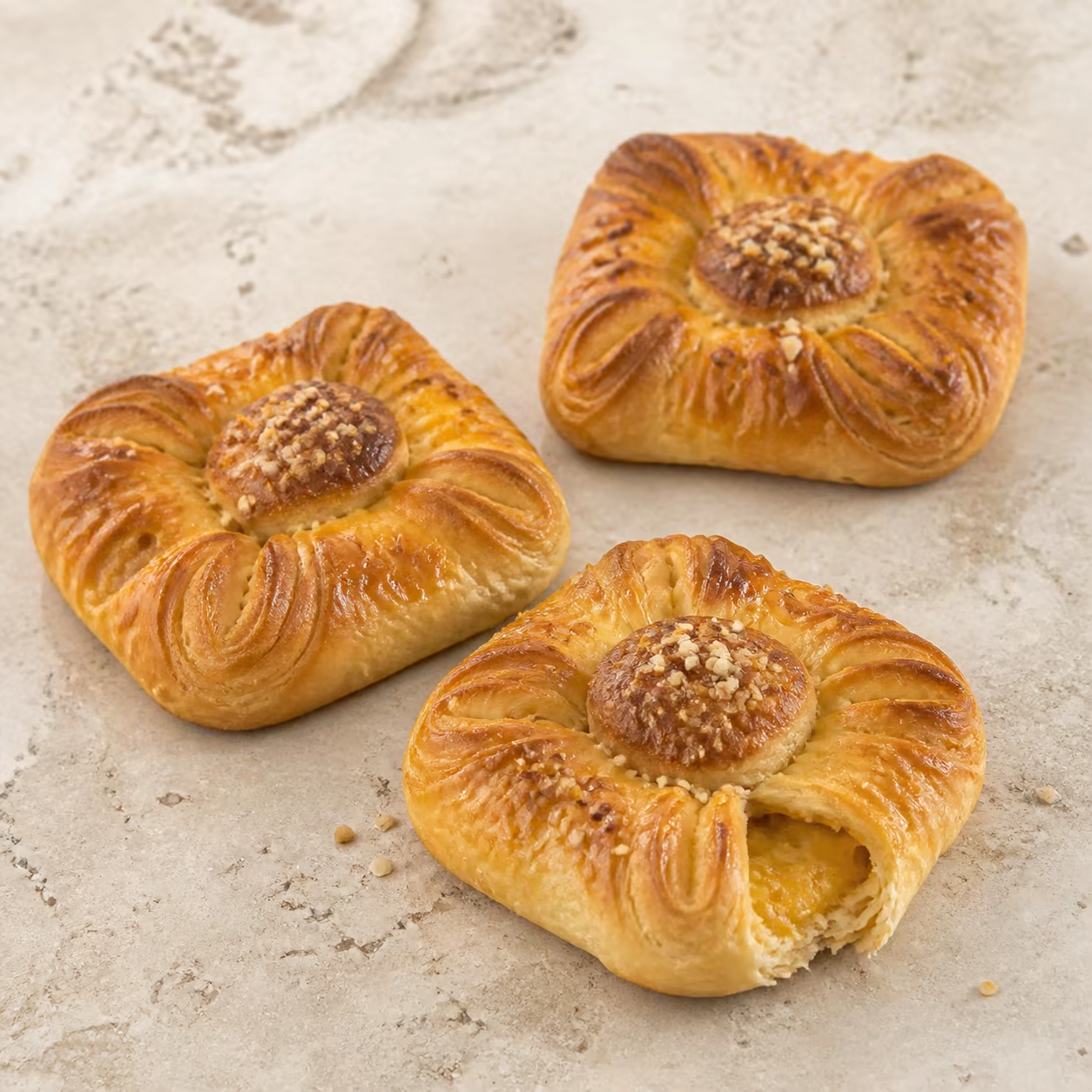
Portuguese Trinitá Egg-and-Almond Pastry
Also known as: Portuguese Trinitá pastry · Portuguese folded egg-and-almond brioche · Trinitá egg pastry
A brioche square whose four folded corners hold egg-and-almond cream beneath a round cap.
- Origin
- Portuguese pastry-counter tradition · creator and date not established
- Place
- Portugal
- Region
- Nationwide
- Category
- Cakes & Sweet Breads
- Season
- Year-round
- Evidence
- Well documented
The reference Trinitá begins with a square of brioche or laminated brioche. Once egg-yolk cream mixed with ground almond is placed at the centre, all four corners are folded inward. A small round dough cap seals their meeting point; chopped almond on the centre echoes the filling and completes a four-petalled floral form.
Its geometry distinguishes it from snails, braids and croissants made from related doughs. The folded corners should remain legible, the centre is tall and round and the interior concentrates orange-yellow yolk cream. Some counters call it Girassol, or sunflower, a name describing the same floral impression.
- Brioche or laminated brioche dough
- Egg-yolk cream
- Ground almond
- Chopped almond for decoration
- Egg wash or pastry glaze for finishing
Soft and buttery in the dough, moist and intense in the egg cream, with toasted flavour and fine texture from almond. The folded edges bake more deeply than the centre, contrasting golden crust with tender crumb.
The reference form uses brioche or laminated brioche, chopped almond and a glossy finish. Floresta da Póvoa sells a puff-pastry Trinitá with egg cream and icing sugar. The name Girassol appears at some shops for related forms. Each version should identify its actual dough rather than imply one immutable national recipe.
Panificação da Floresta in the Vila Franca de Xira area keeps Trinitá in its catalogue. Its Floresta da Póvoa shop currently sells Trinitá de Ovo and publishes the composition on its delivery menu. Because the form varies between brioche and puff pastry, confirm which version is available.
Espresso, galão or black tea.
No reliable documentation found identifies an inventor, first bakery or creation date. Fabrico Próprio records Trinitá among the archetypes of Portuguese semi-industrial pastry and precisely describes the manipulation of its dough square. Later academic research places it in a formal brioche family with Caracol, Ferradura, Argentino, Trança, Orelha and Moinho: related ingredients generate distinct cakes through folding and cutting.
Continuity is confirmed by active businesses. Panificação da Floresta lists Trinitá among its cakes, while the current Floresta da Póvoa menu sells “Trinitá de Ovo”. The latter uses puff pastry, egg cream and icing sugar, showing that the name survived even where some bakeries changed the dough and finish.
Well documented
Identity supported by institutional, specialist or corroborating sources.
- fabricoproprio.net/enciclopedia/trinita/ (opens in a new tab)
- reseed.uc.pt/index.php/2021/09/06/the-everyday-challenges-of-portuguese-semi-industrial-confectionery/ (opens in a new tab)
- panificacaofloresta.pt/bolos-de-pastelaria/ (opens in a new tab)
- ubereats.com/pt/store/floresta-da-povoa/QoZiAK2KWtO7zbPNXcpbSw (opens in a new tab)
Pastries from here — Nationwide
 Catalogue image
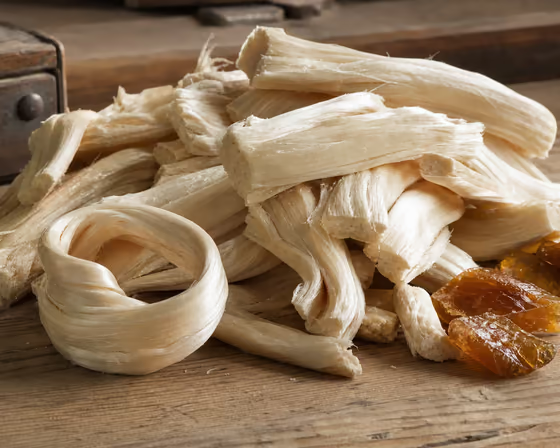
 Alféloa
Sugar or molasses cooked to a hard stage and worked until pale.
Nationwide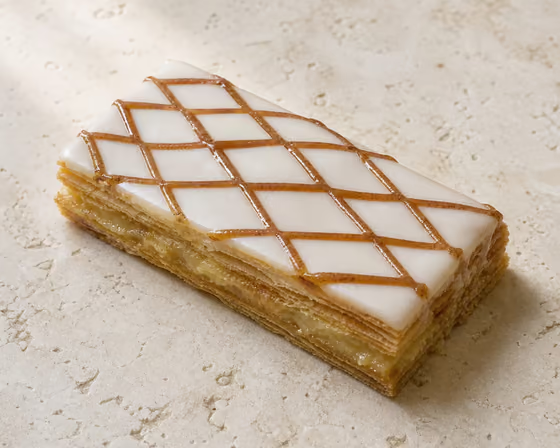 Catalogue image
 Portuguese Gila Allumette
A rectangular puff pastry with cream, gila and cinnamon beneath diamond-patterned royal icing.
Nationwide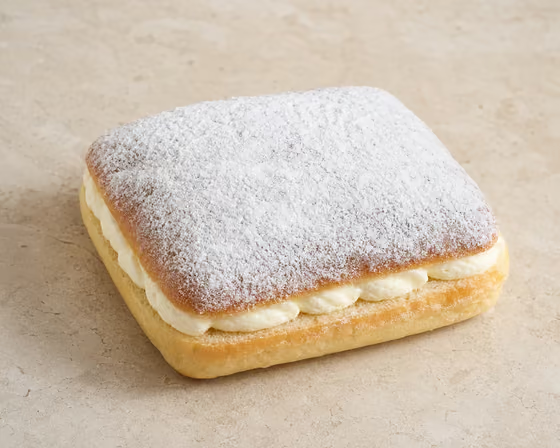 Catalogue image
 Portuguese Brioche Almofada
Light brioche dough, fresh buttercream and icing sugar.
Nationwide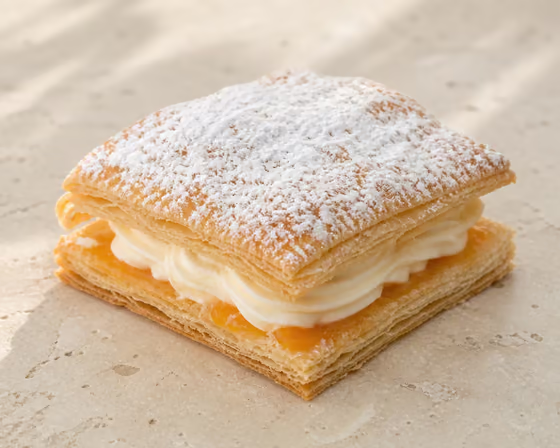 Catalogue image
 Portuguese Puff-Pastry Almofada
Puff pastry with white cream, egg sweet and icing sugar—the laminated Almofada variant.
Nationwide