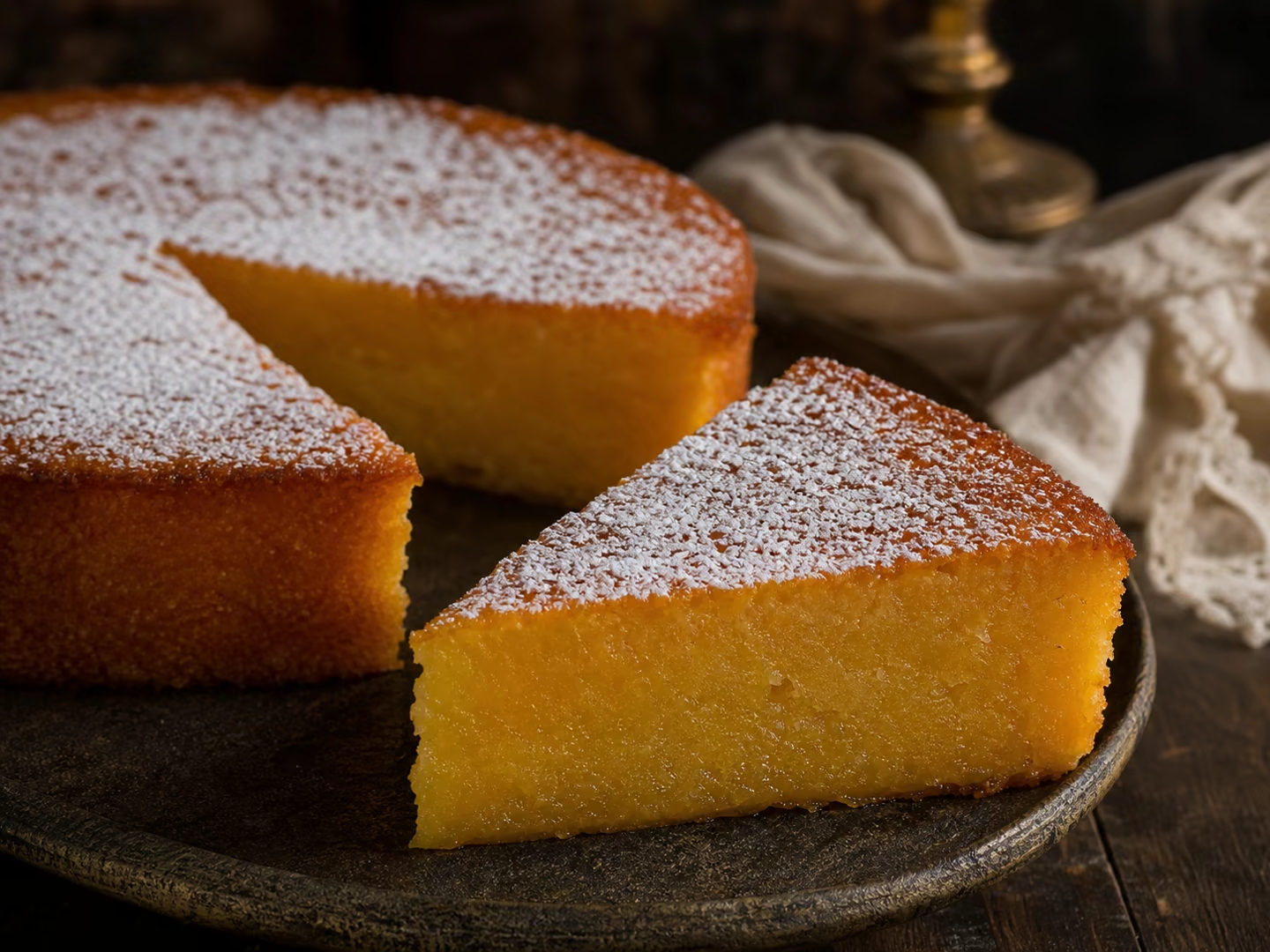
Toucinho do Céu
A dense block of almond and yolk, named for the pork fat it no longer contains.
- Origin
- Convent sweet · Guimarães and Murça, northern Portugal · 16th–18th century
- Place
- Portugal · documented variants in Guimarães and Murça
- Region
- Nationwide
- Category
- Convent Sweets
- Season
- Year-round
- Evidence
- Well documented
Toucinho do céu is one of the cornerstones of Portuguese convent sweetmaking: a dense, moist, glossy sweet of ground almond, many egg yolks and sugar cooked to a thread. Baked in a mould and cut into squares or thin slices, it is so rich that it is eaten in small portions — almost a spoon-sweet that learned to stand on its own.
The name unsettles. 'Toucinho' recalls the pork lard said to have gone into the oldest recipes, before it was replaced by butter or dropped altogether; 'do céu' is the convent's promise. Two northern towns lay claim to its glory: Guimarães, in the Minho, where the Poor Clares of the Santa Clara convent made it famous; and Murça, in Trás-os-Montes, a legacy of the Benedictine nuns who kept a convent there. Many versions fold gila pumpkin jam into the almond.
- ground almonds
- egg yolks
- sugar
- water
- gila pumpkin jam
- lemon zest
- cinnamon
- butter
Very sweet, dense and moist, with the deep, toasted flavour of almond carried by the richness of the yolk. The texture is compact yet tender, almost fondant, and the sugar leaves a faintly satiny gloss on the palate.
Each town has its own, differing mostly in proportion. The Guimarães version, heir to Santa Clara, is among the most celebrated; the Murça version is listed among Portugal's traditional products. Many recipes in both towns add gila pumpkin jam, which stretches the paste and keeps it less dry; some are scented with cinnamon or lemon, and others are almost pure almond, yolk and sugar.
In traditional bakeries of the North, above all in Guimarães — where several houses claim the Santa Clara recipe — and in Murça, where Casa das Queijadas (Largo 31 de Janeiro) keeps the convent recipes. The Murça version is listed among Portugal's recognised traditional products. Look for it sold in dense, glossy pieces cut from a mould — not the aerated supermarket cake.
A tawny Port or a Moscatel, which embrace the sweetness; or a short espresso to cut through it.
It was born behind convent walls, where egg yolks were always in surplus — the whites went to starch habits and clarify wine — and where that abundance gave rise to dozens of egg-and-almond sweets. In Guimarães it has been made since old times at the Santa Clara convent, founded in the 16th century; in Murça it is credited to the Benedictine nuns who lived there between 1651 and 1890. When the religious orders were dissolved in the 19th century, the recipes crossed the cloister and made a name for themselves across the country.
Each town came to claim its own: besides Guimarães and Murça, there are celebrated versions across the North and even in the Alentejo, all variations on a single convent idea. In Murça the tradition is now kept by houses such as Casa das Queijadas and celebrated by a brotherhood founded in 2017.
Well documented
Identity supported by institutional, specialist or corroborating sources.
- tradicional.dgadr.gov.pt/en/categories/desserts-and-pastry/220-toucinho-do-ceu-de-murca (opens in a new tab)
- cm-murca.pt/noticia/toucinho-do-ceu-de-murca-tradicao-historia-e-devocao (opens in a new tab)
- virgiliogomes.com/index.php/cronicas/936-toucinho-do-ceu-de-murca (opens in a new tab)
- en.wikipedia.org/wiki/Toucinho_do_C%C3%A9u (opens in a new tab)
- asreceitasdogato.com/post/toucinho-do-ceu-guimaraes (opens in a new tab)
- yourtoursportugal.com/pt-pt/docaria-de-guimaraes-o-maior-tesouro-conventual/ (opens in a new tab)
Pastries from here — Nationwide
 Catalogue image
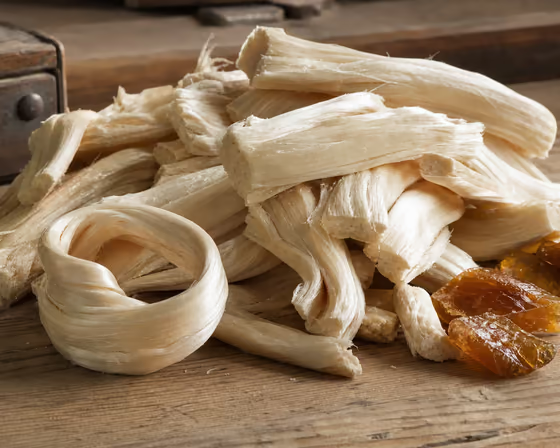
 Alféloa
Sugar or molasses cooked to a hard stage and worked until pale.
Nationwide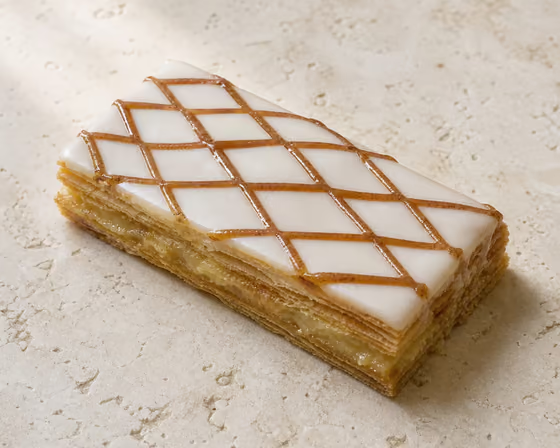 Catalogue image
 Portuguese Gila Allumette
A rectangular puff pastry with cream, gila and cinnamon beneath diamond-patterned royal icing.
Nationwide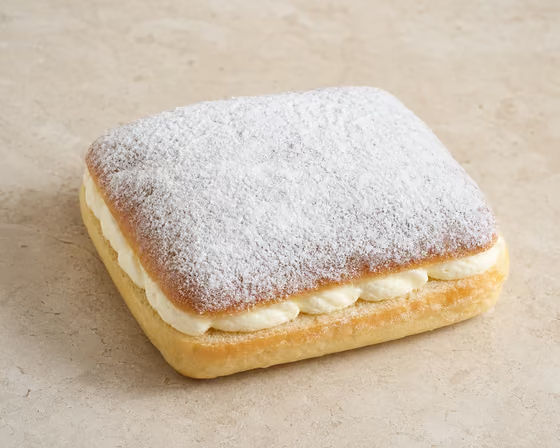 Catalogue image
 Portuguese Brioche Almofada
Light brioche dough, fresh buttercream and icing sugar.
Nationwide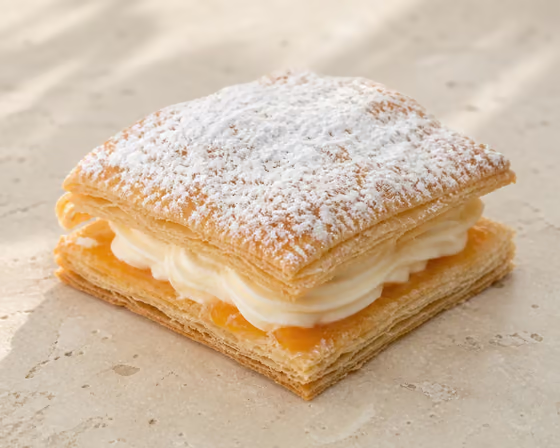 Catalogue image
 Portuguese Puff-Pastry Almofada
Puff pastry with white cream, egg sweet and icing sugar—the laminated Almofada variant.
Nationwide