Murça Heaven's Bacon
Also known as: Murça Toucinho-do-céu · Murça bacon from heaven
A golden almond-and-gourd slice of Trás-os-Montes heaven.
- Origin
- Conventual confectionery · Benedictine monastery in Murça (until the late 19th c.)
- Place
- Murça
- Region
- Trás-os-Montes
- Category
- Convent Sweets
- Season
- Year-round
- Evidence
- Well documented
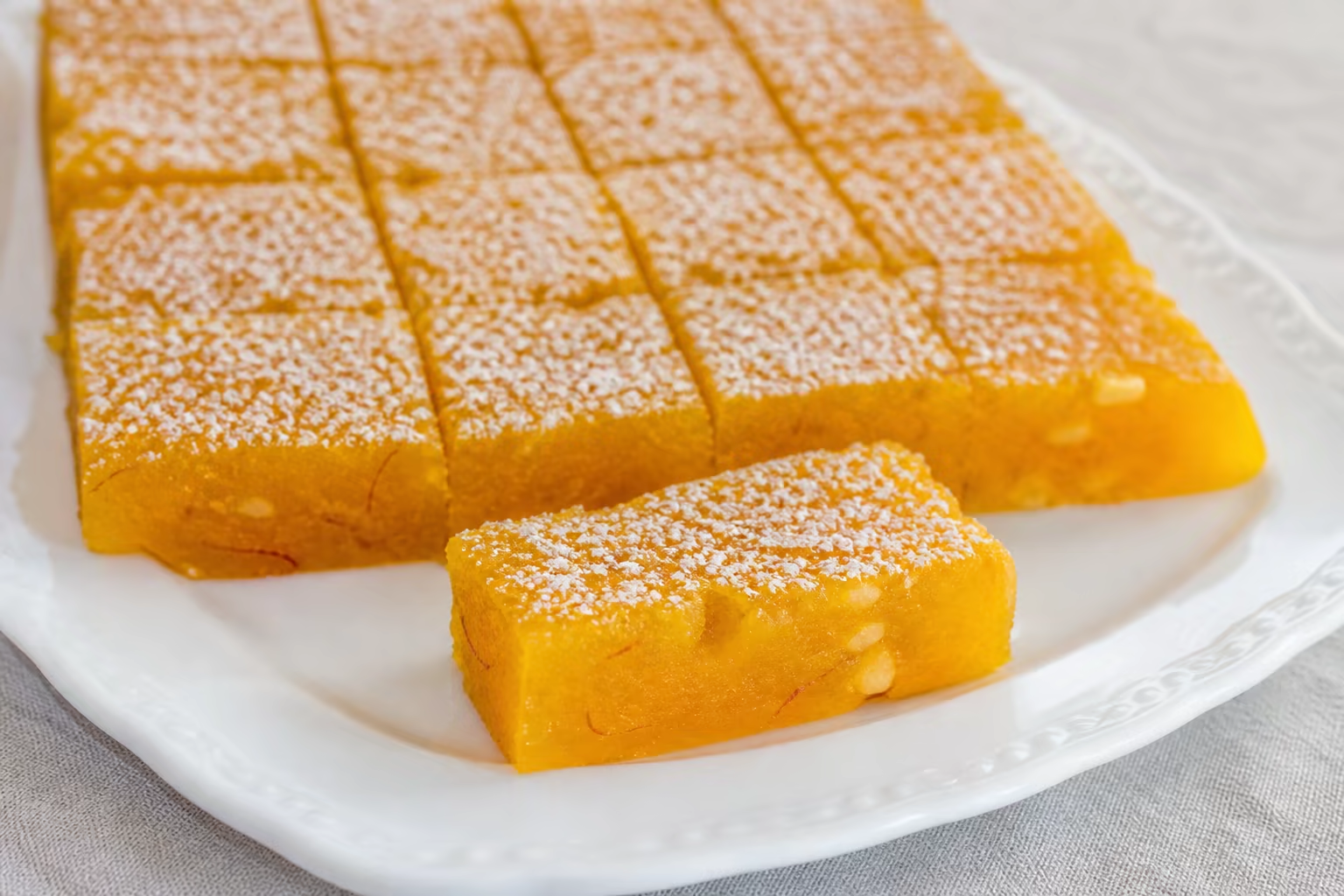
Toucinho do Céu de Murça is a dense, moist conventual sweet built from a sugar syrup, grated almond, gila (a candied gourd preserve) and a generous quantity of egg yolks. Unlike other versions across the country, the Murça one is baked in a rectangular tray and then cut into regular slices — bright yellow within and dusted with icing sugar.
It looks modest: a tawny rectangle, almost translucent at the edges, yet in the mouth it turns rich and nearly fudge-like, the almond lending body while the gila releases its fine threads. It is eaten in small portions, after a meal or in mid-afternoon, always with something to cut the sweetness.
Serve it at room temperature in small slices, given its concentration of sugar, almonds and yolks.
- Sugar
- Water
- Grated almond
- Gila (candied gourd preserve)
- Egg yolks
- Wheat flour
- Icing sugar (for dusting)
Very sweet and deeply rich, with the toasted note of almond, the mellow weight of egg yolk and the subtle thread of gila. The texture is moist and dense, almost fudge-like — far from the airiness of a sponge.
The Murça version stands apart for its rectangular shape, cut into slices, and for its use of grated almond and gila. It differs from the toucinho do céu of Guimarães and other regions, often baked in round moulds and not always made with gila.
Look for it in the traditional pastry shops and confectioners of Murça and at fairs across Trás-os-Montes; the local Real Confraria champions the sweet and its authenticity. It is best sought in the village itself, where it is still made by the old methods.
It calls for a glass of Port or Muscatel, or a strong coffee to balance its sweetness. In Trás-os-Montes it sits well beside a homemade liqueur at the end of a meal.
DGADR records the sweet as a legacy of Benedictine nuns established in a Murça monastery until the late nineteenth century. The same source attributes transmission of the production secret to Serafina Rosa Alves, a domestic servant at the convent, and then to her granddaughter Hermínia Alves, proprietor of Casa das Queijadas. This is a published historical account, not a convent manuscript reproduced by the source.
The Real Confraria do Toucinho do Céu de Murça was presented on 16 July 2022. The municipality reports that producers have maintained the same method for more than four hundred years; that longevity is presented here as a local claim, not as independent documentary dating.
Well documented
Identity supported by institutional, specialist or corroborating sources.
- tradicional.dgadr.gov.pt/pt/cat/doces-e-produtos-de-pastelaria/220-toucinho-do-ceu-de-murca (opens in a new tab)
- cm-murca.pt/viver/comunicacao/noticias/noticia/real-confraria-do-toucinho-do-ceu-de-murca-nasce-para-valorizar-doce-conventual-historico (opens in a new tab)
- feed.continente.pt/receitas/yammi/toucinho-do-ceu-de-murca (opens in a new tab)
Pastries from here — Trás-os-Montes
 Catalogue image
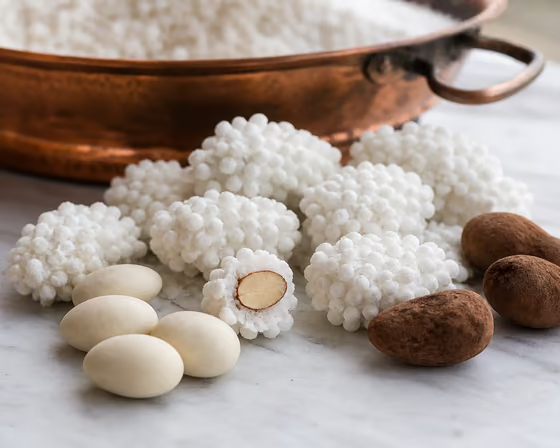
 Moncorvo Sugar-Coated Almonds
The queen of Trás-os-Montes sweets, spun from sugar and patience in copper.
Trás-os-Montes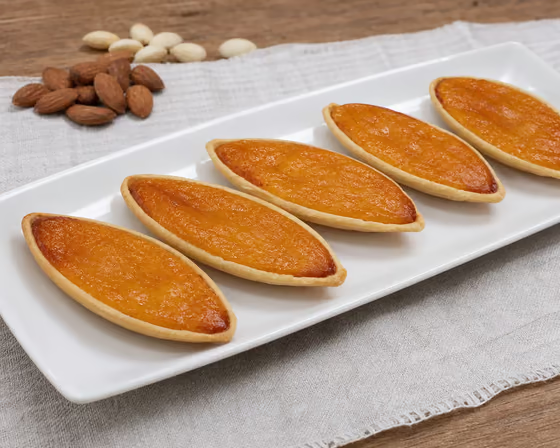 Catalogue image
 Alfândega da Fé Almond Boats
Pale pastry boats with a glossy filling of yolk and Trás-os-Montes almonds.
Trás-os-Montes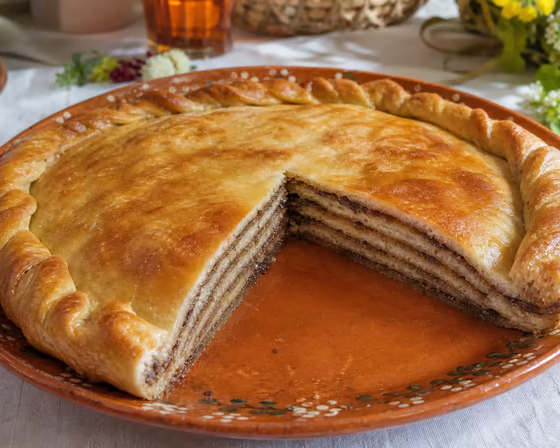 Catalogue image
 Mirandese Sweet Bola
The Easter bola that unravels in layers of sugar and cinnamon.
Trás-os-Montes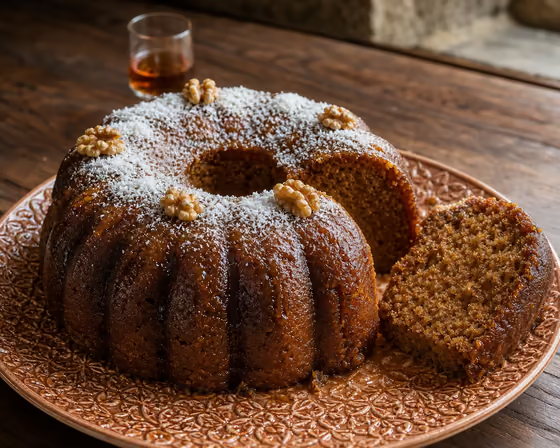 Catalogue image
 Douro Port-Soaked Cake
A rich egg-and-butter cake soaked while hot in a generous Port-wine syrup.
Trás-os-Montes