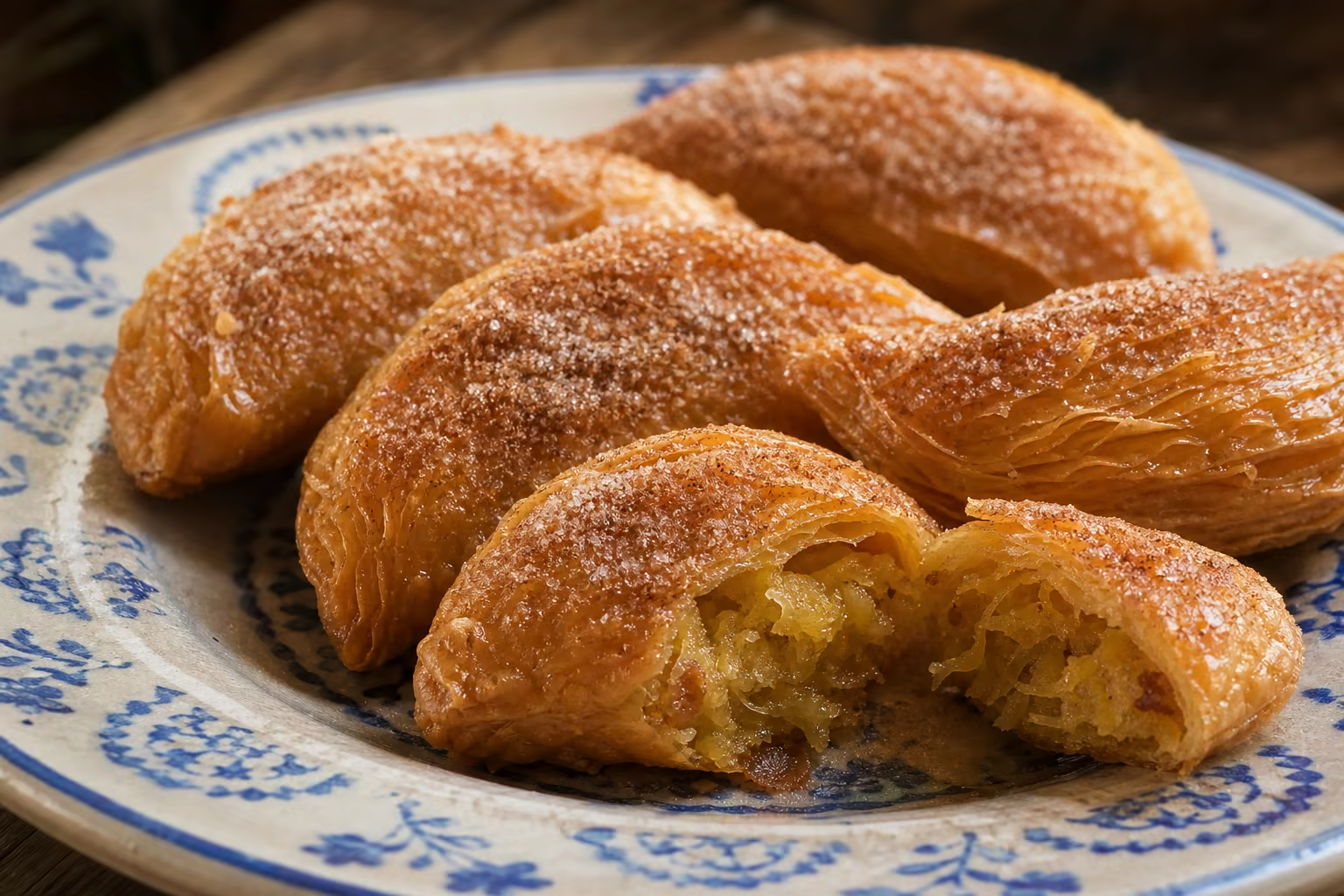
Guimarães Rolls
Also known as: Costinhas Rolls
The flaky half-moon the nuns of Santa Clara bequeathed to Guimarães.
- Origin
- 19th century · Convent of Santa Clara, Guimarães
- Place
- Guimarães
- Region
- The North
- Category
- Laminated & Fine Pastries
- Season
- Year-round
- Dough family
- Short or tender pastry A flour-and-fat wrapper mixed directly without puff-pastry folds.
- Evidence
- Well documented
Despite their name, the Tortas de Guimarães bear no resemblance to the rolled sponge one might expect: they are instead small half-moon pastries with a golden, flaky shell concealing a soft, fragrant filling. The dough is worked by hand with pork lard from rojões until it blisters, opening into gossamer-thin layers that dissolve on the tongue.
Inside lives a filling of eggs and almond, perfumed with cinnamon and candied citron — and, in many versions from Guimarães, doce de chila to lend body and sweetness. Once baked, the pastries are briefly dipped in syrup at the thread stage and dusted with sugar and cinnamon.
Served at room temperature, at the counter or boxed as a gift, they form part of the sweet trinity that defines Guimarães confectionery, alongside the tortas de viana and the toucinhos do céu.
- Wheat flour
- Pork lard (from rojões)
- Salt
- Sugar
- Eggs
- Almonds
- Cinnamon
- Candied citron
- Doce de chila (gila squash preserve)
The flaky shell is crisp and rich with lard, giving way to a silky filling of egg yolk and almond — sweet but balanced by cinnamon and the citrus perfume of candied citron.
The filling varies from house to house: some keep to the traditional egg-and-almond record, while others fold in doce de chila for a moister centre. They should not be confused with the neighbouring tortas de viana that share the same Guimarães display case.
They are found in the pastry shops and confeitarias of Guimarães's historic centre, with Casa Costinhas claiming the oldest lineage. Buy them singly or boxed, as a keepsake from the cradle city.
They call for a strong coffee or tea, but shine alongside a fortified wine such as a tawny Port or a Moscatel.
The origin of the Tortas de Guimarães is attributed to the nuns of the Convent of Santa Clara in Guimarães, where convent confectionery flourished over centuries. As early as 1892, the Abade de Tagilde was recording the fame of the Poor Clares' pastry-making, citing the tortas among the sweets that had earned them a name inside and beyond Portugal.
The transition from convent to city came through what became known as the Casa Costinhas: a nun of Santa Clara took in two orphaned nieces and, when the establishment of the Republic prevented them from living in the convent, settled them in a nearby house. Since all bore the surname Costa, they became known as "as Costinhas", and it was through their livelihood that the convent recipes began to be sold to the city. Today the Tortas de Guimarães are listed in the DGADR register of Traditional Portuguese Products.
Well documented
Identity supported by institutional, specialist or corroborating sources.
- tradicional.dgadr.gov.pt/pt/cat/doces-e-produtos-de-pastelaria/1031-tortas-de-guimaraes (opens in a new tab)
- tradicional.dgadr.gov.pt/en/categories/desserts-and-pastry/1031-tortas-de-guimaraes (opens in a new tab)
- sapo.pt/artigo/tortas-de-guimaraes-conhece-a-historia-por-detras-deste-doce-0851-689ca7114e03edf36402998a (opens in a new tab)
- visitguimaraes.travel/planear/roteiros-tours/tours-gastronomia-e-enoturismo/percurso/doces-tesouros-de-guimaraes (opens in a new tab)
- comerciocomhistoria.gov.pt/en/listings/casa-costynhas-doces-regionais-e-conventuais-lda-4424/ (opens in a new tab)
Pastries from here — The North
 Catalogue image
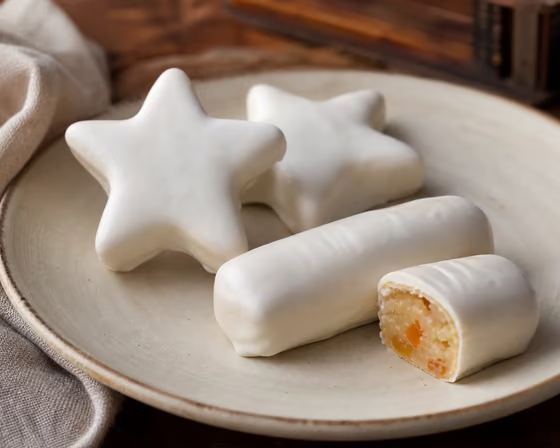
 A Bella Queijadinha de Barcelos
A white star of almond, preserved fruit and family memory.
The North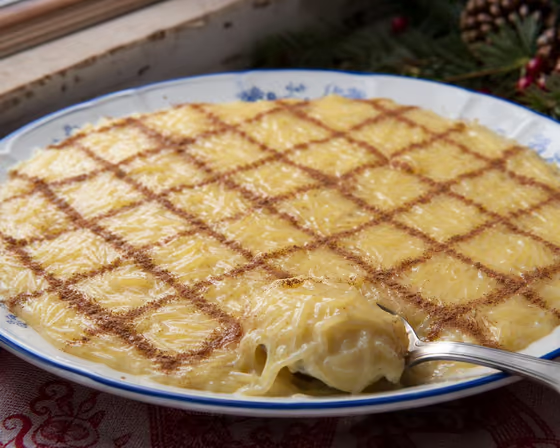 Catalogue image
 Sweet Vermicelli
Fine wheat threads simmered in milk and yolk, scored with cinnamon.
The North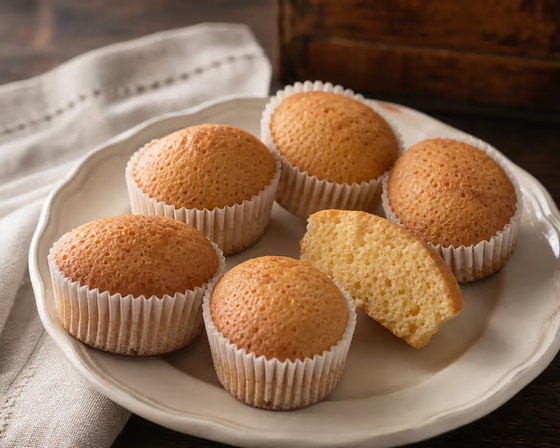 Catalogue image
 Amarantinos
Small egg, lemon and cinnamon cakes whose historical identity is not told consistently by the sources.
The North Catalogue image
 Vieira do Minho Cone Wafers
Paper-thin crisp wafers, iron-baked and rolled by hand while still hot.
The North