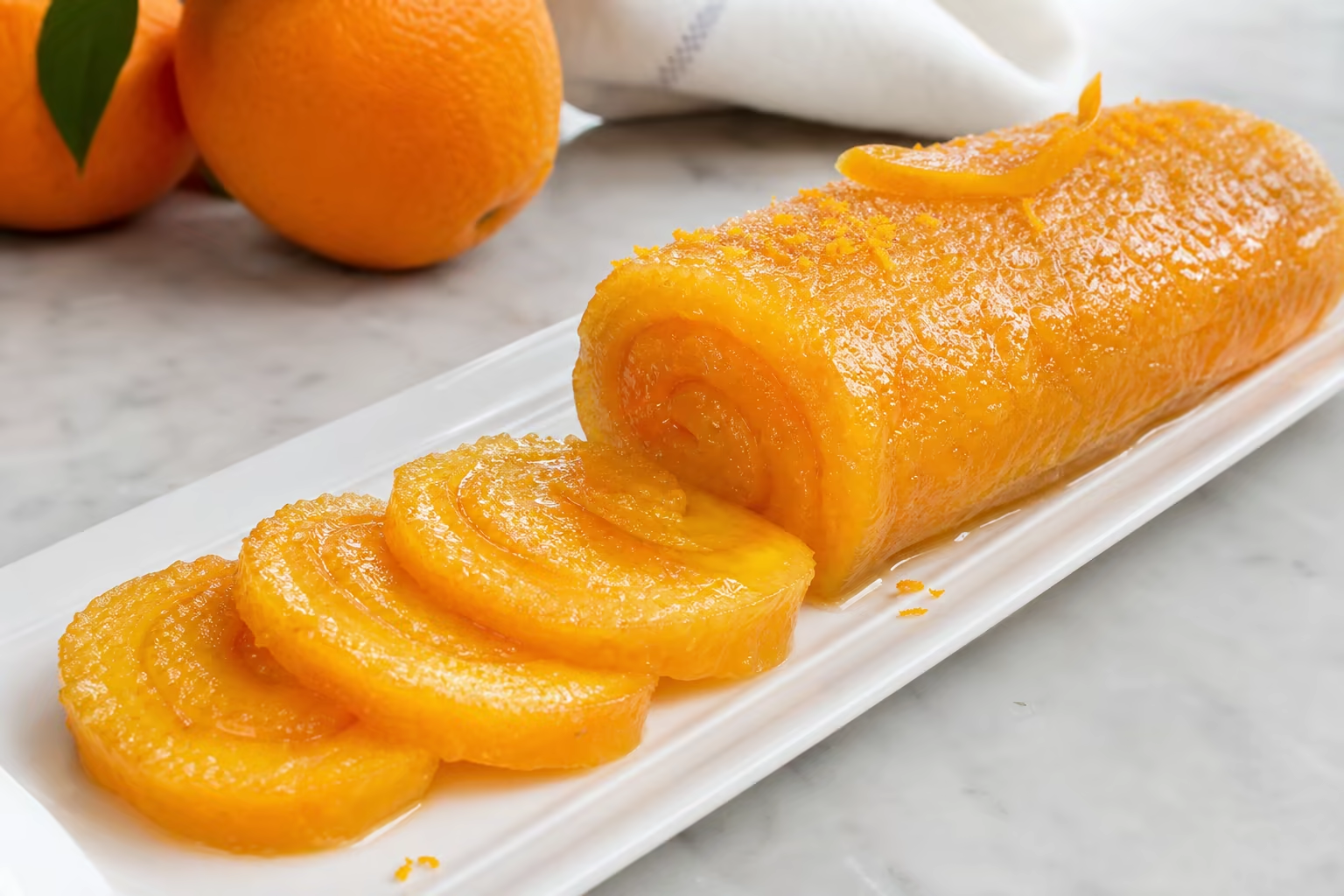
Orange Roll
Also known as: Algarve orange roll · Setúbal orange roll · Portuguese orange roll cake
A sheet of cake, almost all egg and orange juice, rolled into a tight spiral.
- Origin
- Portuguese confectionery · historical and regional origin not established
- Place
- Algarve
- Region
- The Algarve
- Category
- Cakes & Sweet Breads
- Season
- Year-round
- Evidence
- Limited documentation
Torta de laranja combines orange juice and zest, eggs and sugar in a thin, moist, flexible baked layer. Some recipes omit flour; others add a small amount of flour or starch for structure.
While still warm, the baked sheet is turned onto a sugar-dusted cloth and rolled into a spiral. It is normally unfilled: its character depends on orange, eggs and a moist texture. Editorial sources associate it commercially with both the Algarve and Setúbal, but do not establish one exclusive regional birthplace.
- Eggs
- Sugar
- Orange juice
- Orange zest
- Flour or cornflour (optional, a little)
- Butter (for the tin)
- Sugar (for dusting and rolling)
Intensely perfumed with orange, the fresh acidity of the juice balancing the sweetness and the richness of the yolks. Its texture is the secret: moist, dense and elastic, almost melting, with none of the airy crumb of a sponge. Each slice is soft and silky, and the zest leaves a faintly bitter edge that lifts the whole.
Some recipes omit flour while others use a small amount of flour or starch to make rolling easier. Syrup, liqueur and other citrus variants also occur; the sources do not support placing these versions in chronological order.
It is found in pastry shops across the country, but in the Algarve and in Setúbal it is almost obligatory in the display case. Look for tortas that are moist-looking and deeply orange, tightly rolled and cut in a generous slice — the best ones yield gently to the fork and smell of orange before they reach your mouth. At home, eaten fresh and still warm, it is unbeatable.
It calls for a strong coffee or an espresso, whose bitterness echoes the orange zest. To round off a meal, it pairs well with a glass of Moscatel de Setúbal or an orange liqueur.
The consulted sources document recipes and modern regional associations, but provide no primary evidence for creation in a Lagos convent, a sixteenth-century date or direct descent from Aveiro's torta de segredos. Those narratives should be treated as published traditions rather than established facts.
The roll is now made in several Portuguese regions. Without a dated recipe or institutional record fixing its origin, this entry records the history as unknown and focuses on the technique shared by documented versions.
Limited documentation
The identity is documented, but its origin, composition or availability has limited sourcing.
- virgiliogomes.com/index.php/cronicas/536-tortas-99118797 (opens in a new tab)
- cozinhacomrosto.pt/torta-de-laranja-a-moda-antiga-versus-torta-de-segredos/ (opens in a new tab)
- saberescomsabores.blogspot.com/2015/07/torta-tradicional-de-laranja-da-nossa.html (opens in a new tab)
- pastelaria.online/torta-de-laranja-receita/ (opens in a new tab)
Pastries from here — The Algarve
 Catalogue image
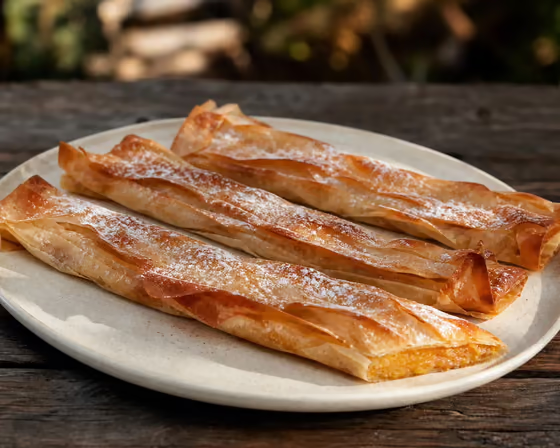
 Aljezur Sweet-Potato Pillows
A long pillow of crisp pastry leaves wrapped around Aljezur sweet potato.
The Algarve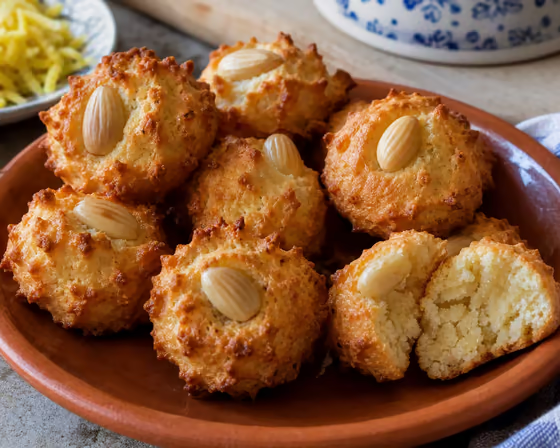 Catalogue image
 Almond Spiky Biscuits
Bristling peaks of almond, lemon and egg white, crisp outside and soft at the centre.
The Algarve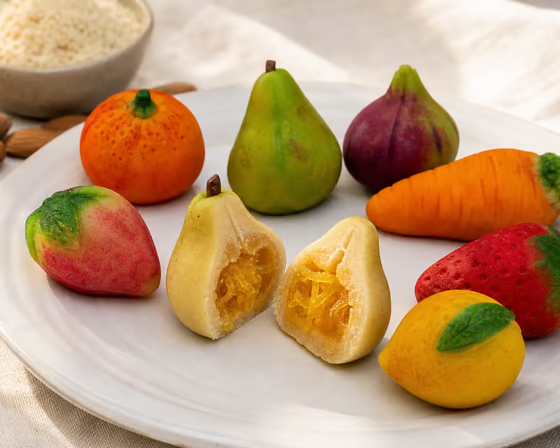 Catalogue image
 Silves Almond Sweets
Algarve figures hand-shaped and painted in almond paste.
The Algarve Catalogue image
 Algarve Nut Sweet Bread
An upland sweet bread enriched with olive oil, spices and walnuts or almonds.
The Algarve