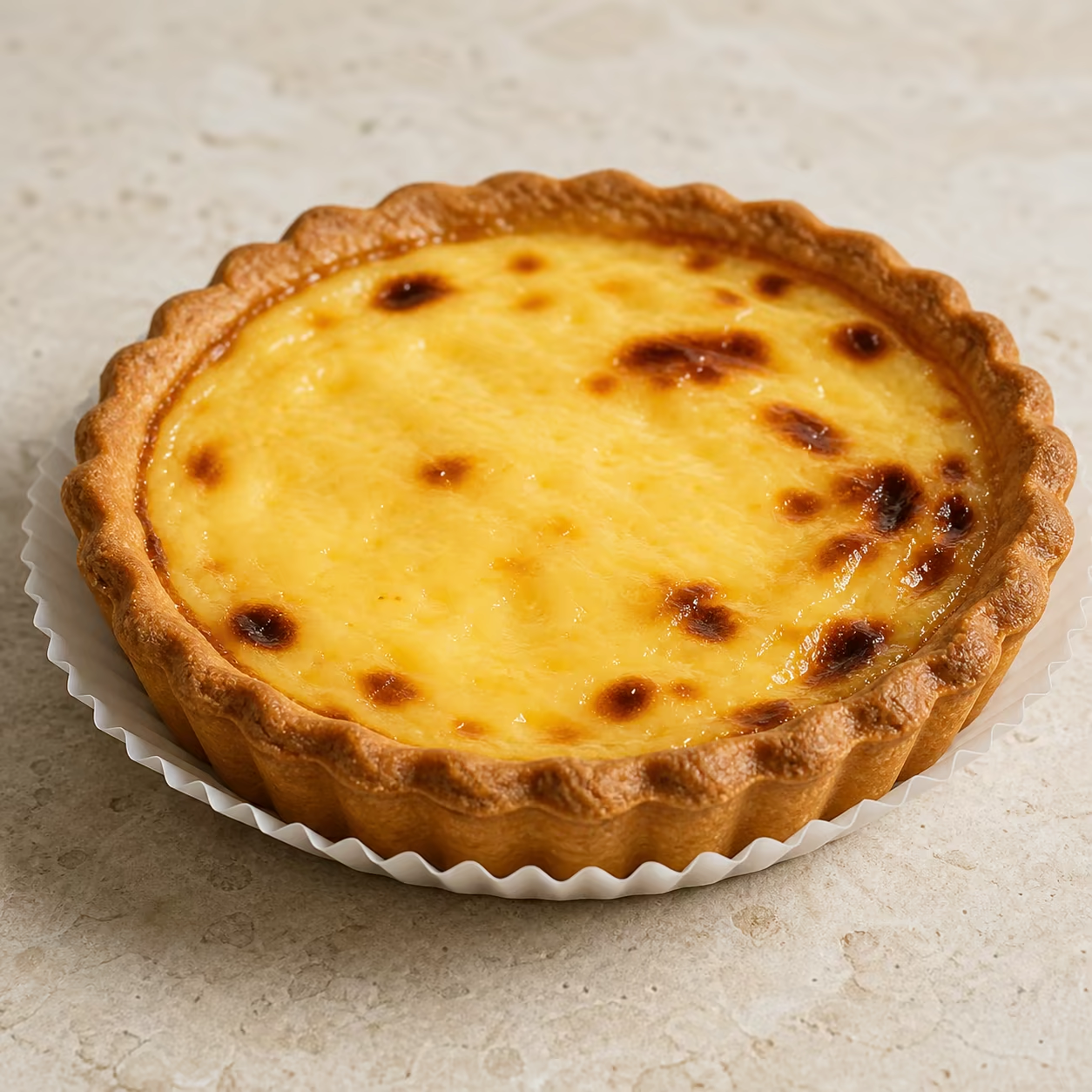
Portuguese Shortcrust Custard Tart
Also known as: Portuguese Custard Tart · Short-Pastry Custard Tart
Milk, yolk, sugar and lemon custard in a shell that varies from sweet pastry to puff pastry.
- Origin
- Portugal · a name documented for both pastry-counter and family-tart formats
- Place
- Portugal
- Region
- Nationwide
- Category
- Custards & Creams
- Season
- No seasonality documented in the sources reviewed
- Evidence
- Well documented
Fabrico Próprio documents Tarte de Nata as a broad, shallow individual cake with sweet pastry and lemon-scented nata filling, presenting it as a direct Bom Bocado variant. Regidoce's current commercial catalogue likewise lists Tarte de Nata (150 g), Bom Bocado (90 g) and Pastel de Nata (70 g) as separate products.
The name also occurs in family-size recipes. Nestlé publishes a 24 cm tart with a flour, butter, egg and water pastry filled with milk, cream, sugar, flour, six yolks and lemon peel. The recipe itself permits puff pastry as an alternative; Teleculinária calls a six-serving puff-pastry version Tarte de Pastel de Nata. Sweet pastry and shallow proportions therefore identify the counter pastry described by the specialist source, but not every recipe named Tarte de Nata.
- Pastry shell, varying by formula
- Milk
- Egg yolks
- Sugar
- Flour
- Cream and lemon in Nestlé's formula
Sweet milk-and-yolk custard with lemon in Nestlé's formula; shell texture depends on the version.
Fabrico Próprio describes a shallow sweet-pastry tartlet. Nestlé publishes a 24 cm family tart and permits replacing its pastry with puff pastry. Teleculinária separately documents a puff-pastry Tarte de Pastel de Nata.
Current commercial production is confirmed by Regidoce in Palmela, which lists Tarte de Nata, Bom Bocado and Pastel de Nata separately. The reviewed sources do not establish uniform nationwide distribution.
Nestlé's recipe suggests optional cinnamon or sugar as a finish; no universal accompaniment was identified.
The relationship with Bom Bocado is Fabrico Próprio's classification, not a dated genealogy: the source provides neither an inventor nor a creation date. A 2012 Revista Macau interview records a Pastel de Nata confraternity cofounder's claim that an older pastel de leite evolved into Bom Bocado and nata, differentiated by their pastry, but the interviewee himself acknowledges the absence of official documentation for that origin.
The firmest evidence is contemporary: specialist, commercial and culinary sources use the name for related custard tarts but differ in scale and pastry. This page preserves that divergence rather than presenting a single origin as established fact.
Well documented
Identity supported by institutional, specialist or corroborating sources.
- fabricoproprio.net/enciclopedia/tarte-de-nata/ (opens in a new tab)
- regidoce.pt/especialidades/ (opens in a new tab)
- saboreiaavida.nestle.pt/print/pdf/node/22771 (opens in a new tab)
- teleculinaria.pt/receitas/tarte-de-pastel-de-nata/ (opens in a new tab)
- revistamacau.com.mo/2012/09/28/nas-bocas-do-mundo/ (opens in a new tab)
Pastries from here — Nationwide
 Catalogue image
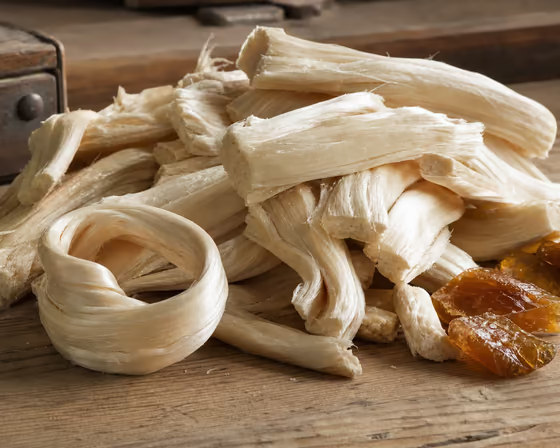
 Alféloa
Sugar or molasses cooked to a hard stage and worked until pale.
Nationwide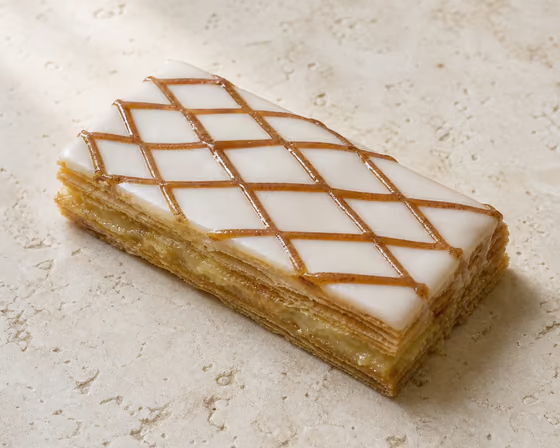 Catalogue image
 Portuguese Gila Allumette
A rectangular puff pastry with cream, gila and cinnamon beneath diamond-patterned royal icing.
Nationwide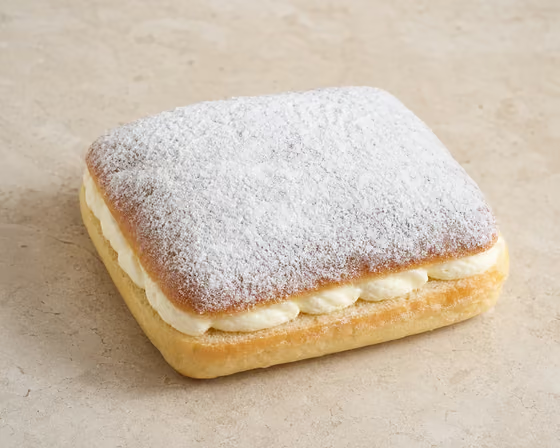 Catalogue image
 Portuguese Brioche Almofada
Light brioche dough, fresh buttercream and icing sugar.
Nationwide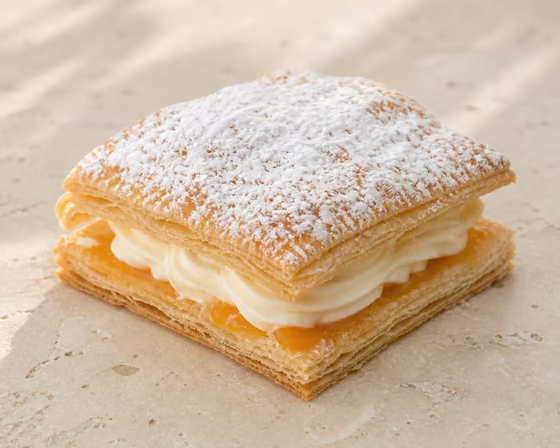 Catalogue image
 Portuguese Puff-Pastry Almofada
Puff pastry with white cream, egg sweet and icing sugar—the laminated Almofada variant.
Nationwide