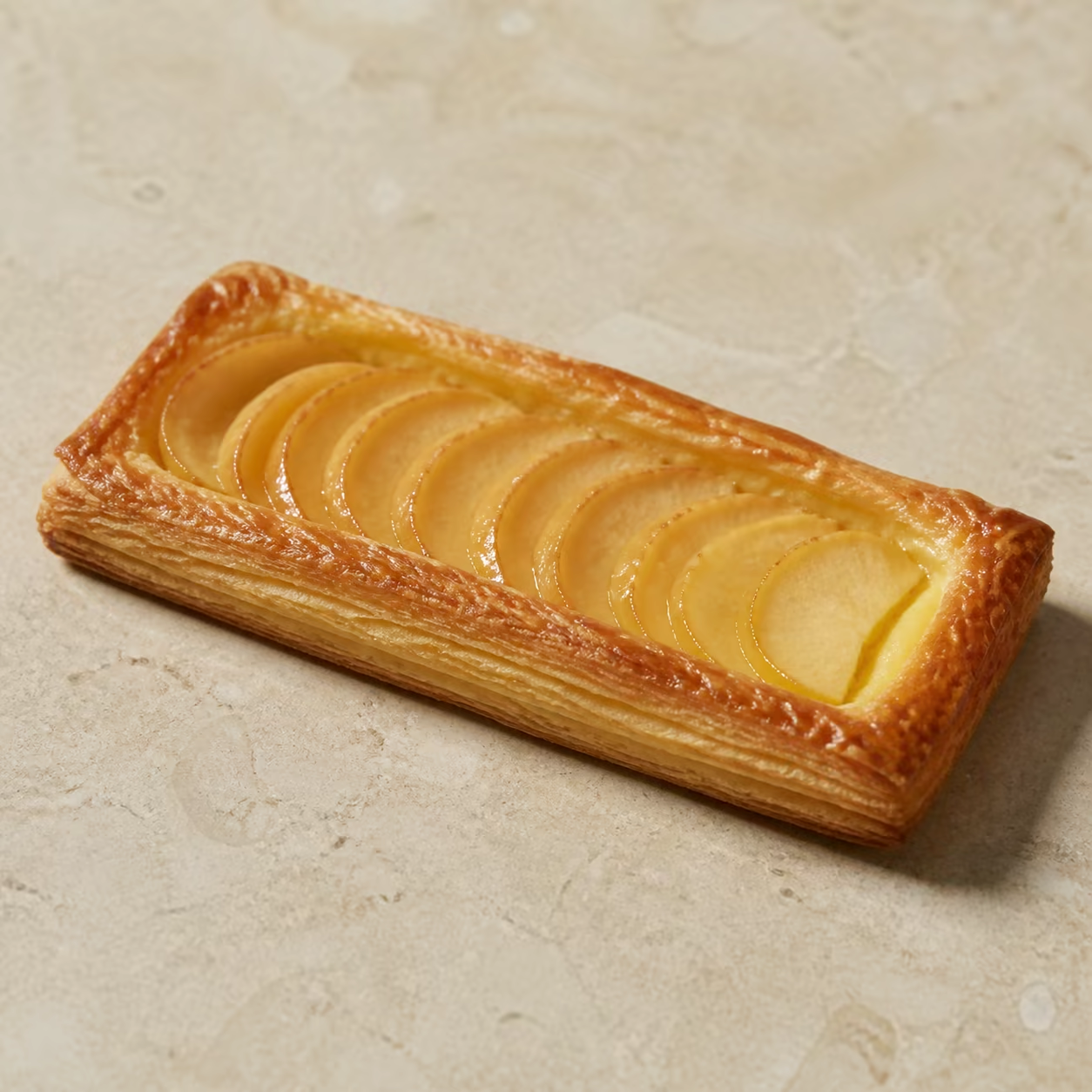
Portuguese Apple Tartlet
Also known as: Portuguese Puff-Pastry Apple Tart · Apple-and-Pastry-Cream Puff Tart
Open puff pastry with pastry cream, sliced apple and quince-jelly glaze.
- Origin
- Portugal · documented pastry-counter format, with no regional origin established
- Place
- Portugal
- Region
- Nationwide
- Category
- Laminated & Fine Pastries
- Season
- No seasonality documented in the sources reviewed
- Dough family
- Laminated puff pastry Layers created through repeated folds of dough and fat.
- Evidence
- Well documented
Fabrico Próprio's encyclopaedia documents Tarte de Maçã as an individual Portuguese pastry-counter cake: puff pastry, pastry cream, sliced apple and a jelly glaze, now presented chiefly as a rectangle. A TV Guia recipe corroborates the same open construction, directing the baker to roll 400 g of puff pastry into a rectangle, mark borders, add cream and Golden apple, and brush it with quince jelly after baking.
This identity does not encompass every dessert called tarte de maçã. Jornal da Bairrada publishes a round family-size version, also made with puff pastry, pastry cream, apple and quince jelly; Continente also publishes shortcrust and covered English-style formulas. Here, the name specifically denotes the open puff-pastry format documented by the specialist source.
- Puff pastry
- Pastry cream
- Sliced apple
- Sugar
- Quince jelly in the published formula
A contrast of puff pastry, sweet cream, cooked apple and a jelly glaze in the reference formula.
The specialist source distinguishes an earlier oval form from today's rectangle. Jornal da Bairrada documents a round 20 cm tart with cinnamon; shortcrust and covered pies are other formulas sharing the generic name.
Its presence in Portuguese pastry culture is documented by Fabrico Próprio. A University of Algarve dissertation records the name on one restaurant menu without identifying this specific format.
No accompaniment is specified by the reviewed sources for the puff-pastry format.
Fabrico Próprio records an earlier oval form and the rectangle's present predominance, but assigns no inventor, creation date or region of origin. The independent sources reviewed corroborate the contemporary formula, not an earlier chronology.
A University of Algarve master's dissertation on dessert choices in one restaurant included Tarte de Maçã among the menu options. That study establishes only contemporary restaurant use of the name; it does not describe the pastry, filling or shape and does not prove nationwide distribution.
Well documented
Identity supported by institutional, specialist or corroborating sources.
- fabricoproprio.net/enciclopedia/tarte-de-maca/ (opens in a new tab)
- tvguia.pt/receitas/detalhe/esta-deliciosa-tarte-folhada-de-maca-fica-pronta-em-30-minutos (opens in a new tab)
- jb.pt/2019/10/receita-da-semana-tarte-de-maca/ (opens in a new tab)
- sapientia.ualg.pt/server/api/core/bitstreams/f7bc1ba0-9e33-423a-9d62-81b4e66c6f18/content (opens in a new tab)
Pastries from here — Nationwide
 Catalogue image
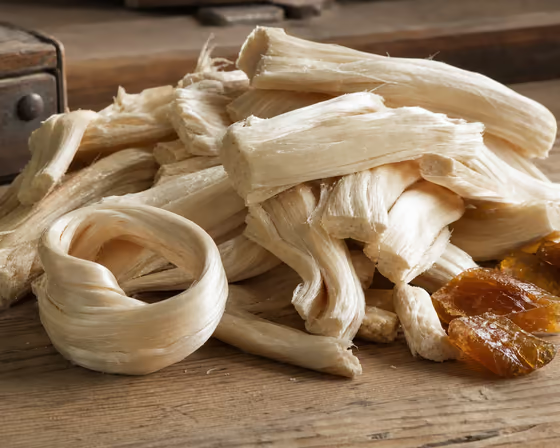
 Alféloa
Sugar or molasses cooked to a hard stage and worked until pale.
Nationwide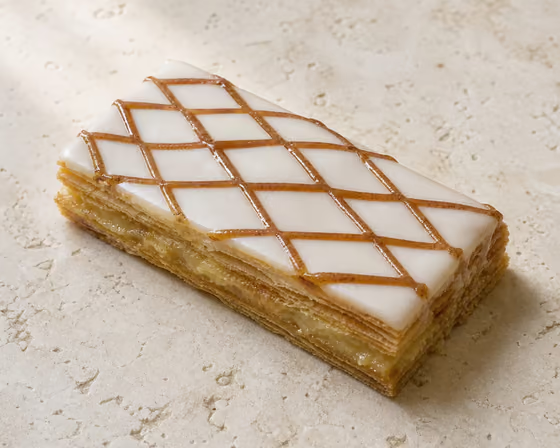 Catalogue image
 Portuguese Gila Allumette
A rectangular puff pastry with cream, gila and cinnamon beneath diamond-patterned royal icing.
Nationwide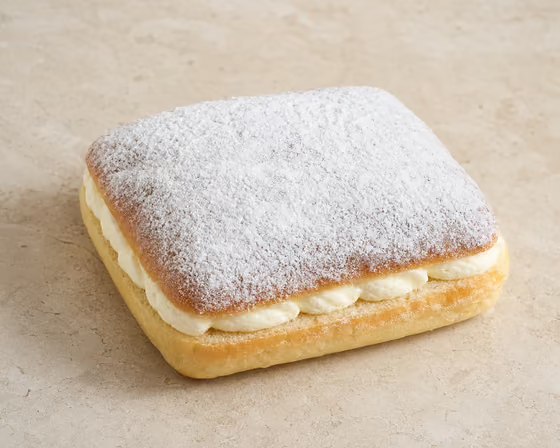 Catalogue image
 Portuguese Brioche Almofada
Light brioche dough, fresh buttercream and icing sugar.
Nationwide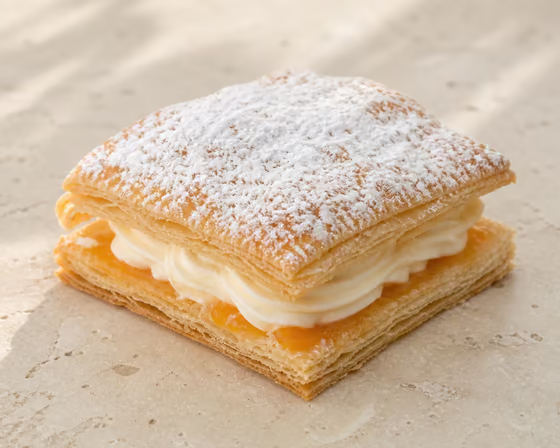 Catalogue image
 Portuguese Puff-Pastry Almofada
Puff pastry with white cream, egg sweet and icing sugar—the laminated Almofada variant.
Nationwide