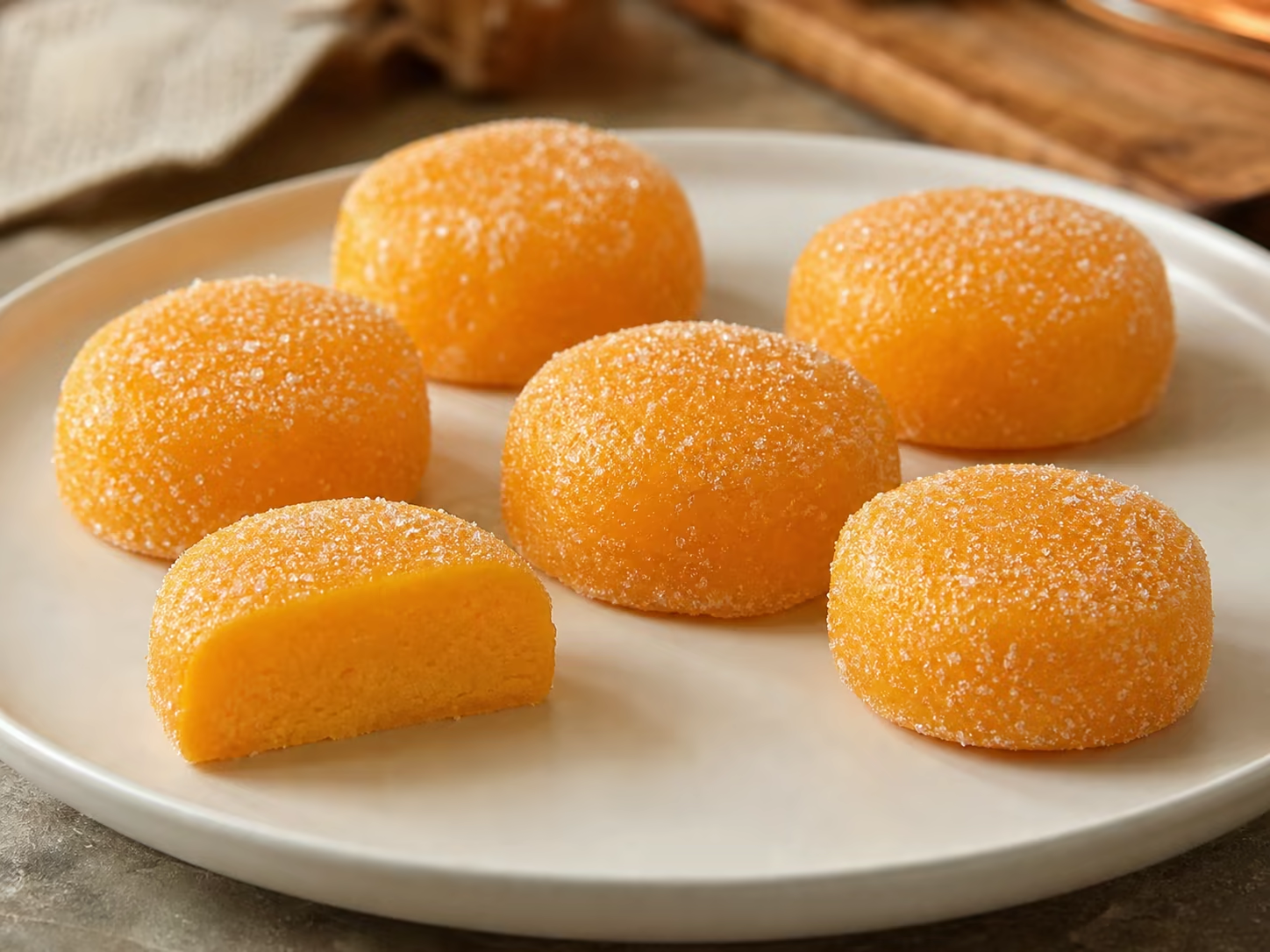
Amarante Saint Gonçalo Cakes
Also known as: Amarante Saint Gonçalo cakes
Small round yolk-and-almond cakes baked in moulds in an oven bain-marie.
- Origin
- Amarante · Tâmega e Sousa
- Place
- Amarante
- Region
- The North
- Category
- Convent Sweets
- Season
- Year-round; also associated with Saint Gonçalo celebrations
- Evidence
- Well documented
The S. Gonçalos of Amarante’s convent confectionery are small, low, vivid-yellow round cakes. Their batter combines stirred egg yolks, boiled grated almonds and sugar syrup; unlike the filling for papos de anjo, it is removed from the heat immediately after mixing so it does not cook in advance.
The mixture fills buttered moulds, may receive a dusting of cinnamon and is baked in a bain-marie. Moist heat sets a soft, compact structure with a smooth or lightly sugared surface. This convent form should not be confused with the phallic São Gonçalo sweet sold during Amarante’s popular festivities, which is a separate product.
- egg yolks
- blanched almonds
- sugar
- water
- butter for the moulds
- optional cinnamon
Rich yolk and gentle almond in a moist compact texture, with a warm cinnamon note when used.
Cinnamon is optional; diameter, height and sugar finish vary slightly among confectioneries.
At Amarante’s traditional confectioneries alongside lérias, foguetes, papos de anjo and brisas do Tâmega.
Black tea, coffee or a late-harvest white Douro wine.
They are one of the five forms of Amarante convent confectionery associated with the Poor Clares of Santa Clara. Their name evokes Saint Gonçalo, deeply tied to the city’s identity, bridge and monastery, while the product specification describes these little cakes as a distinct preparation within the yolk-and-almond family.
Well documented
Identity supported by institutional, specialist or corroborating sources.
- visitportugal.com/pt-pt/content/amarante (opens in a new tab)
- douroetamega.pt/ambt2/uploads/document/file/135/doces_conventuais_de_amarante_atualizado.pdf (opens in a new tab)
- amarantetourism.com/poi/doces-conventuais-de-amarante/ (opens in a new tab)
- docesconventuaisdeamarante.pt/historia/ (opens in a new tab)
Pastries from here — The North
 Catalogue image
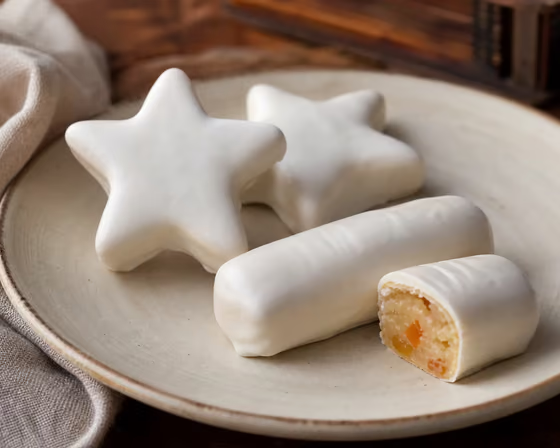
 A Bella Queijadinha de Barcelos
A white star of almond, preserved fruit and family memory.
The North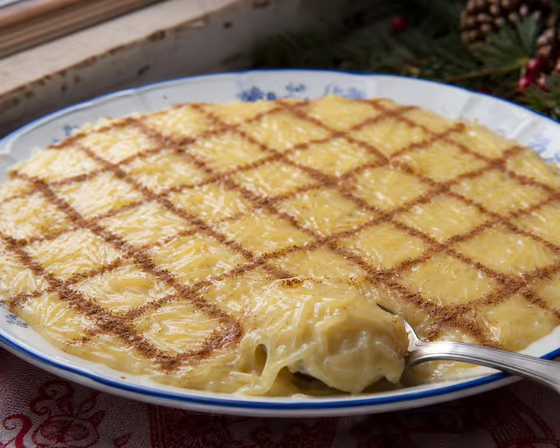 Catalogue image
 Sweet Vermicelli
Fine wheat threads simmered in milk and yolk, scored with cinnamon.
The North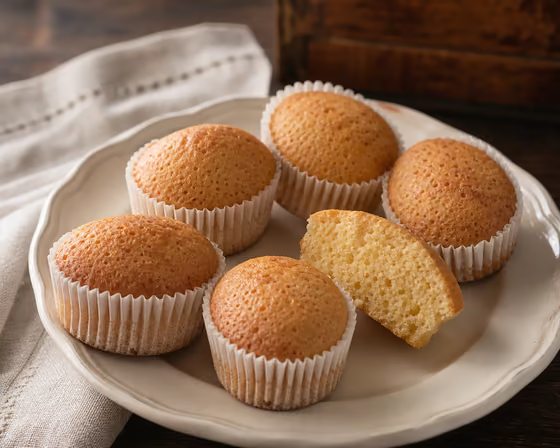 Catalogue image
 Amarantinos
Small egg, lemon and cinnamon cakes whose historical identity is not told consistently by the sources.
The North Catalogue image
 Vieira do Minho Cone Wafers
Paper-thin crisp wafers, iron-baked and rolled by hand while still hot.
The North