Portuguese Sabóia Mosaic Cake
Also known as: Portuguese Sabóia cake
Cake-trimming-paste rolls and casing, buttercream, egg sweet and white sugar.
- Origin
- Pastry repertoire in Portugal · name origin and authorship unconfirmed
- Place
- Portugal
- Region
- Nationwide
- Category
- Cakes & Sweet Breads
- Season
- Current availability and seasonality are undocumented
- Evidence
- Limited documentation
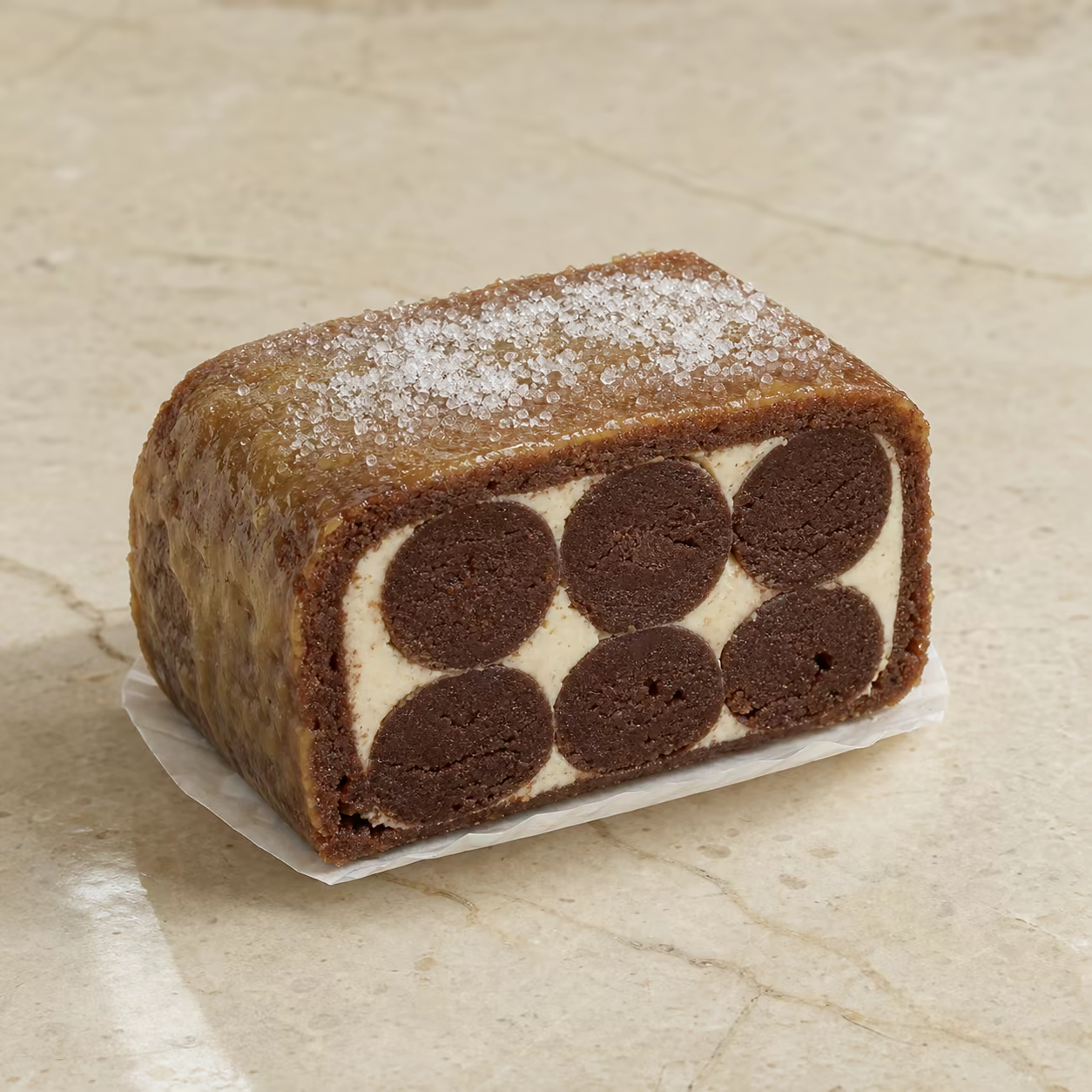
The specialist Fabrico Próprio encyclopedia defines Sabóia through rolls and a casing of cake-trimming paste, fresh buttercream filling, egg-sweet coating and a dusting of white sugar. The record's photograph shows a small rectangular section: six dark rolls are visible in pale cream, enclosed by a brown casing and finished with a glossy coating and sugar crystals.
The rolls' colour may suggest cocoa or chocolate, but the source does not list either. Nor does it explain the composition of the cake-trimming paste, required roll arrangement, proportions, recipe or method. This page documents the published assembly without reconstructing ingredients from appearance alone.
- Cake-trimming paste for the rolls and casing
- Fresh buttercream
- Egg sweet
- White sugar
The source documents cake-trimming paste, buttercream, egg sweet and sugar but publishes no tasting note. Without the paste formula, it is unsafe to describe it as chocolate-flavoured or assign specific aromatics.
The consulted record documents one assembly but does not state that roll count, proportions or format vary. A photograph of one example does not establish a national six-roll standard.
The source says the cake was no longer common when researched but identifies no producer and proves no current availability. Check directly with own-production confectioneries before travelling to find it.
Unsweetened coffee; an editorial suggestion, not a documented pairing.
Fabrico Próprio says its research established that the cake had been made for at least forty years, though it was no longer common during the research period. Cultural publication Gerador corroborates this general account: it describes Sabóia as a cake made from trimmings, once common and disappearing, based on an interview with Rita João, a co-author of the Fabrico Próprio project. This is editorial corroboration published on another domain, although it remains connected to the same original research. Neither source provides an invention date.
The authors could not confirm the name's origin. They explicitly leave unverified a possible connection with the Italian royal house, either through Queen Maria Pia or King Umberto II, exiled in Cascais from the Second World War. That hypothesis matters as a recorded lead but proves no tribute, authorship or place of creation.
Limited documentation
The identity is documented, but its origin, composition or availability has limited sourcing.
- fabricoproprio.net/enciclopedia/saboia/ (opens in a new tab)
- gerador.eu/de-quantos-doces-se-faz-a-nossa-cultura-um-olhar-sobre-a-vitrine-da-docaria-portuguesa/ (opens in a new tab)
Pastries from here — Nationwide
 Catalogue image
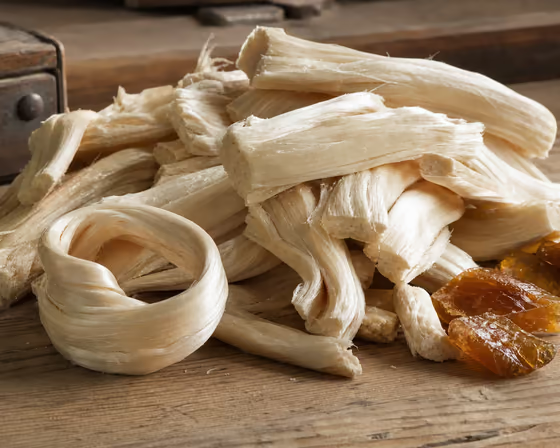
 Alféloa
Sugar or molasses cooked to a hard stage and worked until pale.
Nationwide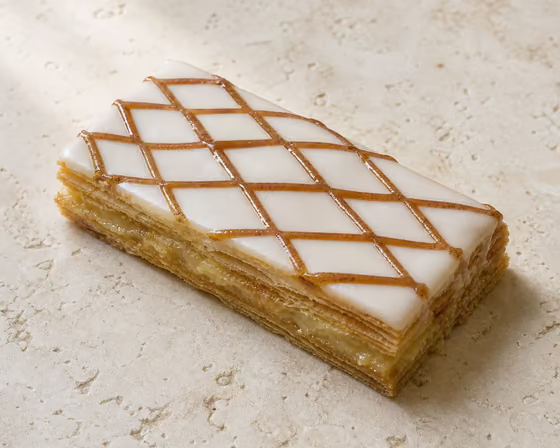 Catalogue image
 Portuguese Gila Allumette
A rectangular puff pastry with cream, gila and cinnamon beneath diamond-patterned royal icing.
Nationwide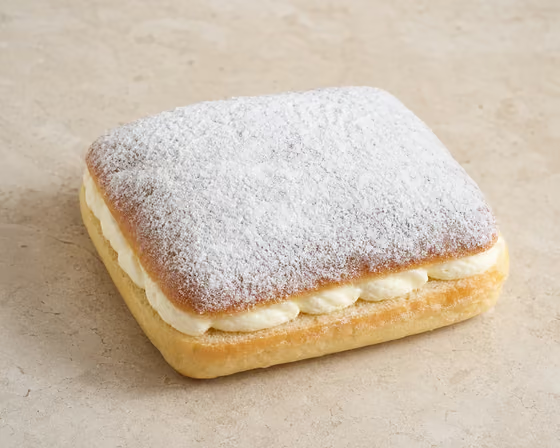 Catalogue image
 Portuguese Brioche Almofada
Light brioche dough, fresh buttercream and icing sugar.
Nationwide Catalogue image
 Portuguese Puff-Pastry Almofada
Puff pastry with white cream, egg sweet and icing sugar—the laminated Almofada variant.
Nationwide