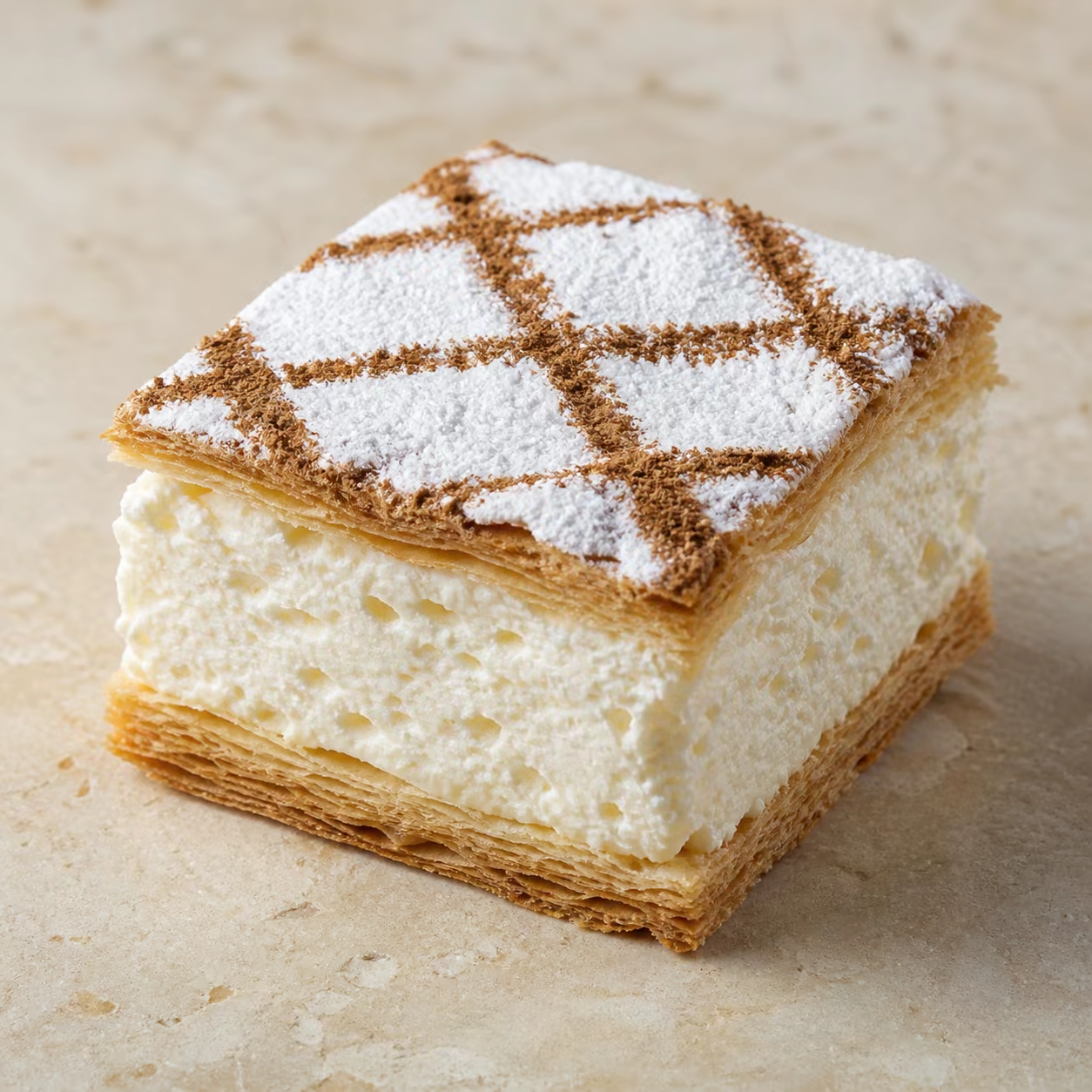
Portuguese Puff-Pastry Russo
Also known as: Portuguese puff-pastry Russo · Porto-style mille-feuille · Russian-cream mille-feuille
Two puff-pastry sheets enclosing a tall block of Russian cream under icing sugar and cinnamon.
- Origin
- Portuguese pastry-counter tradition · central and southern name; Mil-Folhas in Porto and the north
- Place
- Central and southern Portugal · Mil-Folhas in the north
- Region
- Nationwide
- Category
- Laminated & Fine Pastries
- Season
- Year-round, kept chilled
- Dough family
- Laminated puff pastry Layers created through repeated folds of dough and fat.
- Evidence
- Well documented
Russo Folhado is a tall square or rectangle with a puff-pastry sheet at the base, a very voluminous layer of white Russian cream and a second pastry sheet on top. Icing sugar covers the surface and cinnamon lines form diamonds. The pastry should reveal many crisp laminations; the cream is light, aerated and tall enough to make the portion intentionally awkward to bite.
In Porto and the north, this construction is generally sold as Mil-Folhas and may be particularly generous in size. In central and southern Portugal, Russo or Russo Folhado are traditional names. It is not Russo de Amêndoa: that separate cake uses dense almond cake, only a narrow stripe of cream and no puff pastry.
- Puff pastry
- Russian cream based on egg whites or cream, depending on the shop
- Sugar
- Icing sugar
- Cinnamon
Despite its size, the first impression is very light: cool aerated cream between two thin, dry, crisp sheets. Icing sugar sweetens the surface, cinnamon adds aromatic warmth and flaky crumbs provide contrast.
Russian cream varies by shop and may resemble meringue, very light buttercream or stabilised chantilly. Height also changes. Mil-Folhas predominates in the north; Russo Folhado in central and southern Portugal. It should not be confused with mille-feuille topped in egg cream and chocolate, a different counter variant.
O Alentejano’s catalogue retains the name Russo Folhado. In Porto and the north, look for the same structure as Mil-Folhas at own-production bakeries. Confirm by appearance—two puff-pastry sheets and a very tall white centre—because regional names overlap.
Espresso, preferably with a dessert fork.
The speciality belongs to the broad European mille-feuille family, but Portuguese naming became regional. Fabrico Próprio records that Porto and the north call it Mil-Folhas, while Russo Folhado became established elsewhere. Available research identifies neither a first shop nor a secure explanation for why the cream was called “Russian”.
Continuity is visible in catalogues and menus: O Alentejano lists Russo Folhado among its small cakes, while Portuguese menus abroad distinguish it from Russo de Amêndoa. The regional name switch matters for both search and travel: the same intent may appear as “russo”, “russo folhado” or “mil-folhas do Porto”.
Well documented
Identity supported by institutional, specialist or corroborating sources.
- fabricoproprio.net/enciclopedia/russo-folhado/ (opens in a new tab)
- oalentejano.com/bakerywebsite/assets/catalogue/small-cakes.pdf (opens in a new tab)
- lisboaloja.co.uk/menu-cafe/menu-portuguese-cakes.php (opens in a new tab)
- pt.wikipedia.org/wiki/Mil-folhas (opens in a new tab)
Pastries from here — Nationwide
 Catalogue image
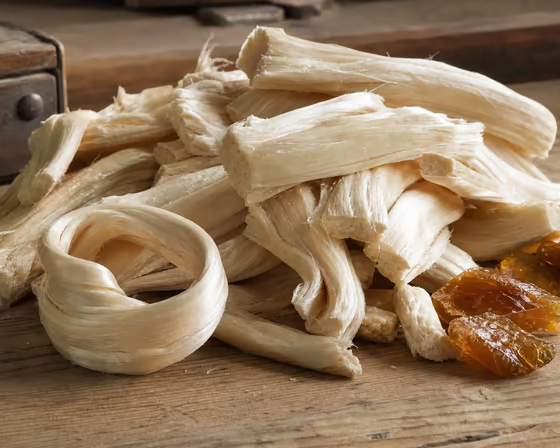
 Alféloa
Sugar or molasses cooked to a hard stage and worked until pale.
Nationwide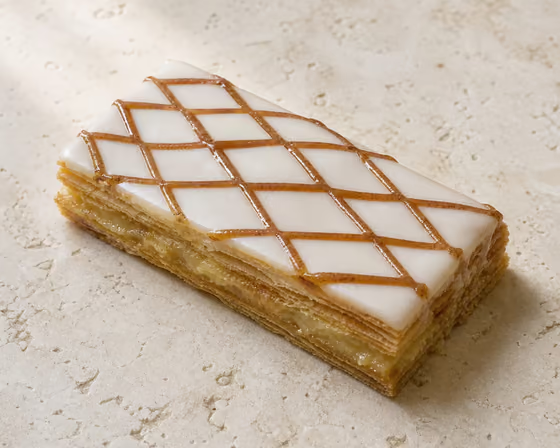 Catalogue image
 Portuguese Gila Allumette
A rectangular puff pastry with cream, gila and cinnamon beneath diamond-patterned royal icing.
Nationwide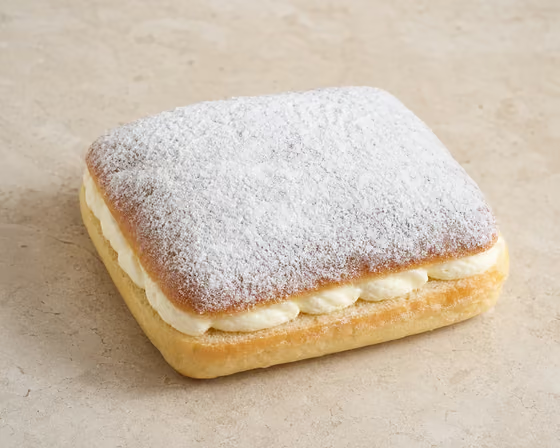 Catalogue image
 Portuguese Brioche Almofada
Light brioche dough, fresh buttercream and icing sugar.
Nationwide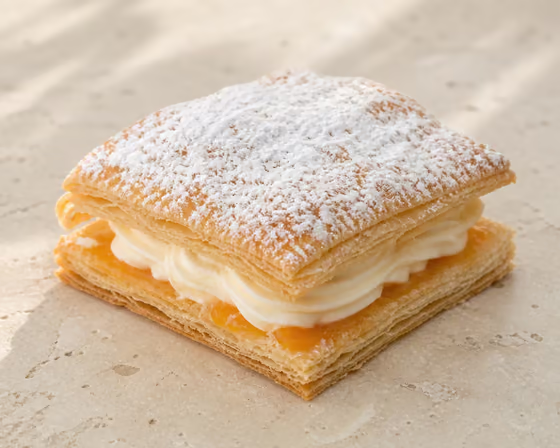 Catalogue image
 Portuguese Puff-Pastry Almofada
Puff pastry with white cream, egg sweet and icing sugar—the laminated Almofada variant.
Nationwide