Pico Rosquilhas
Also known as: Pico Holy Spirit Rings · Pico Festival Rosquilhas
Large yeasted rings, snipped like crowns and shared at Holy Spirit festivals.
- Origin
- Pico Island · Azores
- Place
- Pico Island
- Region
- The Azores
- Category
- Festive & Seasonal
- Season
- Holy Spirit festival season
- Evidence
- Well documented
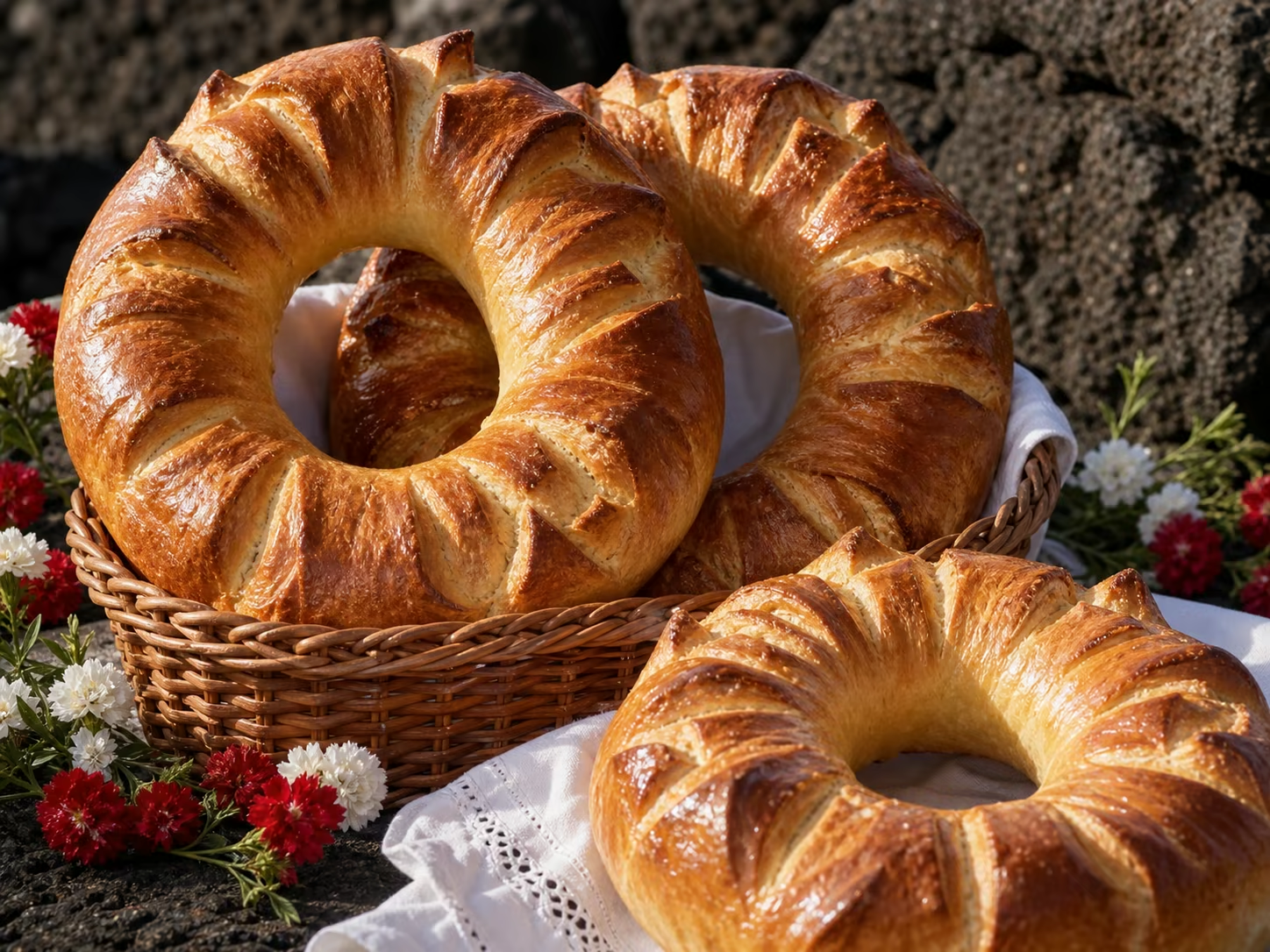
Rosquilhas do Pico are large rings of yeasted dough enriched with eggs and butter. Once kneaded and risen, the dough is divided, shaped into rings and snipped with scissors before wood-fired baking. The cuts open in the heat to form an uneven crown; each ring is generously brushed with butter while still hot, producing a glossy, tender crust.
These are not small dry biscuits. A Pico rosquilha is a substantial festive bread that can fill much of a wicker tray. Decorated baskets accompany processions, after which the rings are distributed, turning the bake into a tangible symbol of community and sharing.
- wheat flour
- eggs
- sugar
- butter
- lard
- milk
- yeast
- lemon zest
- nutmeg
- aguardente (in some recipes)
A fluffy, egg-rich crumb scented with lemon and nutmeg, moderate sweetness and a buttery surface finished straight from the oven.
Proportions and aromatics vary by parish and family: some recipes use milk, lard or aguardente, while others centre on eggs, butter, lemon and nutmeg. Graciosa has a related bodo rosquilha tradition, but with its own methods and formulas.
On Pico during Holy Spirit festivals, especially at community celebrations and impérios in parishes such as São Mateus, Madalena and Lajes do Pico.
Azorean tea, milk or a glass of Pico wine.
The rings belong to Pico's cycle of Holy Spirit festivals. Brotherhoods and local teams organise the kneading, baking and wicker trays carried in procession; the rosquilhas are then offered to participants. The Azores Intangible Cultural Heritage inventory documents this practice in São Mateus do Pico, where each member contributes a bread allotment or its equivalent and the skills of shaping and baking continue to pass between generations. The tradition is emphatically alive: recent festivals in Madalena and Lajes have distributed thousands of rings.
Well documented
Identity supported by institutional, specialist or corroborating sources.
- turismo.azores.gov.pt/pico/ (opens in a new tab)
- culturacores.azores.gov.pt/patrimonio/ver.aspx (opens in a new tab)
- acores.rtp.pt/local/espirito-santo-no-pico-distribuidos-pao-bolos-de-vespera-e-rosquilhas/ (opens in a new tab)
- repositorio.uac.pt/server/api/core/bitstreams/7614f1bc-b0d3-48cc-b5bf-fd11ec723c1b/content (opens in a new tab)
- books.openedition.org/etnograficapress/9827 (opens in a new tab)
Pastries from here — The Azores
 Catalogue image
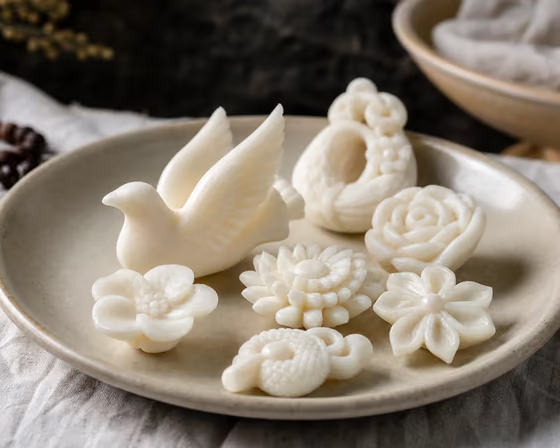
 Alfenim Pulled Sugar
Hand-pulled sugar shaped into animals, flowers, hearts and votive figures.
The Azores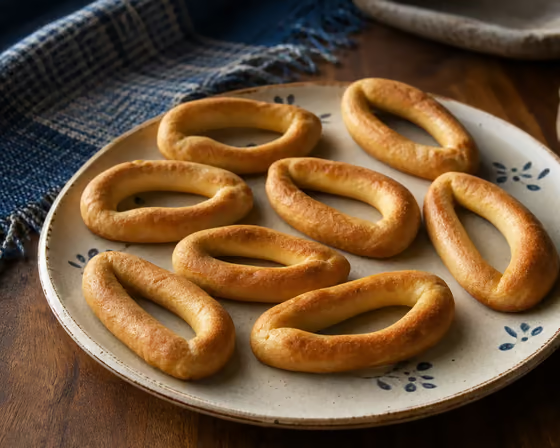 Catalogue image
 Brandy Biscuits
Crisp Santa Maria rings kneaded with eggs, rich fats and a glass of brandy.
The Azores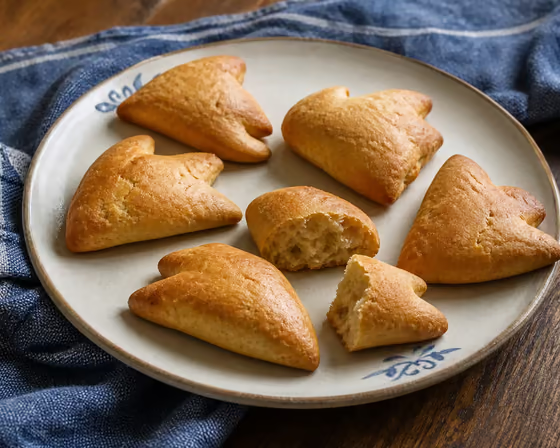 Catalogue image
 Ear-Shaped Biscuits
Santa Maria's triangular enriched biscuits, clipped at the tips like little ears.
The Azores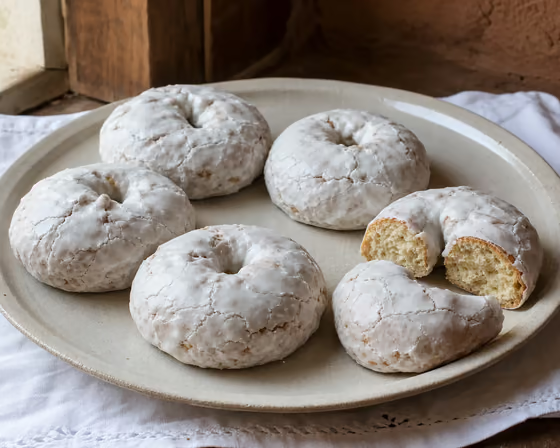 Catalogue image
 Santa Maria Encanelado Biscuits
Santa Maria's yeasted rings under a thick white sugar glaze.
The Azores