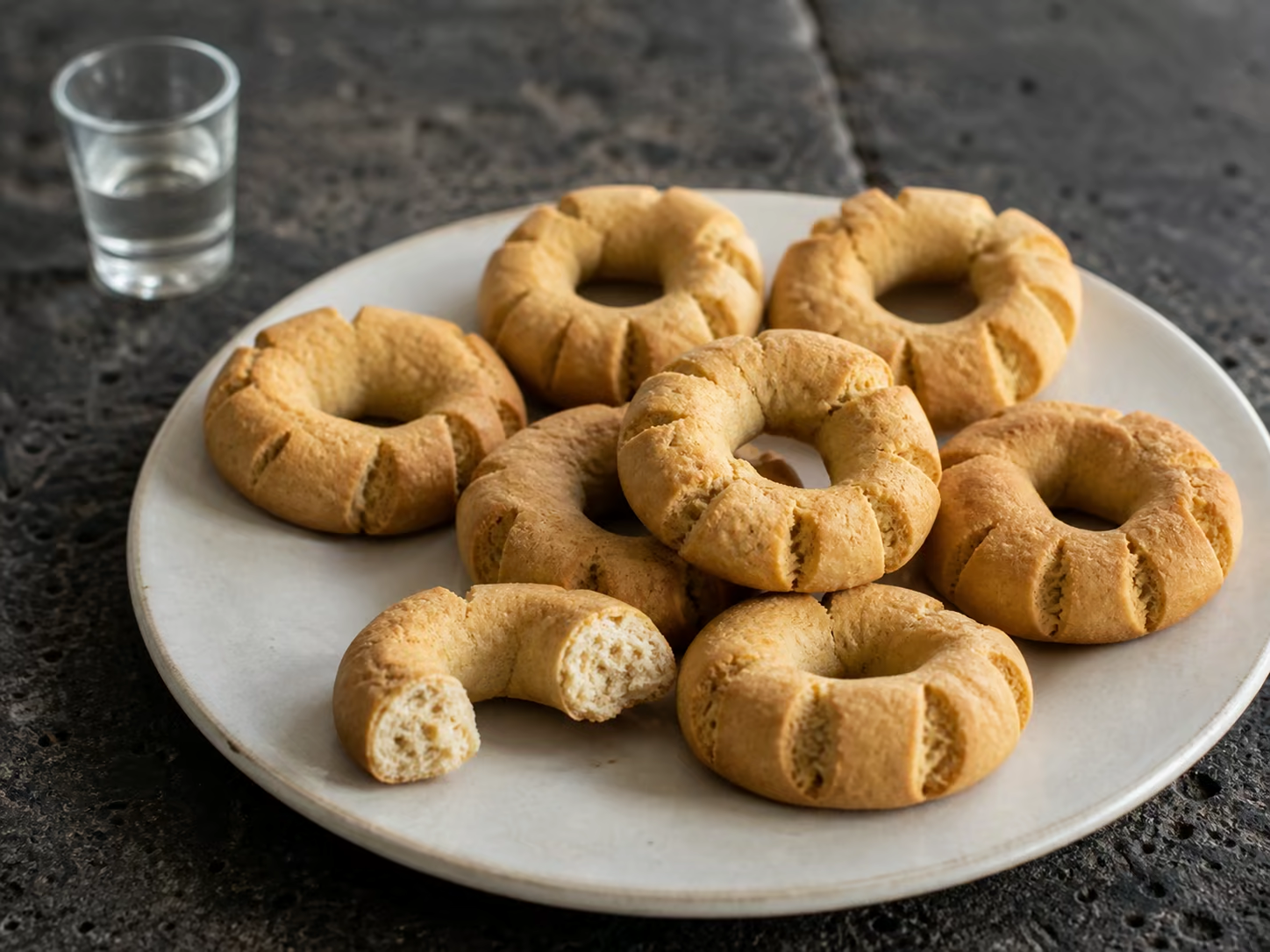
São Jorge Aguardente Rosquilhas
Also known as: São Jorge Aguardente Rings · Aguardente Rosquilhas
Aguardente rings, boiled, scored and finished in a very hot oven.
- Origin
- São Jorge Island · Azores
- Place
- São Jorge Island
- Region
- The Azores
- Category
- Festive & Seasonal
- Season
- Holy Spirit festivals and family celebrations
- Evidence
- Well documented
São Jorge Rosquilhas de Aguardente are small ring-shaped biscuits made with eggs, flour, sugar and local aguardente. Their technique matters as much as their formula: once shaped, the rings are first boiled in water, scored all around and only then transferred to a very hot oven. The cuts open as they bake, creating an irregular, crown-like surface and a tight crumb wholly unlike a fried doughnut.
Nor should they be confused with Pico Rosquilhas, which are large yeasted sweet breads. On São Jorge, aguardente and the two-stage cooking method define a festive biscuit in its own right: dry, aromatic, durable and made to be shared.
- wheat flour
- eggs
- sugar
- local aguardente
- water for boiling
A firm, low-moisture biscuit with straightforward sweetness, the warm vinous aroma of aguardente and toasted edges where the oven opens each score.
Proportions belong to each household tradition. São Jorge sources separate aguardente rosquilhas from boiled and white rosquilhas; their related names do not make them a single recipe.
On São Jorge Island, especially at family tables and celebrations connected with the Holy Spirit festivals.
Coffee, Azorean tea or a small glass of aguardente.
The Azores Regional Tourism Directorate lists these rings among São Jorge's characteristic sweets and records their boil, score and bake method. The regional cultural inventory and ethnographic studies distinguish them from boiled or white rosquilhas. Their place at Holy Spirit festival tables and bodos is also documented: in different parishes they accompanied the ceremonial distribution of bread and other sweets, linking household dough work to community reciprocity.
Well documented
Identity supported by institutional, specialist or corroborating sources.
- turismo.azores.gov.pt/sao-jorge/ (opens in a new tab)
- culturacores.azores.gov.pt/ea/pesquisa/default.aspx (opens in a new tab)
- acores.rtp.pt/comunidades/festas-do-espirito-santo-na-ilha-de-sao-jorge-frederico-maciel/ (opens in a new tab)
- books.openedition.org/etnograficapress/9791 (opens in a new tab)
- research.unl.pt/ws/portalfiles/portal/33856170/Jo_o_Leal_As_Festas_do_Espirito_Santo_nos_A_ores_Um_Estudo_de_Antropologia_Social.pdf (opens in a new tab)
Pastries from here — The Azores
 Catalogue image
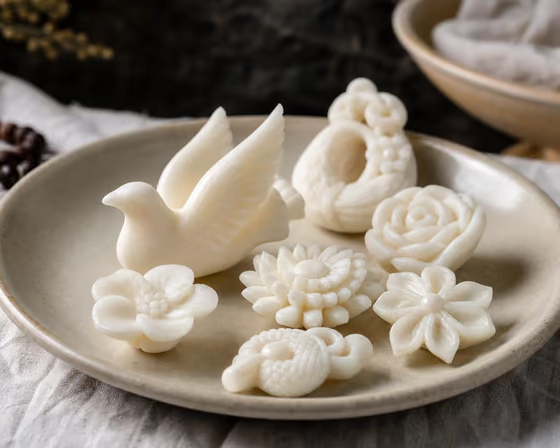
 Alfenim Pulled Sugar
Hand-pulled sugar shaped into animals, flowers, hearts and votive figures.
The Azores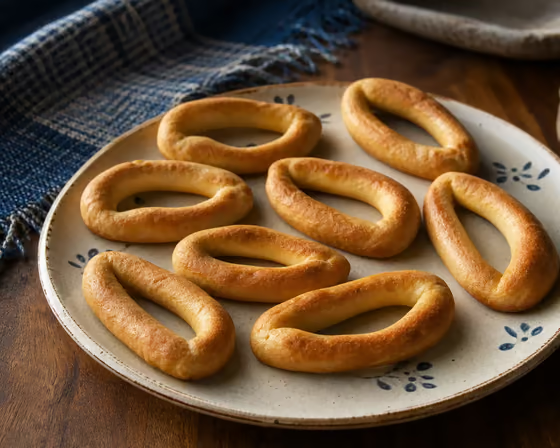 Catalogue image
 Brandy Biscuits
Crisp Santa Maria rings kneaded with eggs, rich fats and a glass of brandy.
The Azores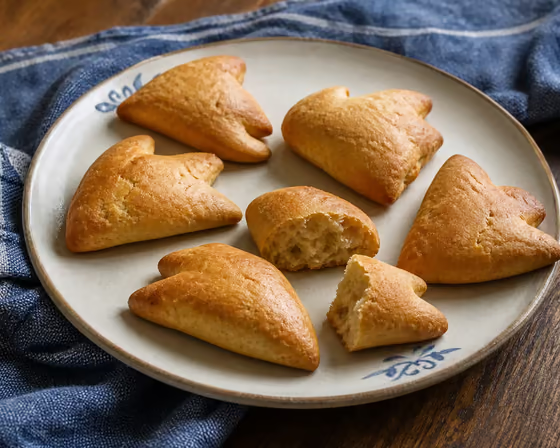 Catalogue image
 Ear-Shaped Biscuits
Santa Maria's triangular enriched biscuits, clipped at the tips like little ears.
The Azores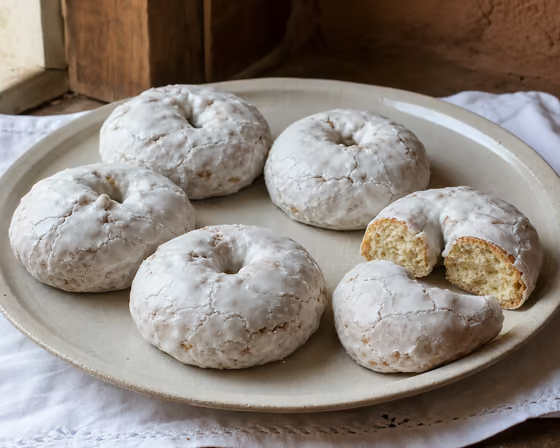 Catalogue image
 Santa Maria Encanelado Biscuits
Santa Maria's yeasted rings under a thick white sugar glaze.
The Azores