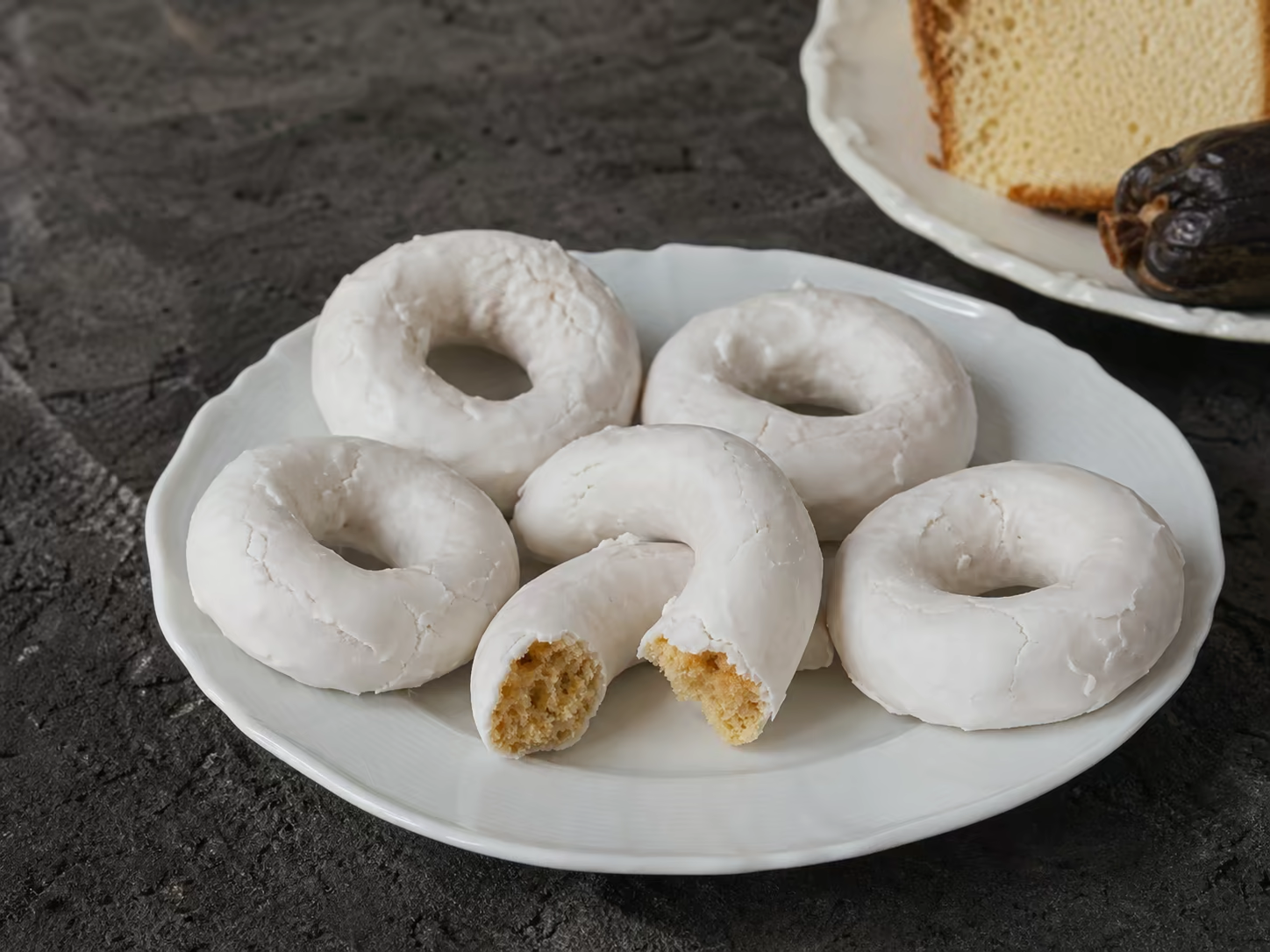
São Jorge White Rosquilhas
Also known as: São Jorge White Rosquilhas · White Sugar Rings
São Jorge egg-and-butter rings beneath a white cooked-sugar shell.
- Origin
- São Jorge Island · Azores
- Place
- São Jorge Island
- Region
- The Azores
- Category
- Festive & Seasonal
- Season
- Pentecost, Trinity and Holy Spirit festival season
- Evidence
- Well documented
São Jorge Rosquilhas Brancas are oven-baked rings made from flour, eggs, sugar and lard or butter, coated after baking with sugar cooked to the proper stage. The syrup dries into an opaque, brittle white shell, giving the sweet its name and creating a strong contrast with the golden dough beneath.
An ethnographic recipe recorded in Santo Antão conveys the communal scale of the bake: one batch used four kilograms of flour, half a kilogram of sugar, a dozen eggs and twenty spoonfuls of fat. These are not Rosquilhas de Aguardente, which are boiled and scored before baking; the white coating and enriched dough define a different São Jorge specialty.
- wheat flour
- eggs
- sugar
- lard or butter
- water for the syrup
A very sweet, dry and crisp shell over a firm ring enriched with egg and softened by butter or lard.
Local records also call the rings ‘doce branco’. ‘Prato de doce branco’, however, can mean the complete ceremonial service of sponge cake, rosquilhas, cavacas and an espécie rather than a single recipe. The dough fat varies between lard and butter.
On São Jorge, especially in Santo Antão, Rosais and other communities during Pentecost and Trinity Sunday celebrations.
Coffee or Azorean tea; at festivals it joins other São Jorge sweets on a shared ceremonial plate.
Rosquilhas brancas belong to the sweet service of São Jorge's Holy Spirit festivals. An ethnographic study of Santo Antão lists them among the more laborious and expensive sweets distributed by mounted attendants in the so-called crown service, alongside espécies, esquecidos, caramels, meringues and pão leve. Municipal documents still identify them as traditional Velas confectionery and record the local equivalence between ‘rosquilhas brancas’ and ‘doce branco’.
The expression also operates at more than one scale. Recipe sources use ‘doce branco’ for the syrup-coated ring; the Francisco de Lacerda Museum also documents the ‘prato de doce branco’, a ritual assortment distributed at Pentecost and Trinity containing sponge-cake slices, two rosquilhas, two glazed cavacas and one espécie.
Well documented
Identity supported by institutional, specialist or corroborating sources.
- run.unl.pt/server/api/core/bitstreams/ee4cc6bc-3e57-48fe-b5b1-3343b13c7958/content (opens in a new tab)
- books.openedition.org/etnograficapress/9791 (opens in a new tab)
- cmvelas.pt/wp-content/uploads/2019/11/Volume-V-Setor-Urbano.pdf (opens in a new tab)
- culturacores.azores.gov.pt/agenda/default.aspx (opens in a new tab)
- culturacores.azores.gov.pt/ea/pesquisa/default.aspx (opens in a new tab)
- acores.rtp.pt/comunidades/o-amigo-jorgense-frederico-maciel/ (opens in a new tab)
Pastries from here — The Azores
 Catalogue image
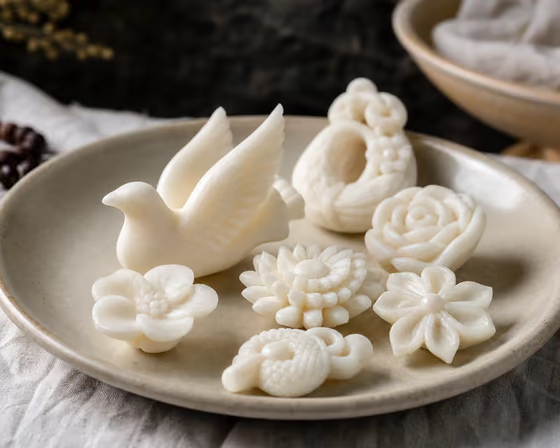
 Alfenim Pulled Sugar
Hand-pulled sugar shaped into animals, flowers, hearts and votive figures.
The Azores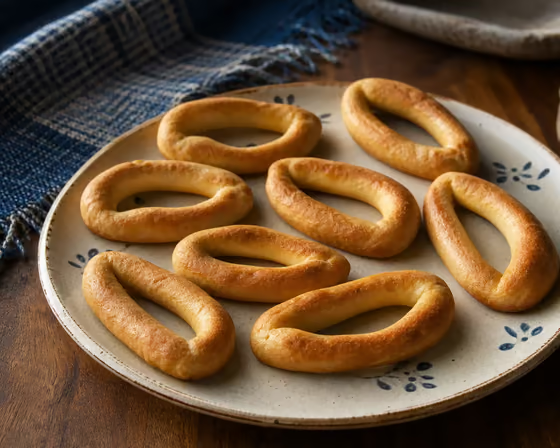 Catalogue image
 Brandy Biscuits
Crisp Santa Maria rings kneaded with eggs, rich fats and a glass of brandy.
The Azores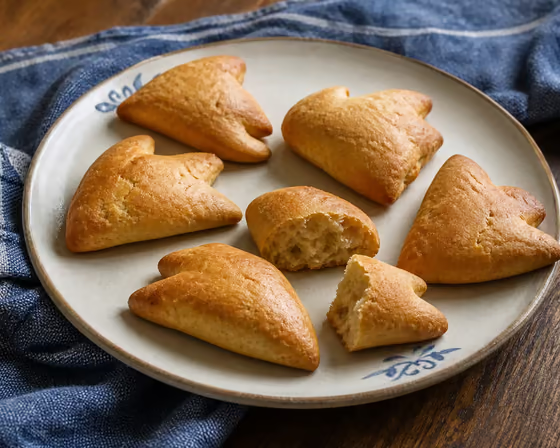 Catalogue image
 Ear-Shaped Biscuits
Santa Maria's triangular enriched biscuits, clipped at the tips like little ears.
The Azores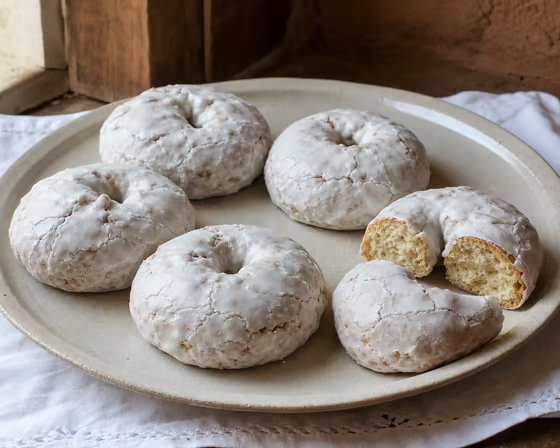 Catalogue image
 Santa Maria Encanelado Biscuits
Santa Maria's yeasted rings under a thick white sugar glaze.
The Azores