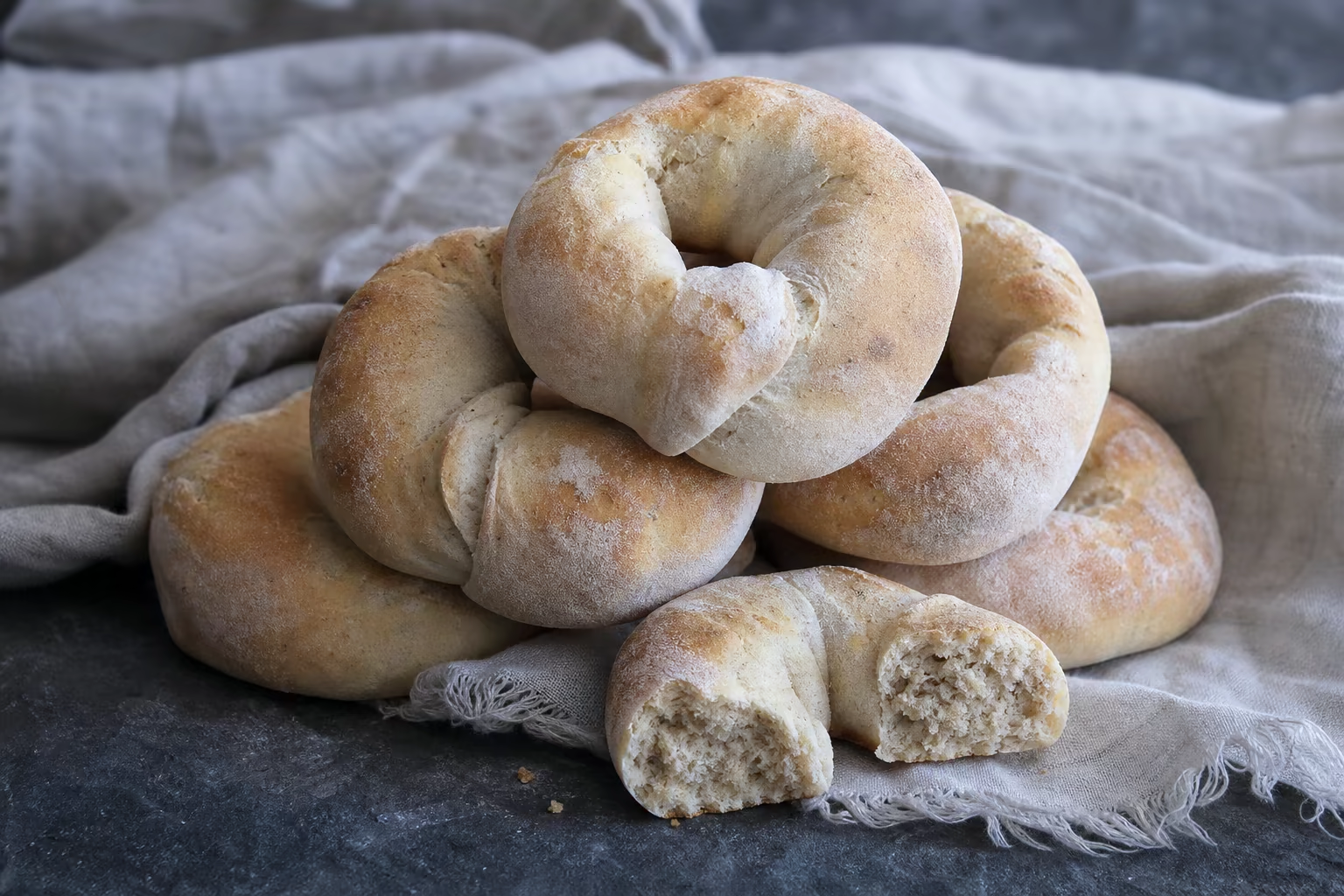
Miranda do Douro Roscos
Crisp Mirandese ring biscuits scented with olive oil, butter, anise and aguardente.
- Origin
- Miranda do Douro · Trás-os-Montes
- Place
- Miranda do Douro
- Region
- Trás-os-Montes
- Category
- Festive & Seasonal
- Season
- Year-round; especially Epiphany and Candeias
- Evidence
- Well documented
Roscos from Miranda do Douro are simple, dry, crisp biscuits, usually shaped as thick rings. Their dough combines eggs, sugar, milk, flour, butter, olive oil, aguardente and anise, rests before being hand-shaped and is brushed with yolk before wood-firing.
The surface is pale, matte and rustic, sometimes cracked; the firm crumb keeps well. For festivals the dough is also shaped into letters and other figures.
- wheat flour
- eggs
- sugar
- milk
- butter
- olive oil
- aguardente
- anise
- baking powder
- bicarbonate of soda
Dry and crisp, scented with anise and aguardente and gently enriched by olive oil and butter.
Besides rings, letters and figures are shaped for festival displays.
At bakeries, fairs and traditional festivals around Miranda do Douro.
Coffee, tea or a fortified Trás-os-Montes wine.
DGADR documents the importance of roscos at Epiphany and Our Lady of Candeias festivities in Silva e Águas Vivas, including display structures decorated with pieces of several shapes and then auctioned. Miranda do Douro municipality confirms that Águas Vivas celebrates Our Lady of Candeias and the Festa do Ramo in February, expressly connecting the event with recognition of traditional rosco-making.
Well documented
Identity supported by institutional, specialist or corroborating sources.
- tradicional.dgadr.gov.pt/pt/cat/doces-e-produtos-de-pastelaria/959-roscos (opens in a new tab)
- cm-mdouro.pt/viver/concelho/freguesias (opens in a new tab)
- cm-mdouro.pt/areas-de-intervencao/agricultura (opens in a new tab)
Pastries from here — Trás-os-Montes
 Catalogue image
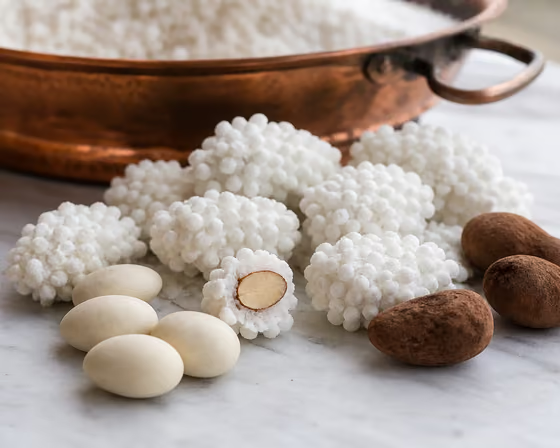
 Moncorvo Sugar-Coated Almonds
The queen of Trás-os-Montes sweets, spun from sugar and patience in copper.
Trás-os-Montes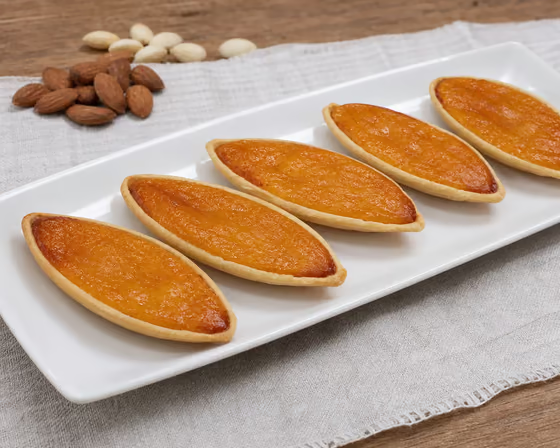 Catalogue image
 Alfândega da Fé Almond Boats
Pale pastry boats with a glossy filling of yolk and Trás-os-Montes almonds.
Trás-os-Montes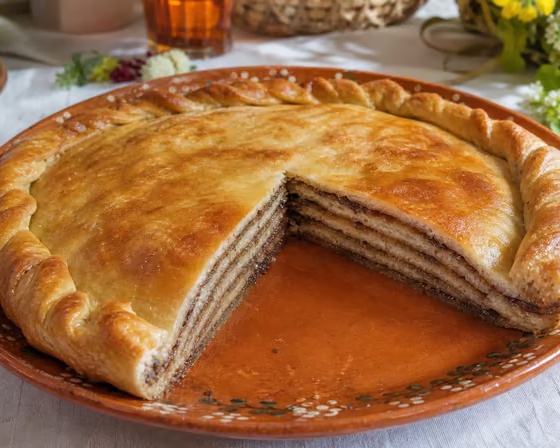 Catalogue image
 Mirandese Sweet Bola
The Easter bola that unravels in layers of sugar and cinnamon.
Trás-os-Montes Catalogue image
 Douro Port-Soaked Cake
A rich egg-and-butter cake soaked while hot in a generous Port-wine syrup.
Trás-os-Montes