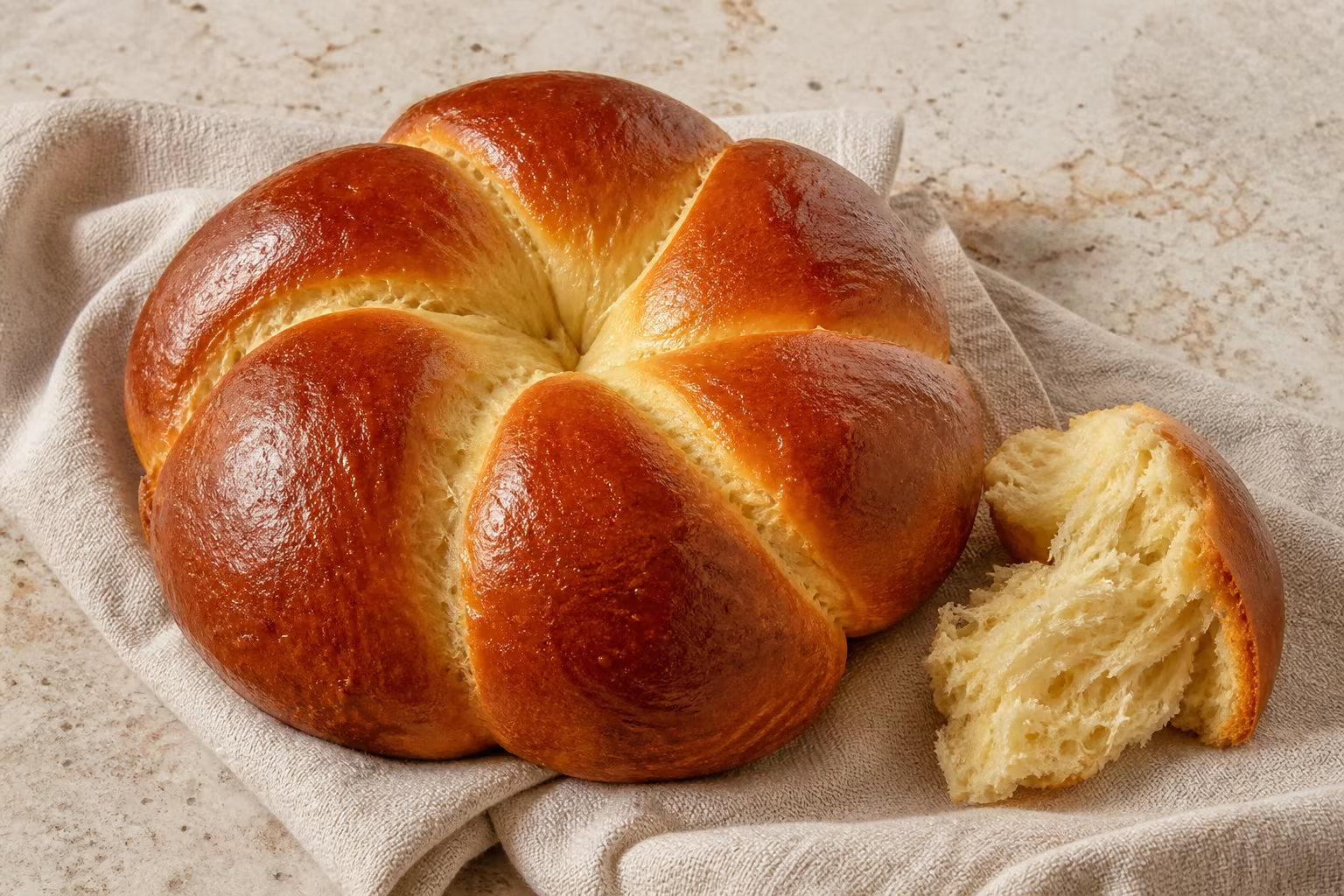
Portuguese Easter Regueifa
The braided, coiled Easter sweet bread traditionally given by godparents to godchildren.
- Origin
- Santa Maria da Feira · Northern Portugal
- Place
- Santa Maria da Feira
- Region
- The North
- Category
- Festive & Seasonal
- Season
- Easter
- Evidence
- Well documented
Regueifa da Páscoa is a glossy brown Easter bread with a soft interior, shaped from two braided strands coiled into a crown. Its dough contains eggs, sugar, butter, milk, cinnamon and Port and undergoes two long rises before being egg-washed.
It is made in several sizes. The braid opens into high lobes in the oven, exposing a yellow, fibrous crumb beneath its lacquered crust.
- wheat flour
- eggs
- sugar
- butter
- milk
- yeast
- cinnamon
- Port
- salt
Light, buttery and gently sweet crumb scented with cinnamon and Port, under a thin egg-washed crust.
There is no single family formula: proportions and flavourings vary, as does the gift's size. A coiled braid is recurrent and, in some localities, the dough is set on cabbage leaves for baking.
At bakeries around Santa Maria da Feira, especially in the weeks before Easter.
Butter, mild cheese, tea or a small glass of Port.
DGADR records a tradition spanning many centuries in Santa Maria da Feira: godparents give regueifa as the customary folar to godchildren and, in northern parishes, it was once wood-fired for baptisms and served with wine. The municipality notes that sweet regueifa is found elsewhere in Portugal while identifying particularly strong traditions in São João de Ver, Lobão and Guisande.
Well documented
Identity supported by institutional, specialist or corroborating sources.
- tradicional.dgadr.gov.pt/pt/cat/doces-e-produtos-de-pastelaria/128-regueifa-da-pascoa (opens in a new tab)
- intranet.cm-feira.pt/visitfeira/index.php (opens in a new tab)
Pastries from here — The North
 Catalogue image
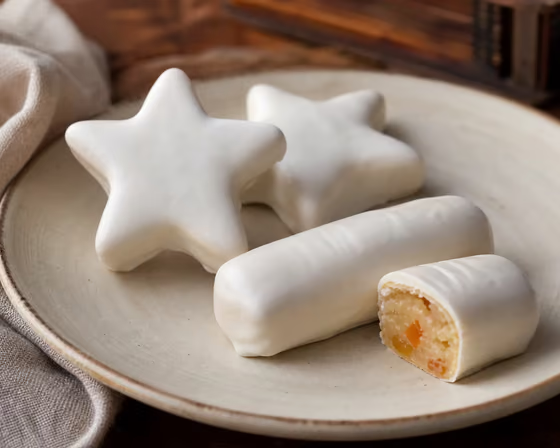
 A Bella Queijadinha de Barcelos
A white star of almond, preserved fruit and family memory.
The North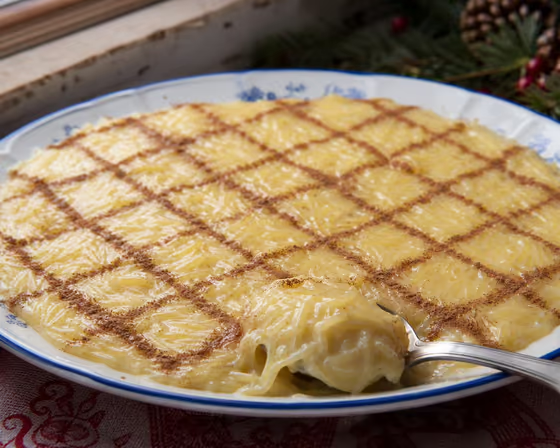 Catalogue image
 Sweet Vermicelli
Fine wheat threads simmered in milk and yolk, scored with cinnamon.
The North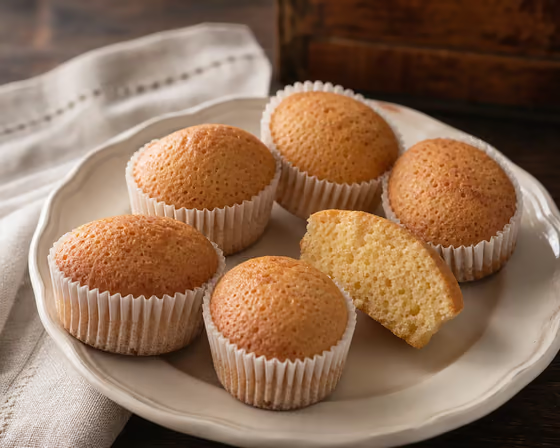 Catalogue image
 Amarantinos
Small egg, lemon and cinnamon cakes whose historical identity is not told consistently by the sources.
The North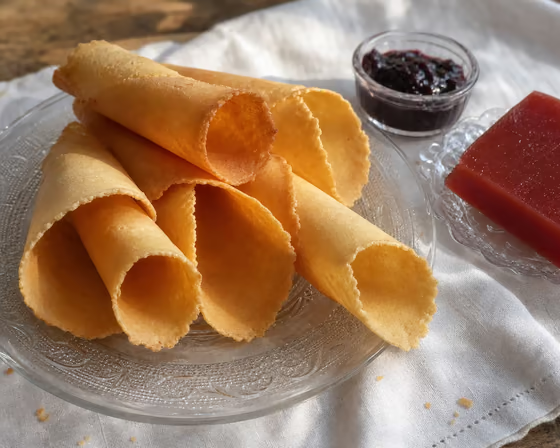 Catalogue image
 Vieira do Minho Cone Wafers
Paper-thin crisp wafers, iron-baked and rolled by hand while still hot.
The North