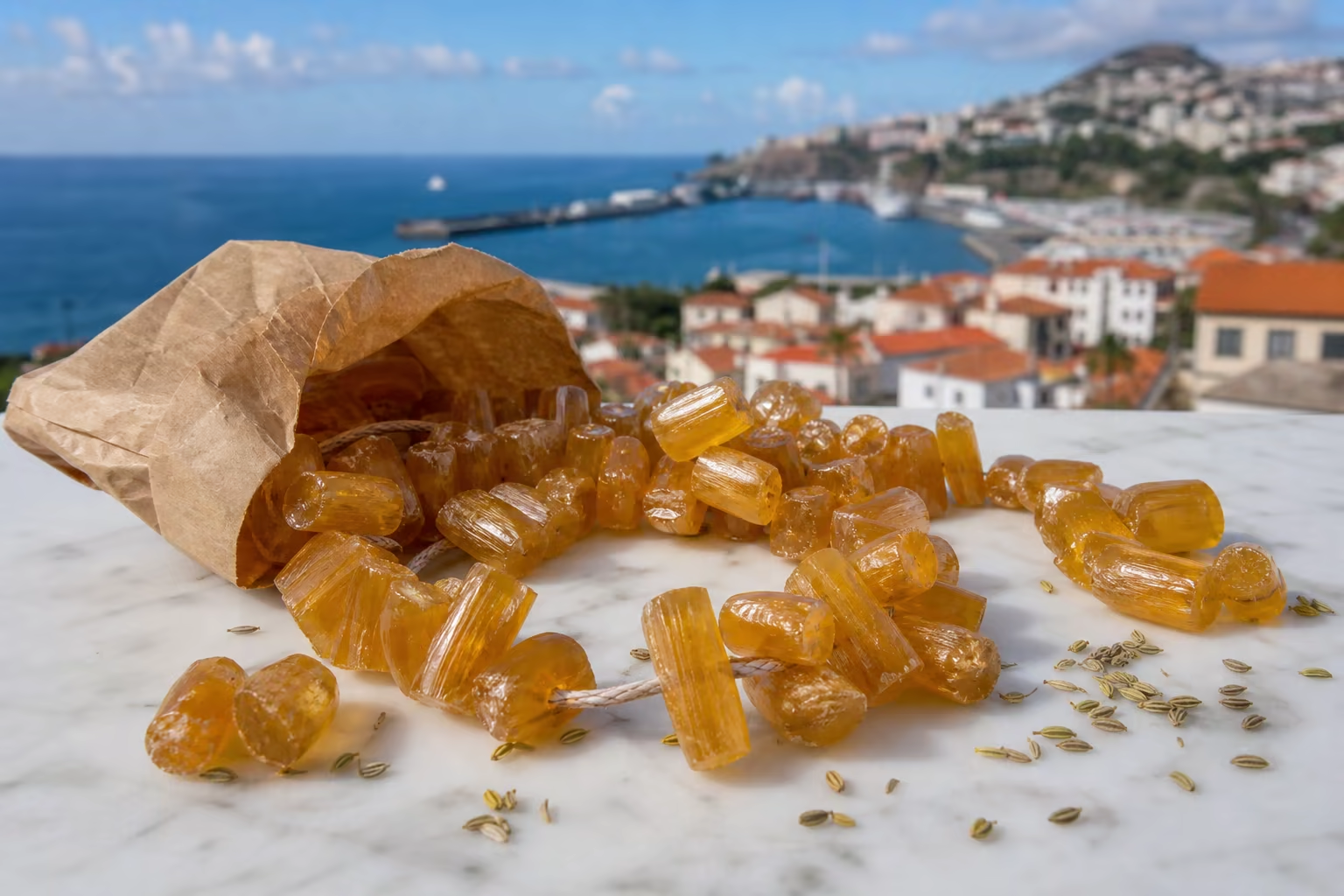
Fennel Candies
Also known as: Madeiran Fennel Sweets · Madeiran Fennel Candy
Small translucent cylinders of sugar flavoured with fennel essence.
- Origin
- Date and maker unknown · Autonomous Region of Madeira, culturally associated with Funchal
- Place
- Funchal
- Region
- Madeira
- Category
- Festive & Seasonal
- Season
- Year-round; also associated with festival stalls
- Evidence
- Well documented
DGADR defines Rebuçados de Funcho as handmade cylinders of variable size, about 1–2 centimetres, yellow-orange, translucent and fennel-flavoured. The identity formula is short: sugar, water and fennel essence heated to hard-ball stage; the mass is cooled, shaped into small cigars and cut with a knife.
The official product is sold in small bags and is not individually wrapped. The coloured candy strings or necklaces sold at island festivals are a related tradition, but the tourism source describing both treats them separately; they do not prove that every fennel sweet is threaded into a necklace.
- Sugar
- Water
- Fennel essence
Concentrated hard-candy sweetness with the anise-like aroma of fennel; DGADR describes translucent yellow-orange pieces.
Regional guides record sweets in other flavours such as eucalyptus, passion fruit and banana. These are distinct flavours and do not alter the documented identity of Rebuçados de Funcho.
DGADR records sale through traditional-product shops and some street vendors in Madeira. Confirm current availability and labelling at the point of sale.
Consumed as a sweet; the reviewed sources establish no formal pairing.
The cultural link to Funchal comes from the historical abundance of fennel on the bay’s slopes, documented by DGADR through a passage from the chronicler Gaspar Frutuoso. The plant gave the city its name and supplies the sweet’s distinctive flavour.
The creation date, first maker and original formula are unknown in the reviewed sources. DGADR documents the identity and know-how in a 2001 publication; a complete domestic formula published in 2020 should be presented as a contemporary version, not as the founding recipe. Popular use to soothe coughs is an ethnographic record in the official source, not a clinical efficacy claim.
Well documented
Identity supported by institutional, specialist or corroborating sources.
- tradicional.dgadr.gov.pt/pt/cat/doces-e-produtos-de-pastelaria/761-rebucados-de-funcho (opens in a new tab)
- helloguidemadeira.com/pt/madeira/tradicoes-regionais/doces-tradicionais (opens in a new tab)
- ocean-retreat.com/eat-drink/recipe-rebucados-de-funcho-fennel-candy/ (opens in a new tab)
- ccmm.madeira.gov.pt/index.php/publicacoes/noticias/116-rebucados-de-funcho-da-madeira-partem-a-conquista-de-novos-mercados (opens in a new tab)
Pastries from here — Madeira
 Catalogue image
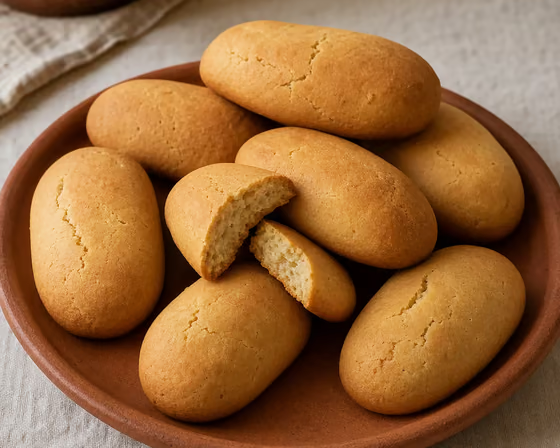
 Porto Santo Toasted Biscuits
Porto Santo's savoury biscuit, baked and then slowly toasted for hours.
Madeira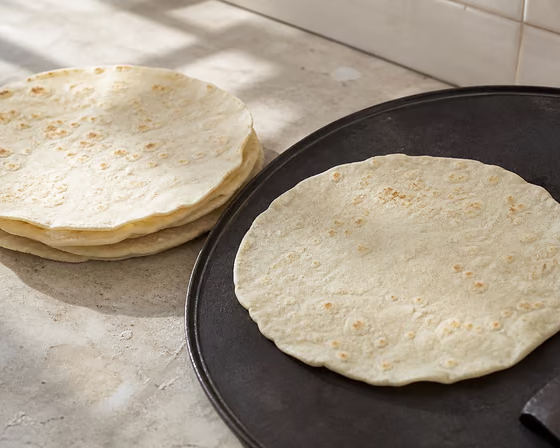 Catalogue image
 Porto Santo Jewish Unleavened Bread
A Porto Santo unleavened bread that one local source describes as barley, water and salt cooked on a griddle.
Madeira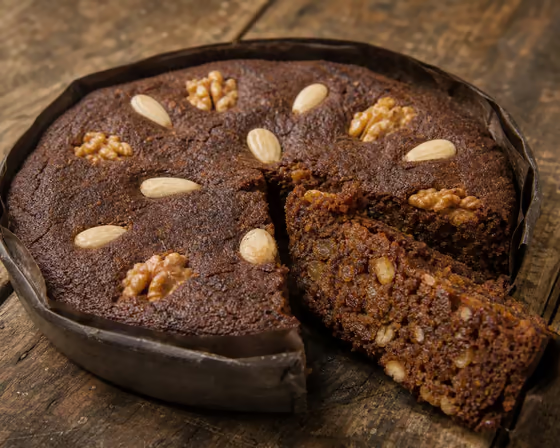 Catalogue image
 Madeira Honey Cake
Madeira's dark Christmas cake, broken by hand and good for months.
Madeira Catalogue image
 Madeira Bolo de Noiva
A spiced festive and wedding sweet bread baked as round portions on plant leaves.
Madeira