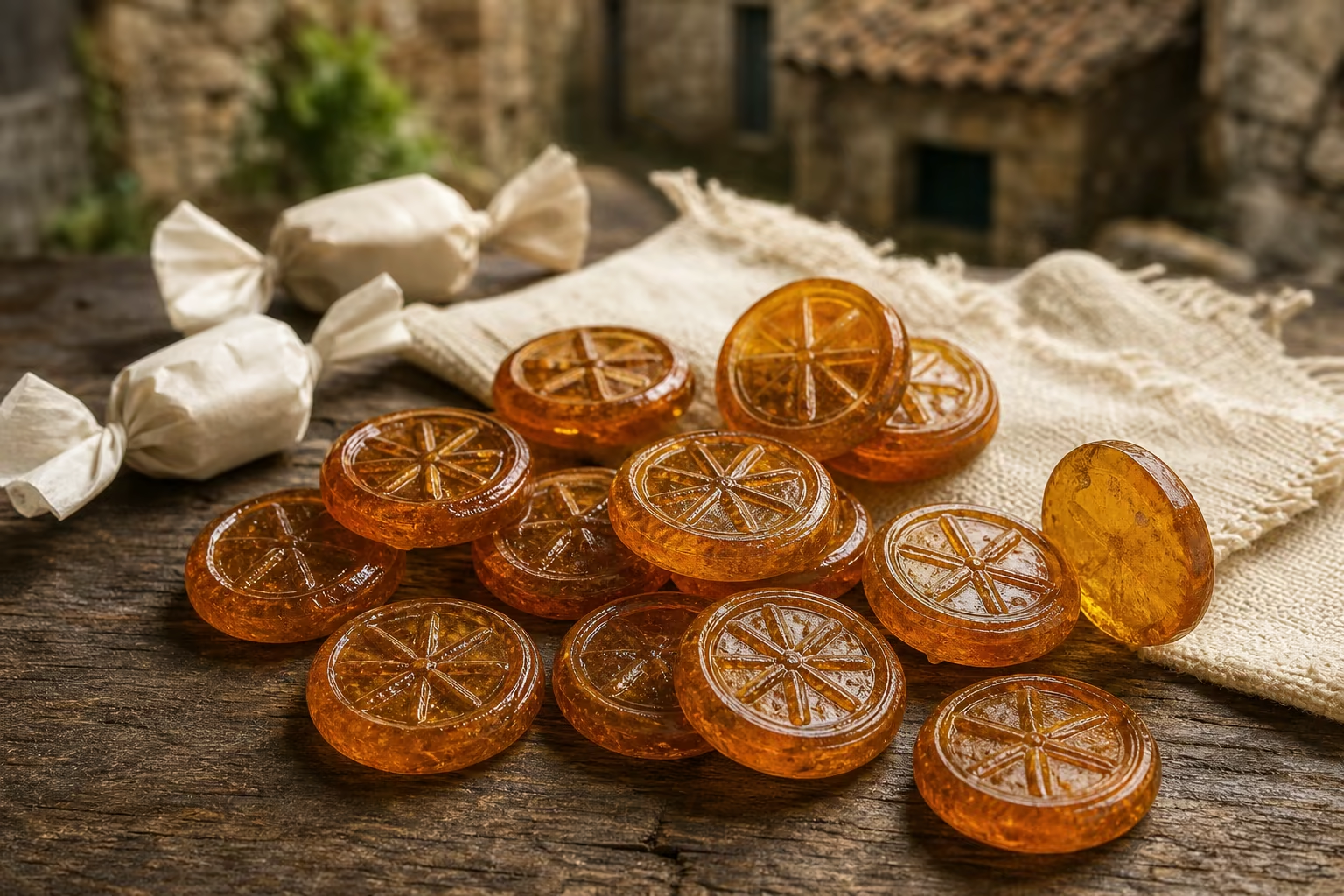
Bouça-Cova Stamped Caramel Candies
Also known as: Bouça-Cova Caramel Candies · Stamped Bouça-Cova Sugar Candies
Amber caramel discs, hand-pressed with old geometric symbols.
- Origin
- Bouça Cova · Pinhel · Guarda district
- Place
- Bouça Cova · Pinhel
- Region
- The Centre
- Category
- Festive & Seasonal
- Season
- Local fairs and festivities, subject to production
- Evidence
- Well documented
Rebuçados de Bouça-Cova are small, hard, translucent discs of caramelised sugar. Each piece is slightly irregular and, while still hot, receives the impression of a metal stamp: crosses, stars, grids and other geometric designs remain engraved across the amber surface.
The documented method is deliberately simple. Sugar is dissolved in water and cooked until it caramelises; small portions are placed on a tray greased with olive oil and pressed immediately. The sugar stage and speed of the gesture determine the colour, thickness and clarity of the mark.
The image on this page is an original editorial photograph based on the documented form. It does not reproduce the workshop, hand, tools, arrangement or photographic composition shown by the sources.
- Sugar
- Water
- Olive oil for greasing the tray
Clean, persistent caramel—sweet first, then lightly toasted—with a glassy, hard and brittle texture.
Colour ranges from pale honey to dark amber, and each stamp leaves a different design. Small variations in thickness and outline are part of the handmade process.
At fairs and local-product showcases in Pinhel and Bouça Cova when production is available. Because this is a family-scale tradition, confirm availability before making a dedicated journey.
Espresso, black tea or an unsweetened herbal infusion.
The tradition belongs to the village of Bouça Cova in the municipality of Pinhel. A Lusa report published in 2016 documented Dolorosa dos Santos, then aged 84, as the last local confectioner maintaining the method she had learnt from her mother. Her daughter also knew the technique, leaving open the possibility of family continuity.
The No Ponto research project recorded that some stamps had passed from grandmother Alexandrina to Dolorosa and drew attention to symbols associated with the village's Sephardic memory. That interpretation is presented as a heritage hypothesis, not as a definitively proven historical origin.
The candies appear in Portugal's national list of traditional products and continue to be promoted by the Municipality of Pinhel, which included them in its programme at the 2024 Lisbon Travel Market.
Well documented
Identity supported by institutional, specialist or corroborating sources.
- eubrdialogues.com/sites/default/files/acoes/documentos/049xlix_lista_de_produtos_tradicionais_portugueses_v_19_0.pdf (opens in a new tab)
- noponto.pt/rebucados-de-bouca-cova/ (opens in a new tab)
- 24.sapo.pt/vida/artigos/rebucados-de-caramelo-feitos-como-antigamente-mantem-tradicao-em-pinhel (opens in a new tab)
- cm-pinhel.pt/pinhel-marca-presenca-na-btl-2024/ (opens in a new tab)
Pastries from here — The Centre
 Catalogue image
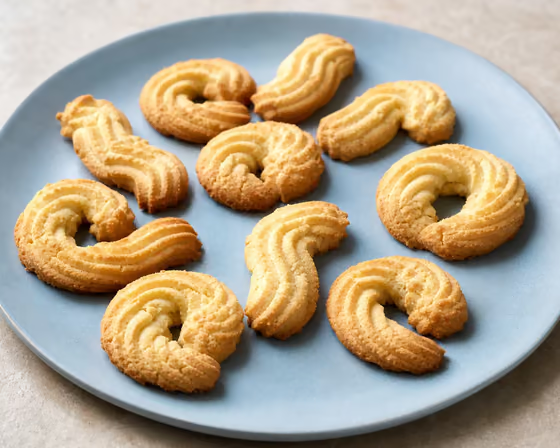
 Ílhavo Piped Butter Biscuits
Regional buttery biscuits piped into deeply ridged rings and curves.
The Centre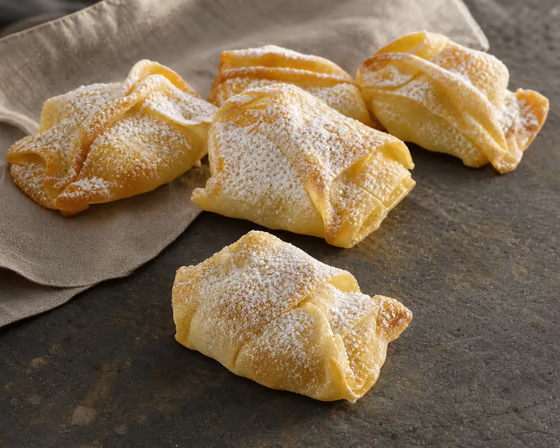 Catalogue image
 Saint Friar Gil’s Saddlebags
The small saddlebag-shaped pastry created at Vouzela’s vocational school and recognised as an innovative sweet.
The Centre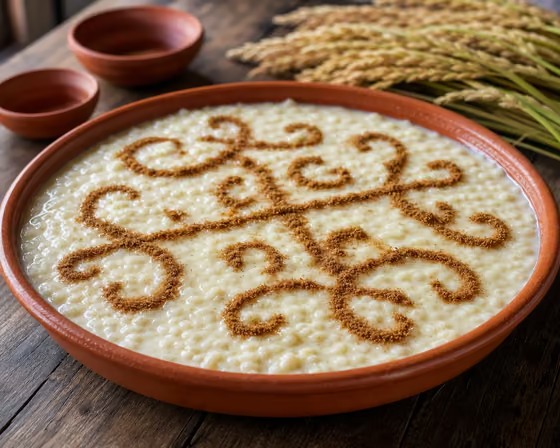 Catalogue image
 Baixo Mondego Rice Pudding
Mondego Carolino rice and Gândara milk, traced with cinnamon.
The Centre Catalogue image
 Arrufada de Coimbra
Coimbra's light, fragrant sweet bread, given by godparents at Easter.
The Centre