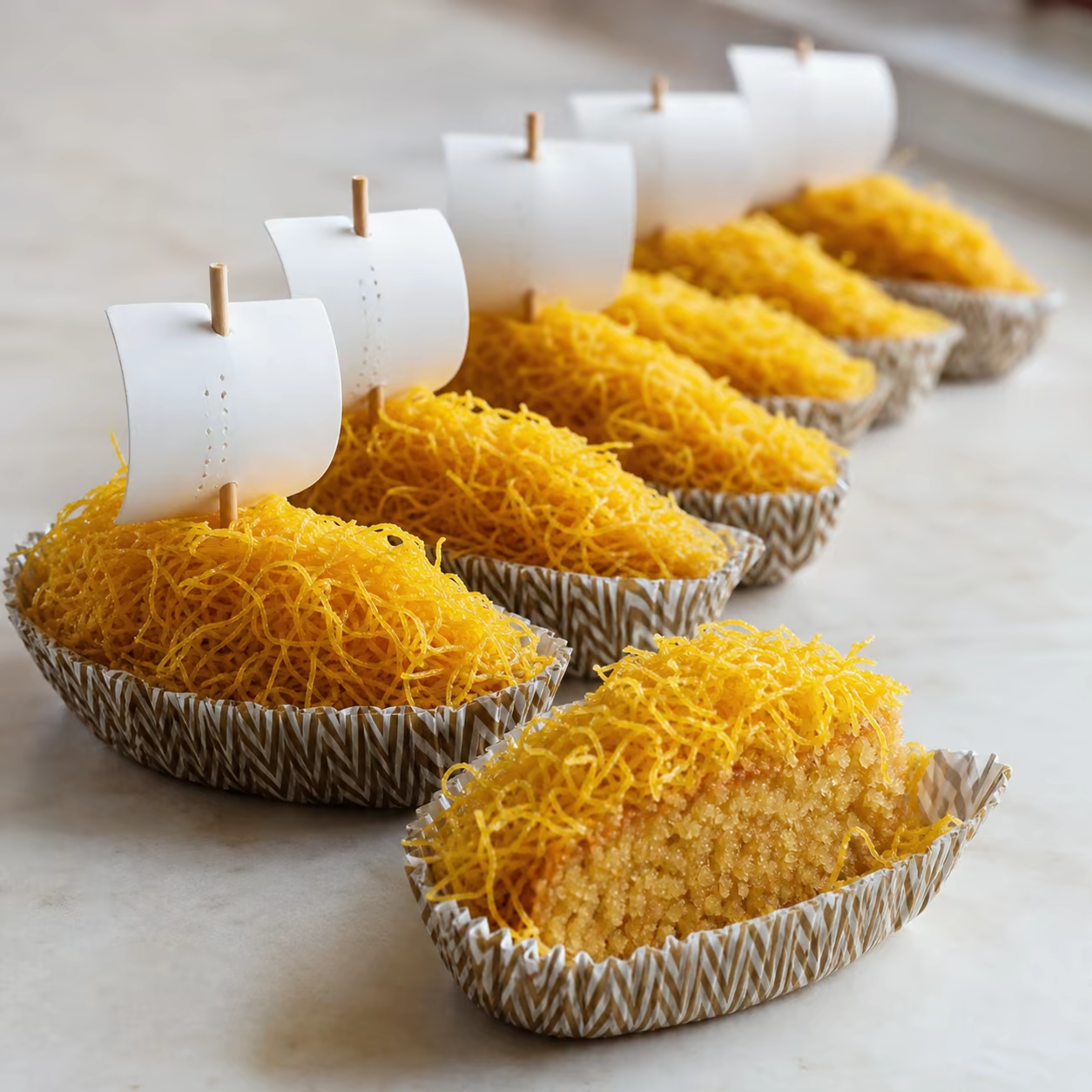
Régua Rabelo Boat Cakes
Also known as: Régua Rabelo Sweets · Douro Rabelo Boat Cakes · Sweet Rabelo Boats
Little sweet boats of rice, maize and almond, with a mast and sail above golden strands.
- Origin
- Peso da Régua, Vila Real · created by Cezília Teixeira
- Place
- Peso da Régua
- Region
- The North
- Category
- Cakes & Sweet Breads
- Season
- Year-round
- Evidence
- Well documented
Régua’s Rabelos are small elongated cakes shaped after the boats that carried wine barrels along the Douro. Each portion sits in a narrow hull-like cup, receives an abundant crown of fine golden strands and is finished with a tiny mast and paper sail.
Beneath the topping is a moist, fine-textured base made with rice flour, maize starch, eggs, sugar, cinnamon, almond and Port. The nautical silhouette is essential: without its hull, mast and sail, the sweet loses the visual tribute that gives it a name.
- Rice flour
- Maize starch
- Eggs
- Sugar
- Cinnamon
- Almond
- Port
Sweet and almond-rich, with a moist fine crumb, cinnamon fragrance and the warming wine note of Port.
Cezília Teixeira’s recipe is the reference and its method remains private. Sail curvature, strand quantity and cup pattern may vary, but the little boat remains recognisable.
Look for them at Peso da Régua pastry shops specialising in local sweets, including recent references to Solar d’Ouro. Confirm production before travelling.
A glass of Port, espresso or black tea.
Cezília Teixeira created the Rabelos in Peso da Régua and modelled them on the rabelo boat, a symbol of the wine-growing Douro and the historic transport of wine to Vila Nova de Gaia. A municipal account reproduced in 2012 said the creation was nearly ten years old, while a later guide described roughly two decades. The evidence places it around the opening years of the twenty-first century but does not establish an uncontested year. The exact method remained the creator’s secret.
A Douro Alliance gastronomic guide recorded the authorship, ingredients and mast-and-sail finish. Photographs reproduced by the Automóvel Club de Portugal document the presentation in small elongated cups covered with yellow-gold strands. Current tourism guides still list Rabelos among Régua’s distinctive sweets, showing that the creation has moved beyond novelty into the city’s confectionery identity.
Well documented
Identity supported by institutional, specialist or corroborating sources.
- livrozilla.com/doc/990713/peso-da-r%C3%A9gua---douro-alliance (opens in a new tab)
- gastrossexual.blogspot.com/2012/03/portugal-gastronomico-95-peso-da-regua.html (opens in a new tab)
- acp.pt/viagens-e-lazer/estrada-fora/conhecer-portugal/norte/detalhe/peso-da-regua (opens in a new tab)
- acp.pt/ResourcesUser/ACP/img_artigo/Viagens_e_Lazer/Estrada_fora/ACP-Estrada-Fora-Peso-da-Regua-5.jpg (opens in a new tab)
- gremio.cm-vilareal.pt/images/publicacoes/tellus53.pdf (opens in a new tab)
- allaboutportugal.pt/pt/peso-da-regua (opens in a new tab)
- universe.com.pt/en/_files/ugd/a41737_03544d6d2bb14a4aaa041c41a4f4fd9b.pdf (opens in a new tab)
Pastries from here — The North
 Catalogue image
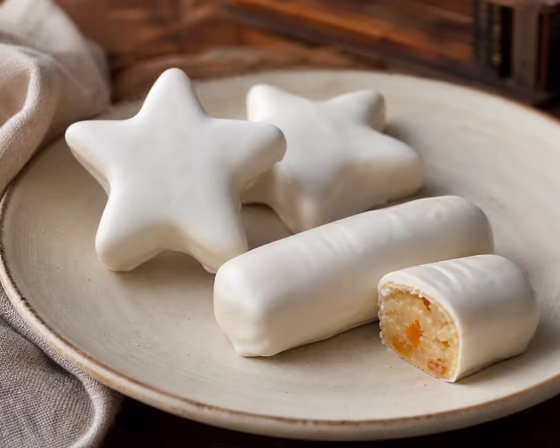
 A Bella Queijadinha de Barcelos
A white star of almond, preserved fruit and family memory.
The North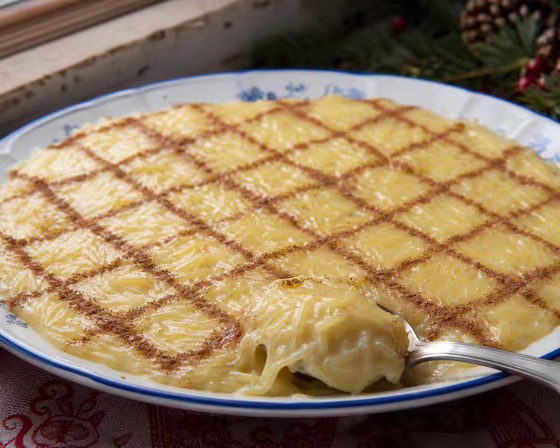 Catalogue image
 Sweet Vermicelli
Fine wheat threads simmered in milk and yolk, scored with cinnamon.
The North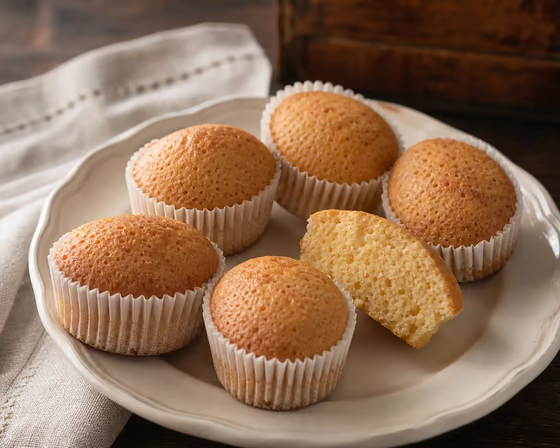 Catalogue image
 Amarantinos
Small egg, lemon and cinnamon cakes whose historical identity is not told consistently by the sources.
The North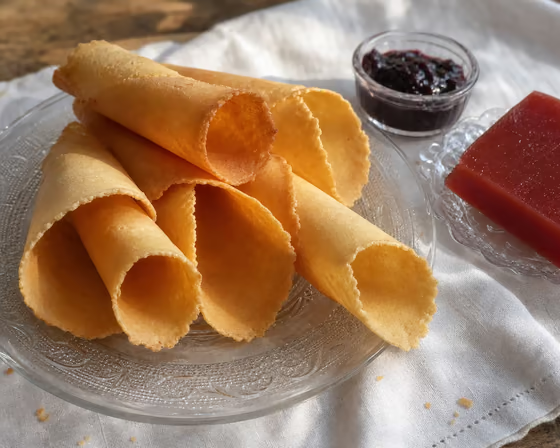 Catalogue image
 Vieira do Minho Cone Wafers
Paper-thin crisp wafers, iron-baked and rolled by hand while still hot.
The North