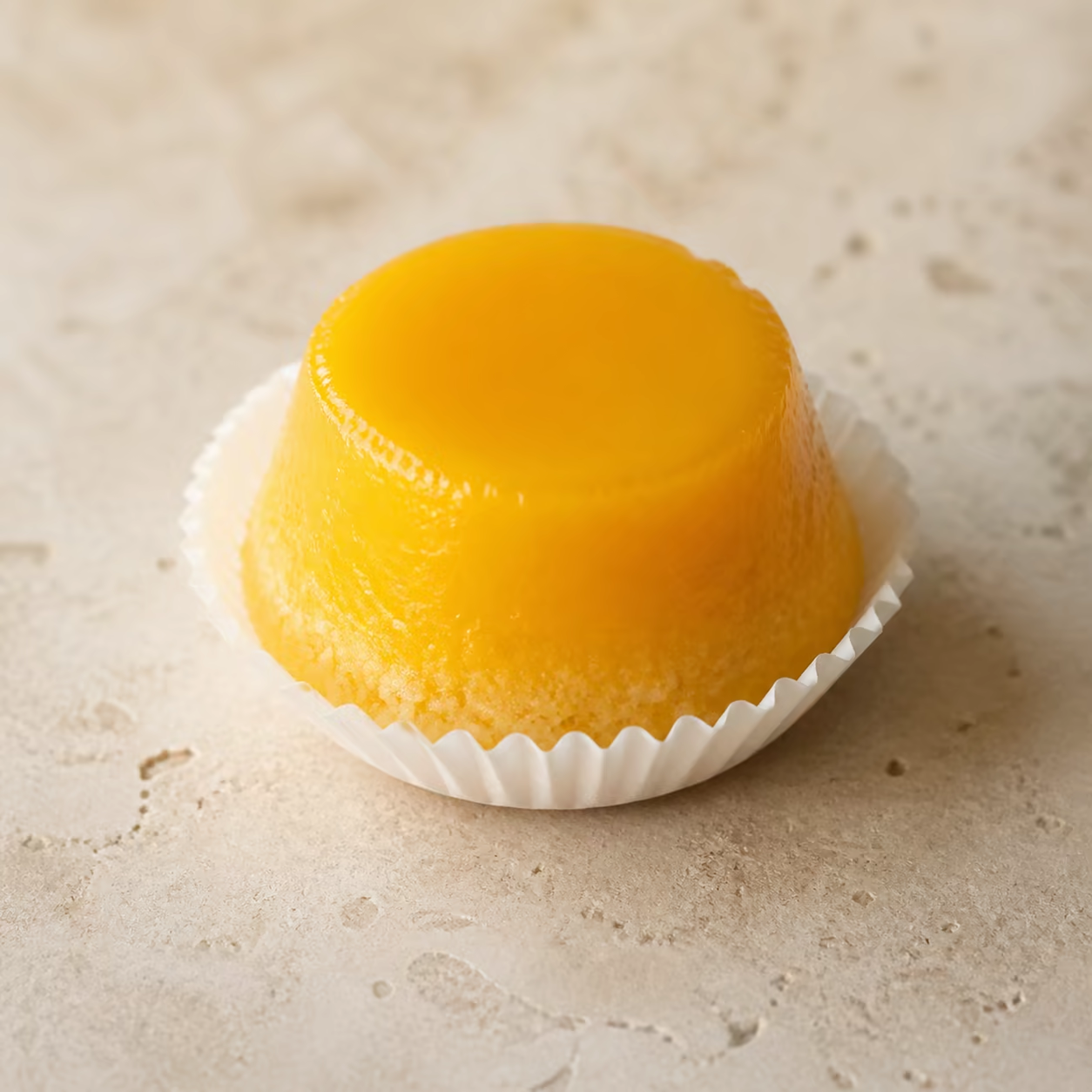
Quindim
Also known as: Coconut quindim · Individual quindim
A small Brazilian yolk, coconut and sugar pudding baked in a water bath.
- Origin
- Brazilian yolk, sugar and coconut sweet, with Portuguese confectionery influence and a name of African etymology; its exact creator and date are unknown.
- Place
- Brazil · present in Portugal
- Region
- Nationwide
- Category
- Puddings & Spoon Sweets
- Season
- Year-round
- Evidence
- Well documented
Quindim is a Brazilian sweet of sugar, coconut and egg yolks, as defined by Priberam. It is baked in small moulds and turned out, leaving a smooth glossy face and a layer in which coconut is more perceptible.
A recipe published by Portugal’s public broadcaster RTP adds coconut milk and butter, places a cherry in each mould, and bakes fifteen pieces in a water bath. The cherry is therefore a documented variation, not a reliable rule for separating quindim from other coconut sweets.
- Egg yolks
- Sugar
- Grated coconut
- Butter in some formulas
- Coconut milk in some formulas
Very sweet and yolk-rich, with a soft glossy face and grated coconut more evident in the opposite layer.
The individual form bakes in small moulds; Priberam defines quindão as a large quindim. RTP’s formula decorates each piece with a syrup-preserved or crystallised cherry and also uses coconut milk and butter.
It belongs to Brazilian confectionery. It is included in this Portugal-wide catalogue because it is recorded in Portuguese dictionaries and in a recipe produced by RTP, not because it is presented as a Portuguese creation.
RTP’s recipe is presented without an accompanying drink; the reviewed sources establish no canonical pairing.
A Gastronomy study deposited at the Federal University of Bahia describes quindim as a typically Brazilian sweet: Portuguese confectionery based on sugar, yolks and almonds influenced Brazilian food habits, where incorporating coconut contributed to this creation. Priberam defines the sweet and gives the word an African etymology; that etymology does not by itself identify the recipe’s inventor.
The reviewed sources document no person, convent, date or single Portuguese recipe as its unique origin. Authorship and chronology remain unknown. This entry therefore does not repeat the popular Brisas do Lis comparison as fact or erase the Brazilian and African components of its history.
Well documented
Identity supported by institutional, specialist or corroborating sources.
- dicionario.priberam.org/quindim (opens in a new tab)
- repositorio.ufba.br/handle/ri/37954 (opens in a new tab)
- media.rtp.pt/praca/rubricas/culinaria/culinaria-quindins/ (opens in a new tab)
Pastries from here — Nationwide
 Catalogue image
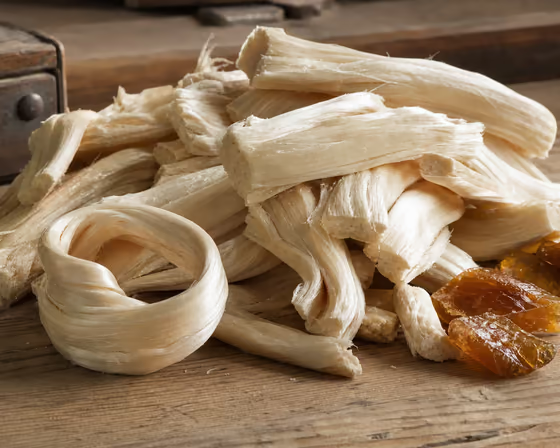
 Alféloa
Sugar or molasses cooked to a hard stage and worked until pale.
Nationwide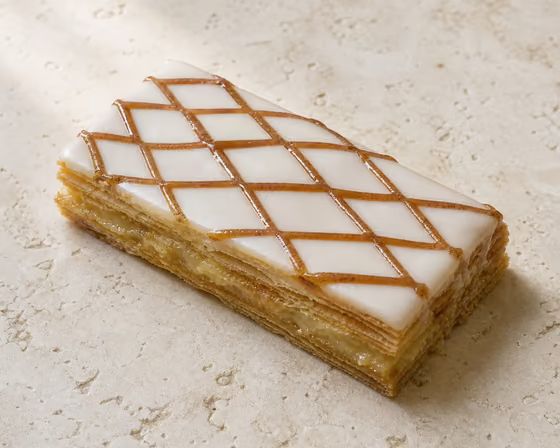 Catalogue image
 Portuguese Gila Allumette
A rectangular puff pastry with cream, gila and cinnamon beneath diamond-patterned royal icing.
Nationwide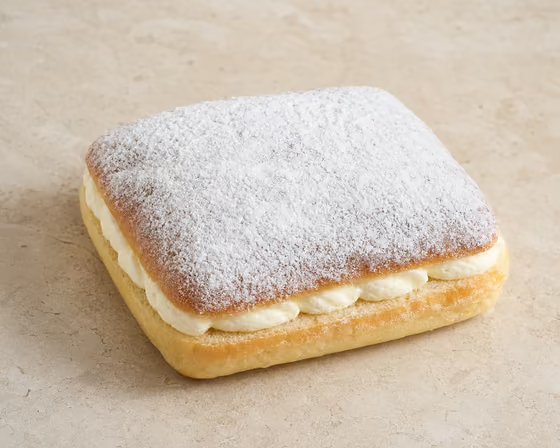 Catalogue image
 Portuguese Brioche Almofada
Light brioche dough, fresh buttercream and icing sugar.
Nationwide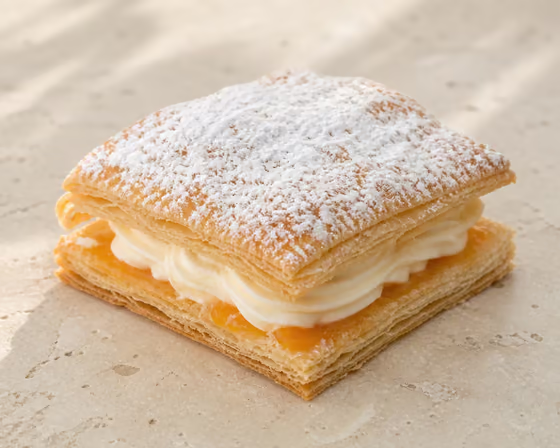 Catalogue image
 Portuguese Puff-Pastry Almofada
Puff pastry with white cream, egg sweet and icing sugar—the laminated Almofada variant.
Nationwide