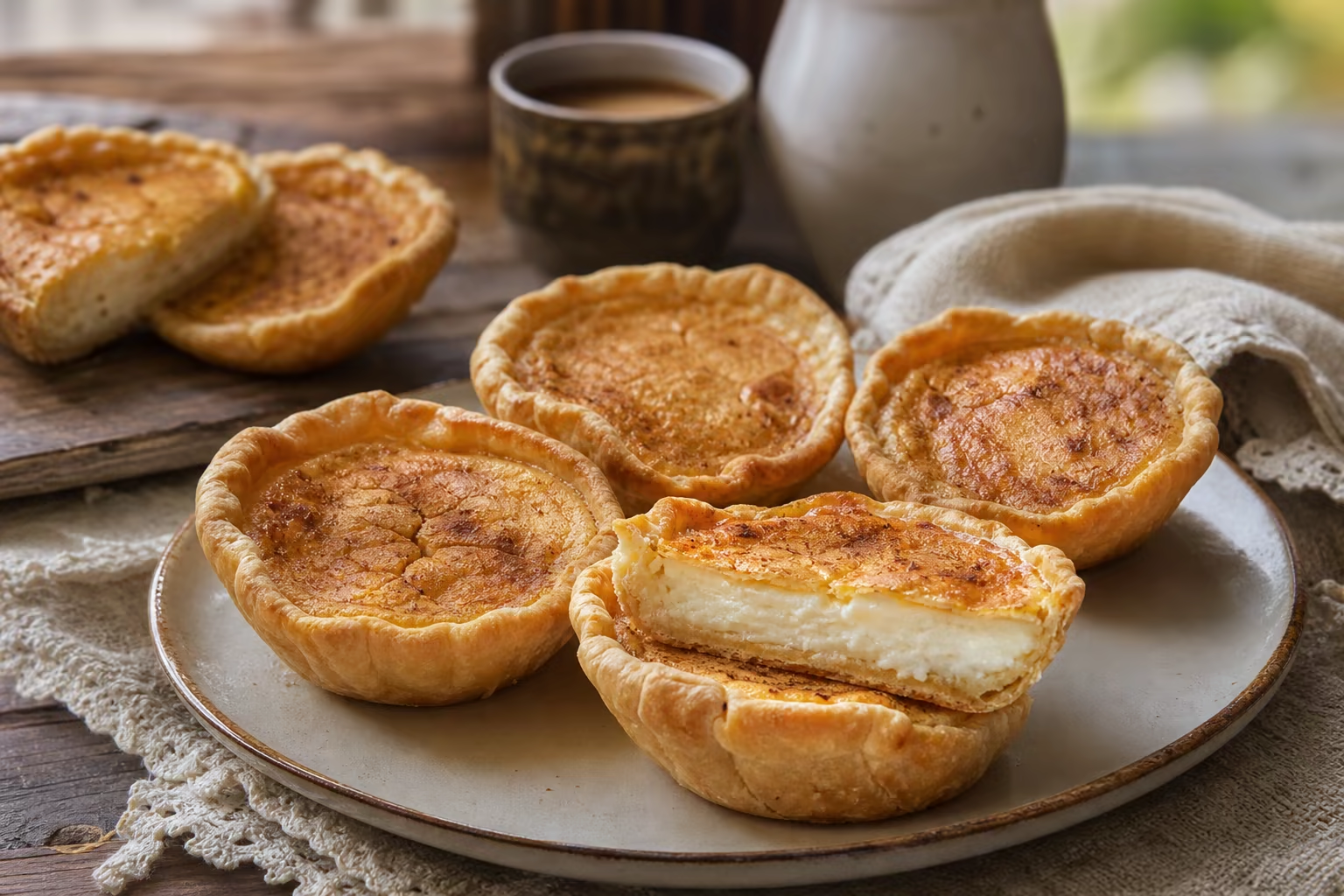
Bárrio Cheese Tarts
Also known as: Bárrio Cheese Tarts · Bárrio Requeijão Tartlets
The queijada identified with Bárrio parish since the early twentieth century.
- Origin
- Bárrio, Alcobaça · popular confectionery of the Oeste
- Place
- Bárrio
- Region
- The West
- Category
- Convent Sweets
- Season
- No seasonality documented in the sources reviewed
- Evidence
- Well documented
Queijadas do Bárrio are the sweet speciality associated with Bárrio parish in the municipality of Alcobaça. Alcobaça municipality includes them among the area’s defining sweets, while a recent Caminhos de Fátima guide distinguishes them from strictly conventual confectionery and places them among popular sweets whose recipes remain tied to local communities.
The institutional and historical sources reviewed confirm the name, geographical origin and more than a century of recognition, but do not publish a technical recipe specific to Bárrio. This page therefore does not conflate the speciality with DGADR’s Alentejo record for Queijadas de Requeijão or assert unverified proportions, flavourings, shape or serving customs for the local recipe.
- Specific recipe not published in the sources reviewed
The specific sensory profile is not described by the institutional and historical sources reviewed.
No local variants are documented in the sources reviewed. Queijada do Bárrio should not automatically be treated as a variant of Alentejo’s Queijadas de Requeijão merely because both use the word queijada.
The speciality remains associated with Bárrio and is included in Alcobaça municipality’s gastronomic promotion. A local source identifies A Prensa, opened in 1994, as a producer selling the queijadas to order; confirm availability and opening hours directly before visiting.
In 1911 they were served with Alcobaça fortified wines at a Fourth Tourism Congress banquet; no specific contemporary pairing recommendation was found.
The documentary chronology is stronger than a monastic origin legend. Historian António Valério Maduro records that Manuel Vieira Natividade already mentioned Queijadas do Bárrio in his 1906 study of industry in the municipality of Alcobaça. Tito Larcher highlighted them again in 1907 when discussing the region’s confectionery inheritance, probably associated with the women’s monastery at Cós. In 1911 they were served with Alfeizerão sponge cake and Alcobaça rice pudding at the banquet for participants in the Fourth Tourism Congress.
According to its parish council, Bárrio was only established as a parish on 29 May 1933, so the sweet’s name predates that administrative status. The sources prove an early-twentieth-century regional tradition and a later association with Alcobaça’s monastic inheritance; they do not prove that a religious community invented the recipe or provide a convent manuscript for it.
Well documented
Identity supported by institutional, specialist or corroborating sources.
- freguesiabarrio.pt/historia-2/ (opens in a new tab)
- cm-alcobaca.pt/50062/doces-conventuais (opens in a new tab)
- researchgate.net/publication/335277005_Requinte_e_Paladar_Gastronomia_Monastica_Alcobacense (opens in a new tab)
- bibliografia.bnportugal.gov.pt/bnp/bnp.exe/q (opens in a new tab)
- iwrt.pt/files/6219_caminhos_fatima_roteiro_nazare_60d3329351994.pdf (opens in a new tab)
- goalcobaca.com/junta-de-freguesia-de-barrio/ (opens in a new tab)
- flemingdeoliveira.blogspot.com/2019/01/notempo-de-pessoas-importantes-como-nos_20.html (opens in a new tab)
Pastries from here — The West
 Catalogue image
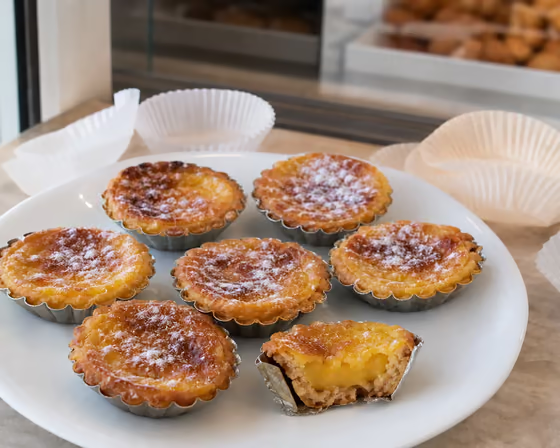
 Friends of Peniche
The sweet named after friends you should not trust.
The West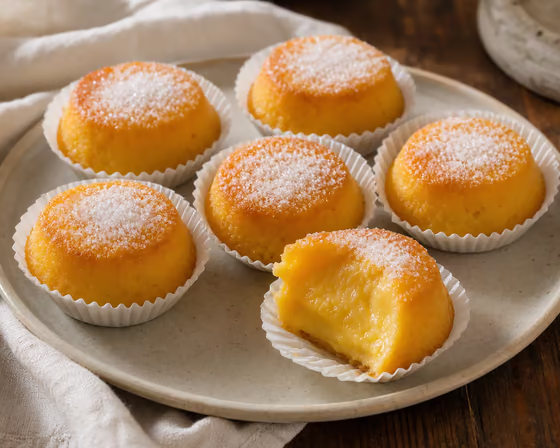 Catalogue image
 Areias Brancas
Small yolk-and-almond pudding cakes, named by the coast and covered with white sugar.
The West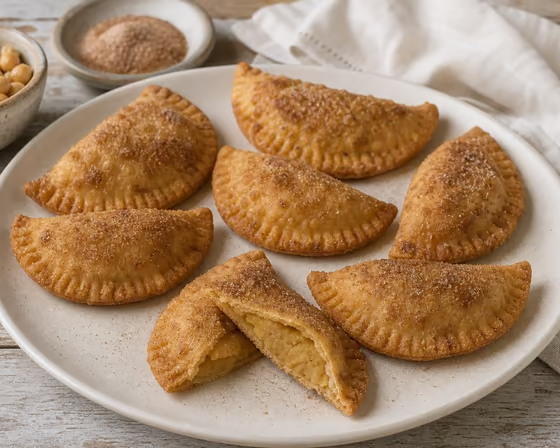 Catalogue image
 Peniche Chickpea Azevias
Thin fried half-moons with a sweet, creamy chickpea, almond and egg-yolk filling.
The West Catalogue image
 Lourinhã DOC Brandy Bonbon
A dark-chocolate bonbon with a Lourinhã DOC brandy heart.
The West