Régua Cassava-Flour Pudding
Also known as: Régua Cassava-Flour Pudding · Manioc-Flour Pudding
A golden, dense Douro baked pudding bound with fine cassava flour.
- Origin
- Peso da Régua · contemporary Douro version of a Portuguese recipe documented in 1913 · exact local chronology unknown
- Place
- Peso da Régua
- Region
- The North
- Category
- Puddings & Spoon Sweets
- Season
- No documented seasonality; current availability unconfirmed
- Evidence
- Well documented
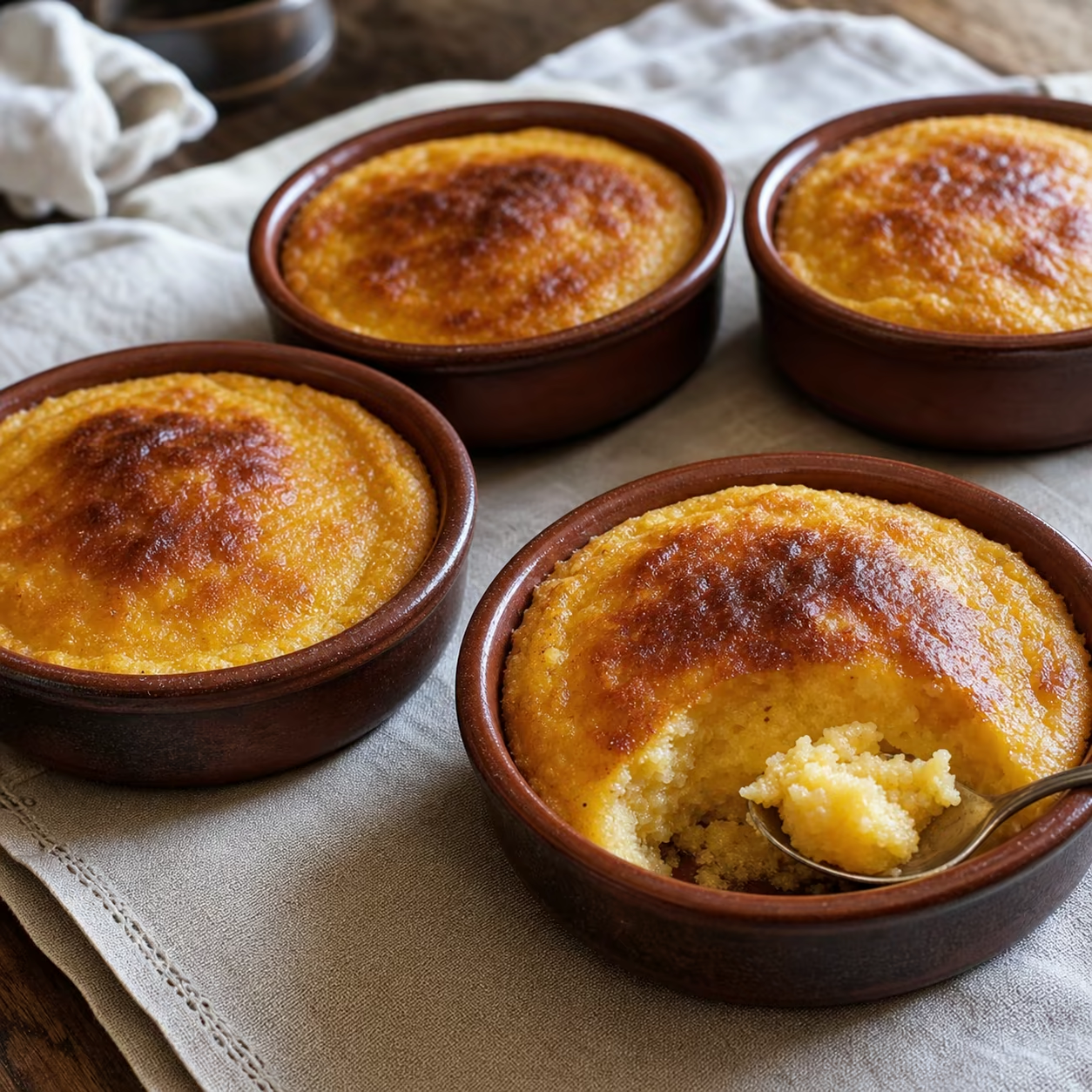
Régua’s Pudim de Farinha de Pau is an oven-baked sweet presented, in the version publicised by Doces do Céu, in small round earthenware dishes. Its surface becomes golden with irregular toasted patches; beneath it, cassava flour produces a moist, dense and finely granular crumb.
Farinha de pau is a Portuguese term for cassava flour, as confirmed by a University of Coimbra food-history study. A recipe published in the newspaper O Radical on 5 July 1913 combines fine sifted flour with warm milk, sugar, four yolks, two beaten whites, butter and lemon zest before baking. The Régua version adds Port wine according to its producer; the two formulas should not be treated as identical.
- Farinha de pau (cassava flour)
- Milk
- Sugar
- Egg yolks and whites
- Butter
- Lemon zest
- Port wine in the Régua version
Milky sweetness with a citrus lift, a moist dense centre, a very fine cassava grain and toasted notes on top.
The 1913 recipe is baked in a buttered mould and does not mention Port; the contemporary Régua version is presented in individual earthenware dishes and its producer says it includes the regional wine. Complete proportions and other differences in the commercial formula are not published.
Production was documented at Doces do Céu in Peso da Régua during the 2019 competition entry and a later demonstration on Porto Canal. The sources reviewed do not confirm that either the shop or pudding remains currently available; contact the producer or local tourism office before making a dedicated trip.
Not documented in the sources reviewed.
The 1913 record proves that both the name and recipe circulated in Portugal in the early 20th century, but it does not establish a Régua origin. University of Coimbra bibliographical research also identifies Pudim de farinha de pau in António Maria de Oliveira Bello’s Culinária Portuguesa, reinforcing the dish’s continued appearance in print.
The specific connection to Peso da Régua is documented through Doces do Céu. In its entry for the 2019 Seven Sweet Wonders of Portugal, the producer said she learnt the recipe from her godmother and described more than a century of transmission among descendants of emigrants who returned from Brazil. The pudding was among 21 sweets selected in the first Vila Real district round. Its exact local chronology remains unknown: that family genealogy and Brazil–Douro route are producer testimony, not facts confirmed by an independent historical source.
Well documented
Identity supported by institutional, specialist or corroborating sources.
- facebook.com/docesdoceu.regua/videos/pudim-de-farinha-de-pau-um-dos-candidatos-%C3%A0s-7-maravilhas-doces-de-portugal-e-qu/351655232217504/ (opens in a new tab)
- facebook.com/docesdoceu.regua/videos/hoje-no-porto-canal-mostrei-como-se-faz-o-pudim-de-farinha-de-pauportocanal-doce/479525690387350/ (opens in a new tab)
- aqualibri.cimcavado.pt/bitstream/20.500.12940/1116/1/O%20Radical_0044_1913-07-05.pdf (opens in a new tab)
- dl.uc.pt/bitstream/10316.2/77371/1/biblioalimentaria.pdf (opens in a new tab)
- gazetarural.com/wp-content/uploads/2019/04/7-Maravilhas-Doces-de-Portugal-Lista-de-Nomeados.pdf (opens in a new tab)
Pastries from here — The North
 Catalogue image
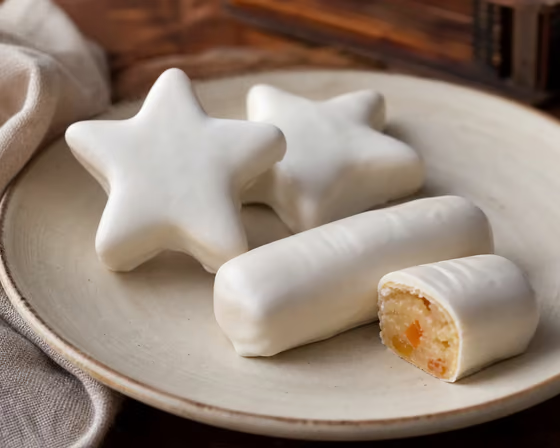
 A Bella Queijadinha de Barcelos
A white star of almond, preserved fruit and family memory.
The North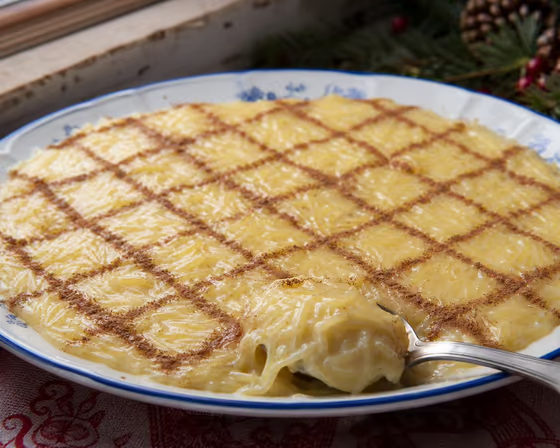 Catalogue image
 Sweet Vermicelli
Fine wheat threads simmered in milk and yolk, scored with cinnamon.
The North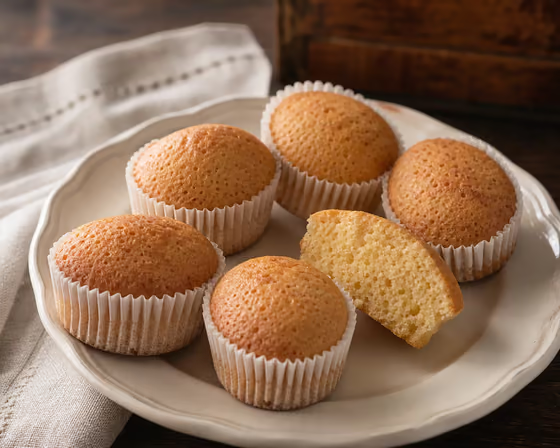 Catalogue image
 Amarantinos
Small egg, lemon and cinnamon cakes whose historical identity is not told consistently by the sources.
The North Catalogue image
 Vieira do Minho Cone Wafers
Paper-thin crisp wafers, iron-baked and rolled by hand while still hot.
The North