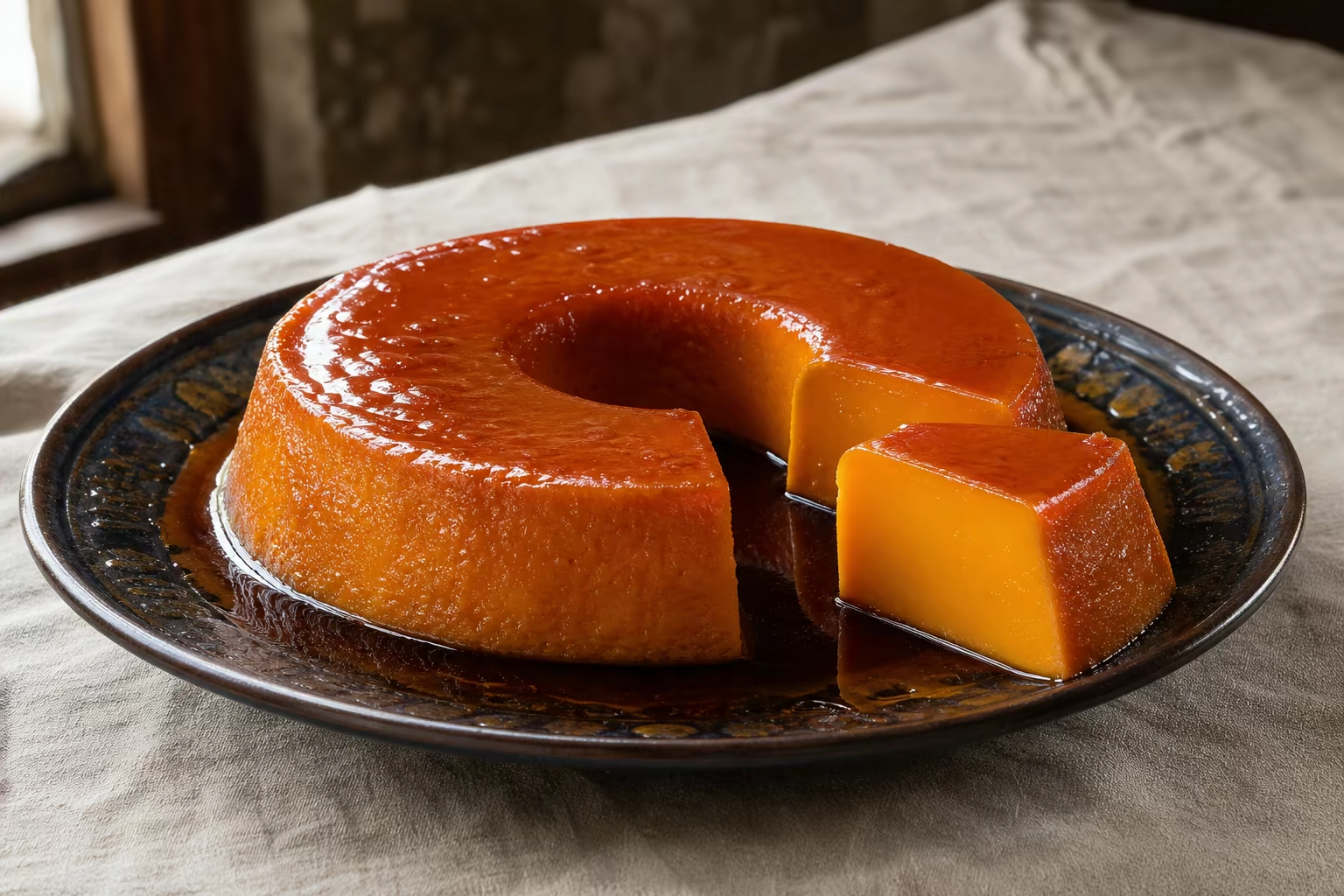
Abbot of Priscos Pudding
Also known as: Abbot of Priscos Pudding
Portugal's richest pudding: egg yolks, Port and — quietly — a piece of pork fat.
- Origin
- Author's recipe · Priscos, Braga · 19th century
- Place
- Braga
- Region
- The North
- Category
- Puddings & Spoon Sweets
- Season
- Year-round
- Evidence
- Well documented
Pudim Abade de Priscos is the most sumptuous of Portuguese puddings: a quivering, translucent block the colour of dark amber, made from many egg yolks, a perfumed sugar syrup, and turned out over its own caramel. Where a flan-style pudding is light and airy, this one is dense, silky and almost meaty — you slice it thin, because a generous portion is, frankly, too much.
The secret lies in two ingredients no one expects in a dessert: a glass of Port wine and a small piece of fresh pork fat, simmered in the syrup. The fat is neither seen nor tasted; it simply velvets the texture and deepens the flavour, giving the pudding the glossy, unctuous finish that made it legendary.
- egg yolks
- sugar
- water
- fresh pork fat
- Port wine
- cinnamon stick
- lemon peel
- caramel
Intensely sweet and deeply rich, with the profound flavour of egg yolk lifted by cinnamon, lemon and the warm, liqueur-like note of Port. Its texture is the triumph: dense and silky, melting on the tongue, without the spongy lightness of an ordinary pudding. The caramel, faintly bitter, balances the sweetness.
Being an author's recipe, the formula is relatively fixed, but the proportions shift from house to house: the most widespread version starts from about fifteen yolks, though some use more, and both tawny and vintage Port turn up. A few confectioners leave out or cut back the pork fat for fear of the ingredient; purists insist that without it, it is not the true pudding.
In the traditional bakeries and restaurants of Braga and the Minho, and at notable Portuguese kitchens across the country. Look for the pudding dark, glossy and dense, sold in thin slices — not a pale, airy flan. It is worth asking whether it really contains pork fat and Port: the right answer is yes.
A glass of the same Port that goes into the recipe, ideally tawny; or a short espresso to balance so much sweetness.
The pudding owes its name and recipe to Manuel Joaquim Machado Rebelo (1834–1930), the Abbot of Priscos, parish priest of Priscos in the municipality of Braga for 47 years. He was one of the most celebrated cooks of 19th-century Portugal: named honorary chaplain of the Royal Household by decree in 1874, he prepared banquets for royalty, clergy and the aristocracy. He is said to have guarded his recipes jealously, so the formula we know today reaches us chiefly through tradition.
Like so many sweets of the North and the Minho, the pudding belongs to the heritage of many-yolk desserts, yet unlike the convent sweets it is a named author's creation, born in the 19th century. Today it is listed among Portugal's recognised traditional products and counts among the most revered desserts in the country.
Well documented
Identity supported by institutional, specialist or corroborating sources.
- tradicional.dgadr.gov.pt/en/categories/desserts-and-pastry/417-pudim-do-abade-de-priscos (opens in a new tab)
- en.wikipedia.org/wiki/Pudim_Abade_de_Priscos (opens in a new tab)
- en.wikipedia.org/wiki/Manuel_Joaquim_Machado_Rebelo (opens in a new tab)
- atlasobscura.com/foods/bacon-pudding-portugal-abade-de-priscos (opens in a new tab)
Pastries from here — The North
 Catalogue image
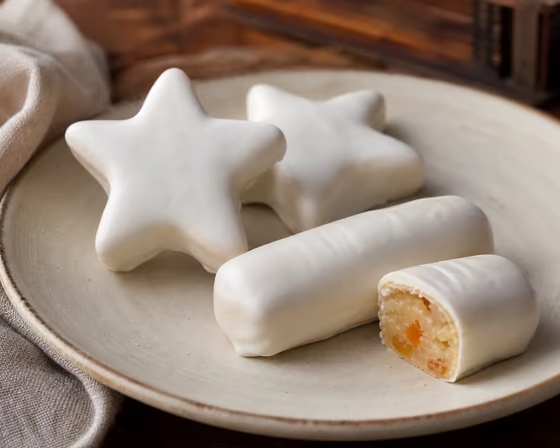
 A Bella Queijadinha de Barcelos
A white star of almond, preserved fruit and family memory.
The North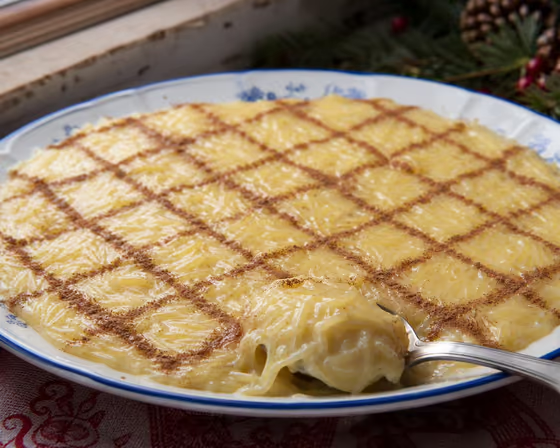 Catalogue image
 Sweet Vermicelli
Fine wheat threads simmered in milk and yolk, scored with cinnamon.
The North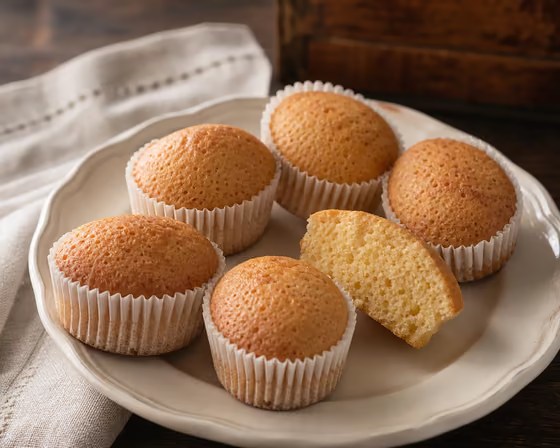 Catalogue image
 Amarantinos
Small egg, lemon and cinnamon cakes whose historical identity is not told consistently by the sources.
The North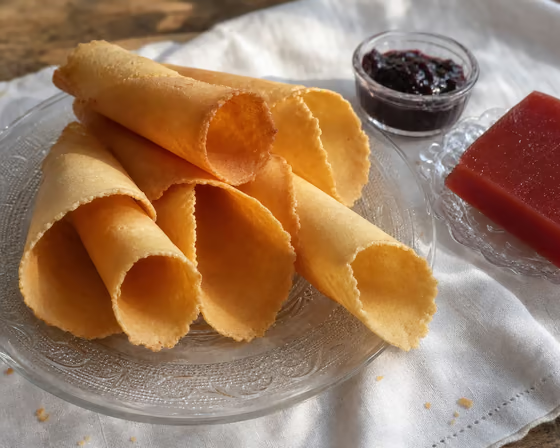 Catalogue image
 Vieira do Minho Cone Wafers
Paper-thin crisp wafers, iron-baked and rolled by hand while still hot.
The North