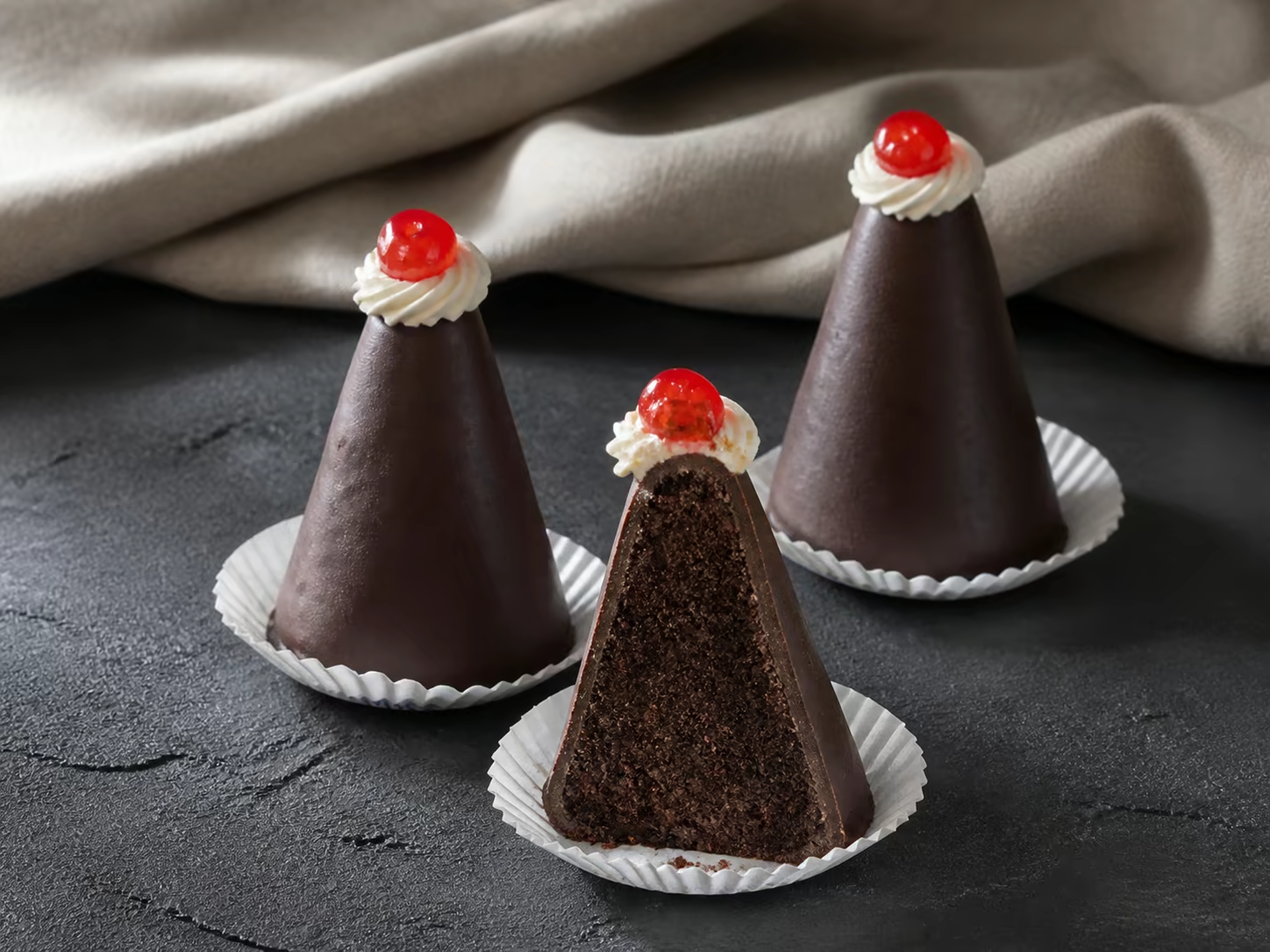
Portuguese Chocolate Pyramid Cake
Also known as: Portuguese chocolate pyramid · Portuguese chocolate cone cake · Pirâmide cake
A cone of cake crumbs bound with syrup, coated in chocolate and crowned with cream and cherry.
- Origin
- Portuguese zero-waste pastry tradition · creator and date not established
- Place
- Portugal
- Region
- Nationwide
- Category
- Cakes & Sweet Breads
- Season
- Year-round
- Evidence
- Well documented
Pirâmide de Chocolate is a Portuguese pastry-counter classic that turns trimmings and leftover cream-free cakes into a new individual cake. The scraps are crumbled and bound with syrup and, depending on the bakery, cocoa, chocolate, nuts or flavouring. The compact mixture is shaped into a tall cone, coated in chocolate, then finished with a small chantilly rosette and half a candied cherry.
Its name is a small geometrical joke: the traditional form is round and conical, not a pyramid with flat faces. Because the mixture depends on the cakes available, its interior can vary subtly from one batch to another. Rather than careless production, this is a longstanding expression of the Portuguese bakery’s zero-waste logic.
- Crumbled trimmings or leftovers from cream-free cakes
- Sugar syrup
- Cocoa or chocolate, depending on the recipe
- Chocolate coating
- Chantilly cream
- Candied or syrup-preserved cherry
- Optional nuts, anise, Port wine or other flavourings
Dense, moist and deeply chocolatey, with a thin shell that gives slightly before the compact crumb. Chantilly lightens the whole and the cherry adds a syrupy fruit note. Its exact flavour varies with the cake trimmings used.
The coating may be dark, milk or white chocolate, either plain or striped with icing. Decorations can include differently coloured cherries, walnuts or small sugar ornaments. The binding mixture also varies: some recipes use syrup alone, while others add butter, chocolate, nuts, raisins, anise or Port. Ratinho is a related leftover-cake confection, but it is shaped and decorated as an animal.
Look for it in traditional pastry shops and confirm the day’s production. Saquinho Dourado in Cascais currently lists “Pirâmide de Chocolate,” while Visconde Pastelaria in Coimbra includes “Pirâmide” on its menu. Cooking Lisbon recommends classic capital-city pastry shops for exploring Portuguese counter cakes, but availability of this particular item should be checked with each bakery.
Espresso or a glass of cold milk.
No reliable documentation found identifies an inventor or creation date. The Fabrico Próprio encyclopedia includes Pirâmide among the archetypes of Portuguese semi-industrial pastry and records that, during the 1950s and 1960s, it was also called Matateu, after the celebrated footballer of Mozambican origin.
The cake belongs to national rather than regional bakery memory: the Fabrico Próprio study describes these counter models as shared from Braga to Tavira and from the islands to Lisbon. Contemporary sources still present it as a characteristic pastry-shop cake, although its popularity has fluctuated. Current menus in Cascais and Coimbra confirm that it remains in circulation.
Well documented
Identity supported by institutional, specialist or corroborating sources.
- fabricoproprio.net/enciclopedia/piramide/ (opens in a new tab)
- fabricoproprio.net/enciclopedia/ratinho/ (opens in a new tab)
- bertrand.pt/blogue-somos-livros/para-devorar/artigo/chocolate-a-bras-piramides-e-queijadas-de-laranja/221947 (opens in a new tab)
- cookinglisbon.com/post/10-essential-cakes-you-ll-find-at-portuguese-pastry-shops (opens in a new tab)
- lifestyle.sapo.pt/sabores/receitas/piramides-de-chocolate (opens in a new tab)
- ubereats.com/pt/store/saquinho-dourado/Jo9QfY6MTMCIlMM2zc4wGA (opens in a new tab)
- glovoapp.com/pt/pt/coimbra/stores/visconde-pastelaria-coi (opens in a new tab)
Pastries from here — Nationwide
 Catalogue image
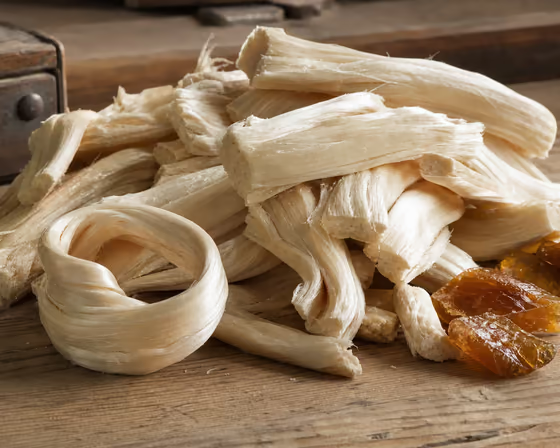
 Alféloa
Sugar or molasses cooked to a hard stage and worked until pale.
Nationwide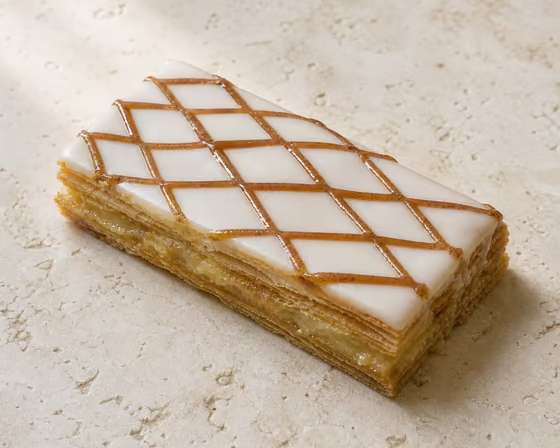 Catalogue image
 Portuguese Gila Allumette
A rectangular puff pastry with cream, gila and cinnamon beneath diamond-patterned royal icing.
Nationwide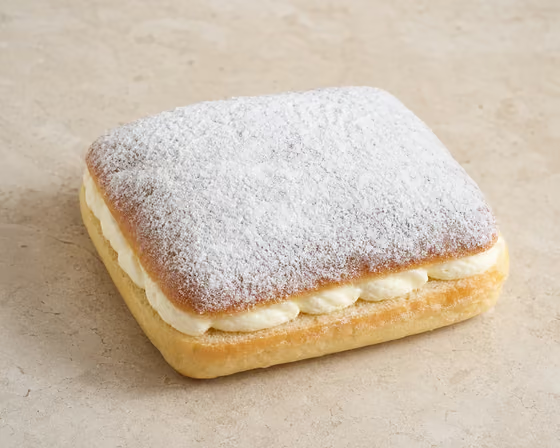 Catalogue image
 Portuguese Brioche Almofada
Light brioche dough, fresh buttercream and icing sugar.
Nationwide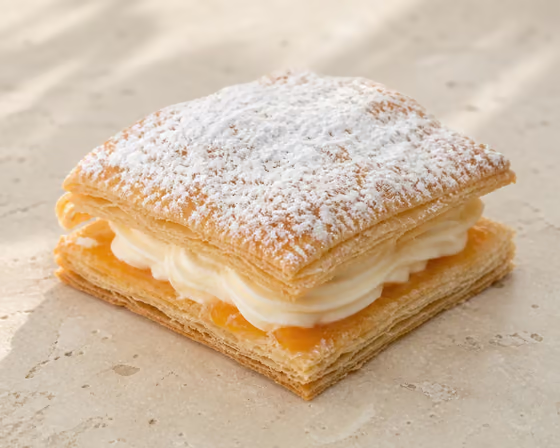 Catalogue image
 Portuguese Puff-Pastry Almofada
Puff pastry with white cream, egg sweet and icing sugar—the laminated Almofada variant.
Nationwide